Weekly Insights: Inflation Fears Ease

This week’s economic indicators and market performance signal cautious optimism, with inflation cooling in key regions and corporate earnings boosting confidence.

In the U.S. the consumer price index (CPI) increased by a seasonally adjusted 0.4% in December, bringing the 12-month inflation rate to 2.9%, according to the U.S. Bureau of Labor Statistics. While the headline figure indicated a slight acceleration from November, core inflation, which excludes food and energy, rose by only 0.2% in December—its smallest increase since July. Year-over-year core inflation also eased to 3.2% from 3.3% in November, falling slightly below expectations. Following the report, U.S. Treasury yields strengthened across most maturities, reflecting investor optimism.

The inflation report arrives amid heightened market sensitivity to Federal Reserve policy signals as well as concerns over tariffs and potential inflationary pressures linked to policies from President-elect Donald Trump.

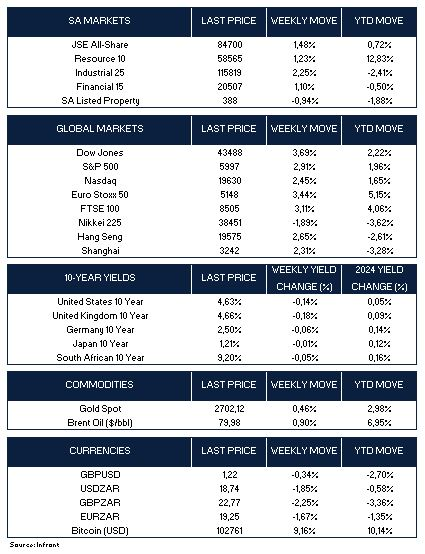
The positive inflation print as well as strong earnings reports from major banks buoyed investor sentiment this week with both the Dow Jones Industrial Average and the S&P 500 climbing 3.7% and 2.9%, respectively, marking their strongest weekly gains since the U.S. presidential election in November. The Nasdaq also posted a solid 2.5% gain.

Negotiators reached a deal on Wednesday for a ceasefire in the Gaza war between Israel and Hamas. Israel’s security cabinet approved the deal on Friday. Under the terms of the first phase of a three-phase agreement, Hamas is to release 33 hostages and Israel is to free Palestinian prisoners while the two sides attempt to negotiate a lasting truce in six weeks.

In Asia, Japanese equities faced headwinds as the Nikkei 225 Index fell 1.9% amid hawkish signals from Bank of Japan officials, heightening expectations of a potential rate hike at the upcoming policy meeting. Conversely, Chinese markets rallied with the Shanghai Composite Index gaining 2.31%, while the benchmark Hang Seng Index was up 2.73%, according to FactSet. The gains were supported by stronger-than-expected economic data. China’s GDP grew 5.4% in Q4, lifting full-year 2024 growth to 5.0% in line with official targets. Retail sales rose 3.7% year-over-year in December, while industrial output expanded 6.2%. However, consumer inflation remained subdued, and the urban unemployment rate ticked up slightly to 5.1%.

Crude oil prices rose amid new U.S. sanctions on Russian oil companies, reducing supply to China and India and pushing those countries to buy more on the open market. Brent crude ended the week up 0.9% at $79.98 per barrel. Gold prices saw marginal gains, closing at $2,702 per ounce, as lower U.S. Treasury yields increased demand for safe-haven assets.

Market Moves of the Week:
In South Africa, the number of consumers applying for loans and those falling into arrears hit a record high in the third quarter, according to data released by the National Credit Regulator on Tuesday. The report revealed 18.1 million credit applications during the quarter, marking a 3% increase from the second quarter and a nearly 50% surge since the end of 2021, when the economy began recovering from the Covid-19 pandemic. Notably, mortgage arrears climbed to 6.9% of outstanding loans, and overdue payments (one to three months late) remained elevated, reflecting financial strain on consumers.

The JSE All Share Index advanced 1.48% for the week, driven by significant gains in industrial luxury goods retailer Cie Financiere Richemont S.A. Shares of the company soared 14.5% after reporting a 10.0% increase in third-quarter 2025 sales, supported by double-digit growth across the Americas, EMEA, and Japan.

On the currency front, the rand strengthened in cautious trading on Friday, closing the week at 18.74 against the U.S. dollar, representing a weekly gain of 1.85% . Market sentiment was influenced by investor attention shifting towards the U.S. President-elect Donald Trump’s upcoming inauguration on Monday.

Chart of the Week:
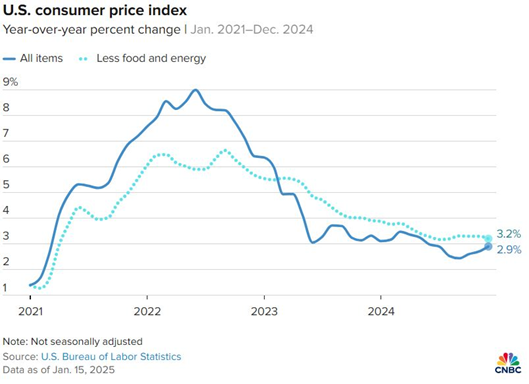
The consumer price index increased a seasonally adjusted 0.4% on the month, putting the 12-month inflation rate at 2.9%, the Bureau of Labor Statistics reported Wednesday. However, excluding food and energy, the core CPI annual rate was 3.2%, a notch down from the month before and slightly better than the 3.3% forecast.

As always, we appreciate your support and value your trust in LNKD Investment Manager. 

Weekly Insights: Trump Sparks Global Market Volatility

Markets started the week on a high note following reports of a softer stance on tariffs from the incoming U.S. administration. However, optimism waned as President-elect Donald Trump dismissed these claims, reviving concerns over trade policy. This triggered significant market volatility, with the U.S. dollar falling briefly before recovering.

U.S. economic data showed a mixed outlook. The ISM Services PMI for December showed a stronger than expected expansion of 54.1, although rising input costs raised concerns about continued inflation. The goods and services trade deficit widened to $78.2 billion in November, reflecting continued challenges in trade balances. Additionally, job market data remained resilient, with nonfarm payrolls exceeding expectations by adding 256,000 jobs in December. The unemployment rate was little changed at 4.1% and wages rose 3.9% year-on-year. However, Federal Reserve officials warned that inflation risks remain elevated, suggesting that interest rates could remain higher for longer. Trump’s proposal to extend the debt ceiling offers temporary relief but underscores the U.S.’ escalating debt burden.

Treasury yields rose during the week, driven by strong employment data and inflationary pressures. The 10-year U.S. Treasury yield reached its highest level since late 2023, signalling ongoing concerns about borrowing costs. Mortgage rates also continued to rise, reaching an average of 6.93%, putting further pressure on potential homebuyers.

Environmental concerns dominated headlines as Southern California battled three major wildfires, exacerbated by the most destructive storm in over a decade. The Palisades Fire burned more than 5,000 acres, destroyed high-value property and displaced thousands, making it one of the costliest wildfires on record.

In Europe, the economic picture was equally complex. Inflation in the eurozone ticked up to 2.4% in December, while core inflation remained steady at 2.7%. Despite cautious optimism from the European Central Bank, weak retail sales and declining sentiment weighed on the region. In the UK, bond market volatility surged, with the 10-year gilt yield reaching 4.8% – a level not seen since 2008 – amid concerns over fiscal policy and debt sustainability. Political uncertainty added pressure, as UK leaders scrambled for growth solutions.

China showed contrasting dynamics, with consumer inflation slowing to 0.1%, reflecting deflationary pressures. However, services activity rebounded sharply thanks to recent stimulus measures, and the People’s Bank of China pledged continued monetary support. Meanwhile, Canada faces political uncertainty following Prime Minister Justin Trudeau’s resignation amid declining approval ratings and party unrest.

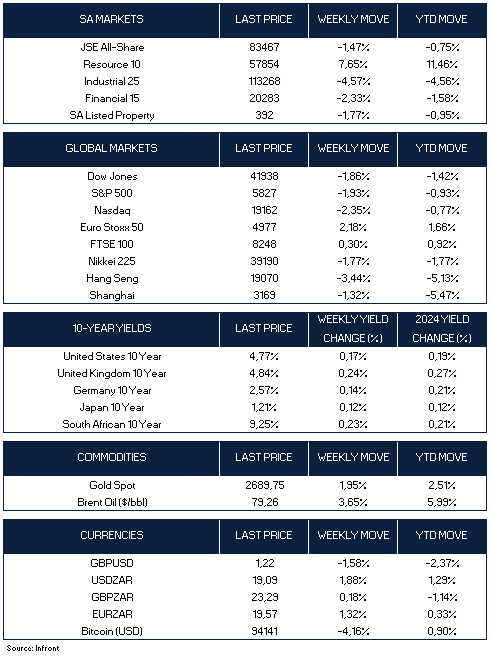
Global markets were mixed this week. In the U.S., the Dow Jones fell by 1.86%, the S&P 500 by 1.93% and the Nasdaq by 2.35%. European markets fared better, with the Euro Stoxx 50 up 2.18% and the FTSE 100 up 0.30%. In Asia, Japan’s Nikkei 225 was down 1.77%, Hong Kong’s Hang Seng fell 3.44% and the Shanghai Composite lost 1.32%. Brent crude oil rose 3.65% to close at $79.26 per barrel, while bond yields rose.

Market Moves of the Week:

South Africa’s manufacturing sector remains under pressure, with the December PMI falling to 46.2 from 48.1 in November, the second consecutive month of contraction. Manufacturing output fell 2.6% year-on-year in November, underlining the sector’s struggles and the urgent need for government action to counter de-industrialisation.

The automotive industry showed mixed results. Vehicle sales rose 2.5% year-on-year in December, led by an 8.2% increase in passenger vehicles. Suzuki and other import brands like Haval, Chery, and Mahindra posted strong growth, while Motus’ Big 3 brands saw a 7% decline, continuing to lose market share to competitors.

On the JSE, the All Share Index lost 1.47% for the week, weighed down by the industrials (-4.57%) and financials (-2.33%) sectors, despite a strong 7.65% gain by the resource sector. The Rand weakened to R19.09 against the US Dollar and the SA 10-year bond yield climbed to 9.25%.

Chart of the Week:

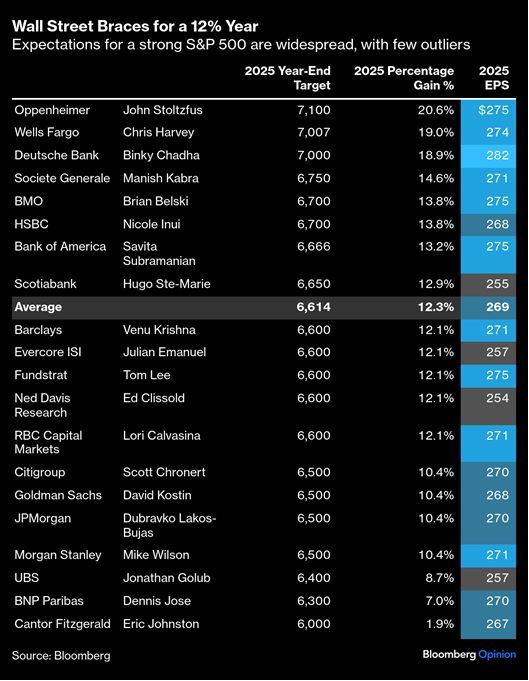
this is down to politics. Trump’s return to the White House will be hugely consequential, but the growing consensus is that he will be great for equities over the next 12 months, even after a frantic post-election rally to price in this good news. Corporate tax cuts and deregulation are great for equities, at least in the short term. Bloomberg asked key Wall Street strategists about their expectations. The results of their survey for 2025 are above.  Source: Bloomberg.

As always, we appreciate your support and value your trust in LNKD Investment Managers. 

Weekly Insights: Stocks close out another strong year

Major stock indexes showed mixed performance during the holiday-shortened week, though a strong rally on Friday helped mitigate earlier losses. For 2024, the S&P 500 (-0.48% w/w) posted its second consecutive annual gain of over 20%, marking the best two-year performance in 25 years. The Nasdaq Composite (-0.51% w/w) also ended the year with over a 20% increase, achieving this milestone for the sixth time in the past eight years.

U.S. manufacturing showed signs of recovery in December with production bouncing back and new orders continuing to rise. However, the overall outlook remains unclear, with concerns about the potential impact of higher tariffs on imported raw materials, which could drive up costs.

Despite the increase in the Institute for Supply Management’s (ISM) Purchasing Managers Index (PMI) to a nine-month high, the mood in the survey was mixed. Several respondents highlighted challenges, using terms like “volume decreases” and “significant slowdown.” Notably, none of the six largest manufacturing sectors showed growth during the month.

In Europe, the Euro Stoxx 50 fell 0.56% over the week on light news flow. The UK’s FTSE 100 Index, on the other hand, rose 0.91%. A weaker British pound versus the U.S. dollar helped support the index, which includes many multinational companies that generate revenue overseas.

Japan’s stock markets closed lower in a holiday-shortened week, following signs of profit-taking. On the final trading day of 2024, the Nikkei 225 Index dropped nearly 1%, ending at a record high of 39,895. The benchmark still posted an impressive annual gain of almost 20%, driven by factors such as share buybacks, corporate governance reforms, and a weaker yen, which benefited exporters.

Chinese stocks fell as weaker-than-expected manufacturing data dampened investor sentiment. The Shanghai Composite Index dropped 5.55% w/w, while Hong Kong’s Hang Seng Index slipped 1.73%. China’s factory activity grew for the third consecutive month, though the official manufacturing PMI slowed to 50.1 in December, missing expectations. The non-manufacturing PMI, covering services and construction, rose to 52.2, surpassing forecasts.

Gold prices (+0.65% w/w) hit a three-week high, supported by a softer dollar and safe-haven buying. In other commodities, Brent oil rose by 4.20% over the week.

Market Moves of the Week:

The South African rand has emerged as one of the top five performing emerging market currencies in 2024, for the first time since 2016, according to analysts at Crédit Agricole and Ashmore Group. Despite a sharp drop in December that pushed its 2024 performance to a circa 2% decline against the U.S. dollar, it still ranks fifth among 24 major developing-nation currencies tracked by Bloomberg, following the Malaysian ringgit, Hong Kong dollar, Thai baht, and Peruvian sol.

Fixed-investment projects in South Africa surged to R794 billion in 2024 from R193 billion the previous year, according to Crédit Agricole. The growth reflects progress in infrastructure and energy reforms, including public-private partnerships at the nation’s largest port. Improved reliability from electricity provider Eskom also supported increased economic activity.

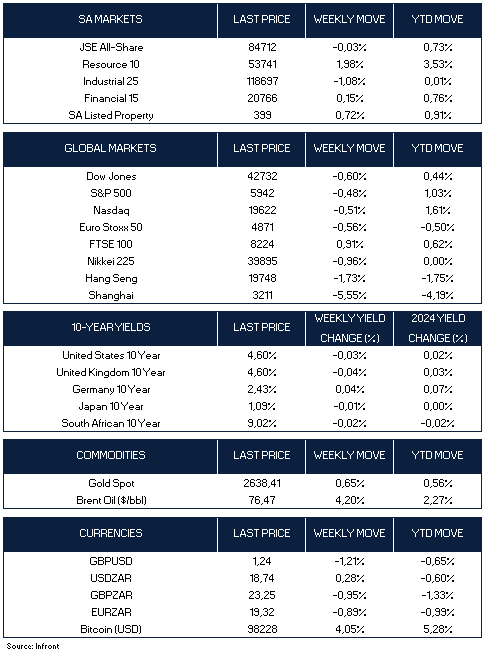
The All-Share Index dipped by 0.03% this week, driven by losses in Industrials (-1.08%). The local currency weakened against the U.S. dollar, moving to R18.74/$ from last week’s R18.68/$ level. SA government bonds remained relatively stable, as yields on the 10-year fell 0.02% over the week.

Chart of the Week:

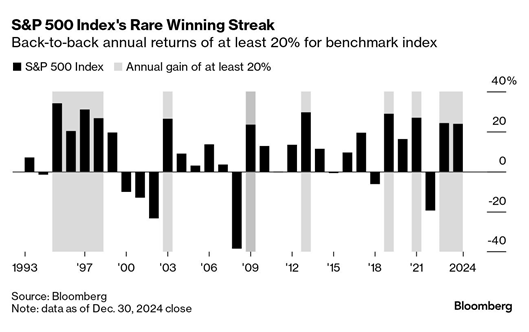
The S&P 500 Index gained 23% in 2024, capping the strongest back-to-back annual run since the dot-com bubble of the late 1990s. Much of the boost to the benchmark index has come from the so-called Magnificent Seven stocks that have rallied about 69% this year, after more than doubling in 2023. Source: Bloomberg .

As always, we appreciate your support and value your trust in LNKD Investment Managers.

Weekly Insights: UK GDP Growth Stagnates

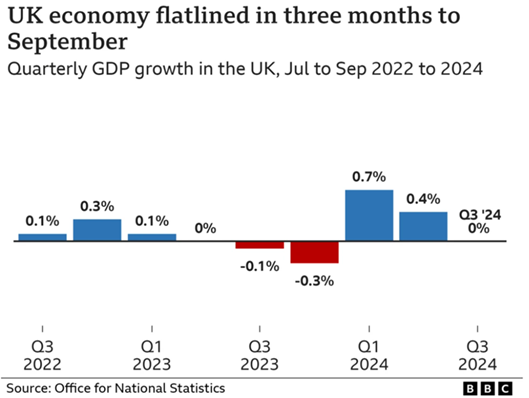
Revised figures from the UK’s Office for National Statistics revealed that the economy showed no growth in the three months to September. This marks a downgrade from the preliminary estimate of 0.1% GDP growth published earlier.

French President Emmanuel Macron has announced a new cabinet under Prime Minister François Bayrou, following the collapse of the previous government earlier this month. Bayrou is the fourth prime minister appointed within a year, as the administration grapples with challenges, including a widening fiscal deficit.

US consumer confidence unexpectedly declined in December, breaking a three-month streak of gains. The Conference Board’s index, which measures consumers’ sentiments on business and labour market conditions, fell by 8.1 points to 104.7. This was below consensus expectations, as concerns over the economic outlook and uncertainty surrounding the Trump administration’s policies weighed on sentiment.

New home sales in November fell slightly short of consensus expectations, with the Census Bureau reporting a seasonally adjusted annual rate of 664,000. Despite this, the November figure marked a significant improvement from the previous month, which had been adversely affected by hurricanes in southeast United States.

Bank of Japan Governor Kazuo Ueda stated on Wednesday that the economy is expected to move closer to sustainably achieving the central bank’s 2% inflation target next year. He indicated that further interest rate hikes may be necessary if economic conditions improve as projected. However, the timing and pace of any adjustments will depend on developments in economic activity, price trends, and financial conditions. Governor Ueda highlighted the importance of maintaining an accommodative policy stance while ensuring inflation does not exceed the 2% target.

China’s industrial profits fell 7.3% year-on-year in November, marking the fourth consecutive month of declines. However, the contraction was less steep than the 10% drop in October and the 27.1% slump in September. Meanwhile, the World Bank revised its growth forecasts for China, now expecting GDP to rise 4.9% in 2024, up from a previous 4.8% estimate. While growth for 2025 is projected to slow to 4.5%, it remains above earlier expectations of 4.1%, supported by policy easing and short-term export strength. Challenges in the property sector and subdued business confidence, however, continue to pose risks.

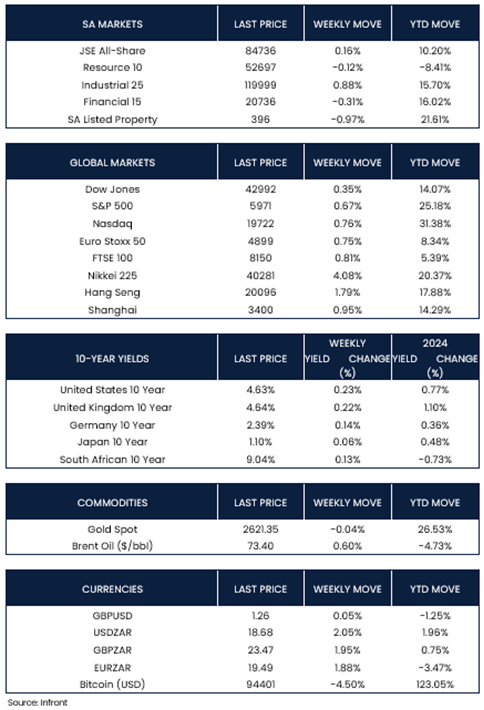
US stock indexes produced moderate gains in the final full week of the year. The Nasdaq Composite, S&P 500 Index, and Dow Jones Industrial Average all posted gains of 0.76%, 0.67%, and 0.35%, respectively. In Europe, equities edged higher during the shortened holiday trading week, with the STOXX 50 Index up 0.75% in local currency terms and the UK’s FTSE 100 Index gaining 0.81%.

Asian markets also saw positive momentum. Chinese stocks rose on optimism about potential government stimulus to bolster economic growth, with the Shanghai Composite Index climbing 0.95% and Hong Kong’s benchmark Hang Seng Index advancing 1.79%. Japanese equities recorded strong gains, as the Nikkei 225 Index surged 4.08% over the week.

Market Moves of the Week:

During the week, the JSE All-Share Index posted a modest gain of +0.16%, primarily driven by a 0.88% increase in the industrial sector. The other sectors finished the week slightly lower, with the resource, financial, and property sectors declining by -0.12%, -0.31%, and -0.97%, respectively. By the close of trading on Friday, the rand had depreciated against the U.S. Dollar, trading at R18.68, marking a weekly decline of -2.05%.

Chart of the Week:

The UK’s quarterly GDP growth held steady at 0% in Q3 2024, signalling a slowdown following modest gains in the first half of the year. 

As always, we appreciate your support and value your trust in LNKD Investment Managers. 

Weekly Insights: Fed Signals Cautious Rate Easing

US Treasuries faced negative returns this week as the 10-year yield climbed to its highest level since May, surpassing 4.50%. On Thursday, the Federal Reserve implemented an expected 0.25% rate cut, lowering the federal funds target range to 4.25%-4.50%. However, the Fed signalled a more cautious stance on future cuts, emphasising it will carefully assess the timing and scale of any additional rate adjustments, a hawkish shift from its prior statement.

Federal Reserve Chair Jerome Powell emphasised the more cautious approach to easing interest rates following a cumulative 100 basis points in rate cuts. Persistent inflation concerns and a robust labour market remain key considerations for policymakers.

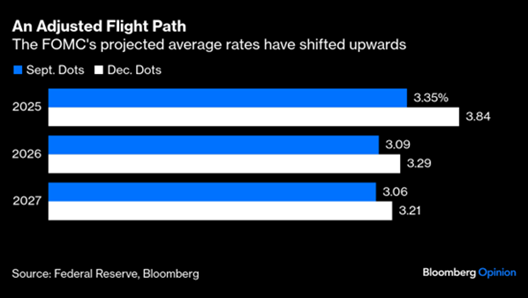
Looking ahead, the Federal Open Market Committee (FOMC) now anticipates two quarter-point rate cuts in 2025, a reduction from four in its September projections. Assuming quarter-point adjustments, officials project two additional cuts in 2026 and one more in 2027.

Over the long term, the FOMC projects the “neutral” federal funds rate to stabilise at 3%, a slight increase from the 2.9% forecasted in September. The committee also raised its outlook for inflation and economic growth, with the median forecast suggesting inflation will not return to the Fed’s 2% target until 2027.

On Thursday, the third quarterly revision of Q3 US GDP data revealed the economy expanded at a 3.1% pace, outpacing the prior estimate of 2.8%. Meanwhile, the Fed’s preferred inflation measure, the personal consumption expenditures (PCE) price index, rose 0.1% in November, slightly below expectations. On a year-over-year basis, PCE increased to 2.4%, up from 2.3% in October, while the core rate held steady at 2.8%. The better-than-feared report supported gains in stocks on Friday, while Treasury yields eased slightly to end the week off their lows.

Early Saturday morning, the U.S. Senate approved a bipartisan federal spending bill, averting a government shutdown. The bill extends federal funding at current levels for three months and allocates additional disaster relief and farm aid. The decisive vote highlighted bipartisan urgency to avoid a costly shutdown just days before Christmas.

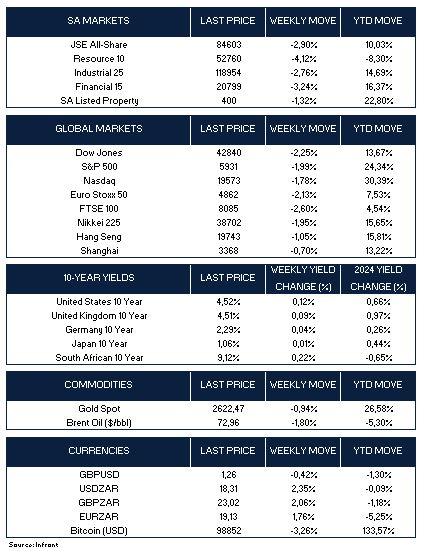
In Europe, broad based indices ended the week lower, impacted by Trump’s tariff threats and ongoing uncertainty about regional interest rates. The Euro Stoxx 50 Index ended the week 2.13% lower. In the UK, the Bank of England (BoE) left its key interest rate unchanged at 4.75% in a 6-to-3 vote. Headline annual inflation accelerated as expected in November to 2.6% from 2.3% in October due to higher gasoline and clothing costs, informing the BoE’s more gradual approach to rate cuts. The UK’s FTSE 100 Index slid 2.60% for the week, following other European indices lower.

In Germany, Chancellor Olaf Scholz lost a vote of confidence in his coalition government, paving the way for an early federal election on February 23.

The Bank of Japan held rates steady at 0.25%, a surprise to some who expected a quarter point rate hike. The BOJ cited high uncertainty surrounding Japan’s economy and inflation. The benchmark Nikkei 225 Index ended the week 2% lower as the market digested a slower pace of monetary policy normalisation.

In South Korea, political turbulence intensified as President Yoon Suk Yeol was impeached, with Prime Minister Han Duck-soo stepping in as acting president.

Chinese equities were also weaker for the week with the Shanghai Composite Index declining 0.7%. Economic data for the week was softer with retail sales expanding by a below-consensus 3% from a year ago, down from October’s 4.8% rise and highlighting Chinese consumers’ unwillingness to spend. Last month, China suffered its biggest outflow on record from its financial markets amid concerns about U.S. trade tariffs and broader economic risks under the incoming Trump administration.

Market Moves of the Week:

President Cyril Ramaphosa has officially signed all sections of the Basic Education Laws Amendment (Bela) Act into law this week with the approval of parties within the government of national unity (GNU) following a three-month consultation period. Ramaphosa did so despite earlier attempts by the Democratic Alliance and trade union Solidarity to prevent the implementation of two contentious clauses of the Act, relating to admissions and language policies.

SA has experienced no load shedding for more than six months and Eskom expects to pencil in a profit of more than R10bn by the end of March 2025. On Thursday, Eskom released its financial results — nine months late. The power utility reported a loss of R55-billion for the year ending 31 March 2024. The financial loss reflects complexities tied to accounting standards and the restructuring of Eskom into three separate entities: generation, transmission, and distribution — starting with its transmission business being sold off in July 2024.

The JSE firmed marginally on Friday after the release of key US inflation data, which provided some relief and a slight improvement in risk sentiment after Wednesday’s hawkish tone surrounding the Fed’s interest rate outlook for the year ahead. However, the all-share index was down 2.9% for the week with all the major sectors posting losses.

The rand, in line with most emerging market currencies experienced significant volatility this week, closing at R18.31 to the US dollar, over 2% weaker on the week.

Chart of the Week:

The Federal Open Market Committee members now expect only two cuts of 25 basis points each for next year, with the average expectation that rates will fall next year only as far as 3.84%. The Fed had previously projected four quarter-point cuts, or a full percentage point reduction, in 2025, at its meeting in September.

As always, we appreciate your support and value your trust in LNKD Investment Managers. 

Weekly Insights: U.S. Inflation Remains Steady

The Nasdaq briefly surpassed the 20,000 mark this week, reflecting a year of robust U.S. economic growth, rising corporate profits, moderating inflation, and central-bank easing. However, as inflation progress slowed in the fourth quarter, questions arise about the Federal Reserve’s future policy direction.

U.S. consumer inflation data for November showed prices rising by 0.3% month-on-month, with core annual inflation holding steady at 3.3% for the third month in a row. While inflation has eased considerably from its peak of 6.6% in 2022, it remains above the Federal Reserve’s 2% target. November’s CPI data is the last major input before the Fed’s meeting on 17-18 December. The market expects the Fed to deliver a 25 basis point cut at its December meeting, but may slow the pace of rate cuts in 2025 amid persistent inflation uncertainties.

Meanwhile, U.S. employment data showed signs of a softening labour market as initial jobless claims reached a two-month high of 242,000, and continuing claims hovered near three-year highs. This trend suggests longer job search durations, aligning with gradual labour market adjustments.

The European Central Bank (ECB) cut its deposit rate by 25 basis points to 3.0% but signalled a cautious stance on future easing, while the Swiss National Bank (SNB) surprised with a larger cut of 50 basis points to 0.5% amid easing inflationary pressures. Meanwhile, UK GDP unexpectedly contracted by 0.1% in October on weak industrial production and manufacturing.

In Japan, speculation grew that the Bank of Japan (BoJ) may delay an interest rate hike at its December 18–19 meeting, weakening the yen to the mid-JPY 153 range against the USD. While expectations for a rate hike were initially split between December and January, consensus now favours a January hike. This delay allows the BoJ to consider additional inflation data, its quarterly economic report, and regional feedback. Meanwhile, Japan’s economy exceeded expectations in Q3, with GDP growing 0.3% quarter-on-quarter.

China announced plans for increased fiscal spending and public borrowing in 2025 to bolster domestic consumption. However, economic data highlighted ongoing deflationary pressures, with consumer prices rising just 0.2% year-on-year in November. Export growth slowed while imports declined further, underscoring the economy’s challenges.

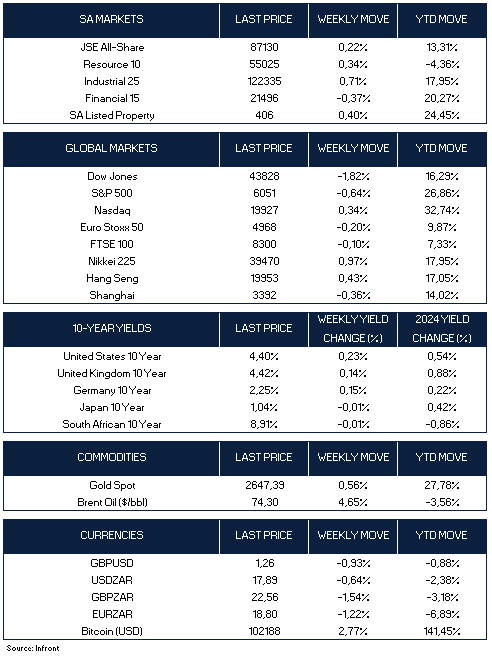
Global markets delivered mixed results this week. In the U.S., the Dow Jones declined 1.82%, the S&P 500 slipped 0.64%, while the Nasdaq gained 0.34%. European markets edged lower, with the Euro Stoxx 50 down 0.20% and the FTSE 100 losing 0.10%. In Asia, Japan’s Nikkei 225 rose 0.97%, and Hong Kong’s Hang Seng advanced 0.43%, while the Shanghai Composite dipped 0.36%. Brent Crude surged 4.65%, closing at $74.30 per barrel, while developed market bond yields rose.

Market Moves of the Week:

South Africa’s SACCI Business Confidence Index rose to 118.1 in November, marking the largest year-on-year improvement since late 2022. Confidence was driven by higher tourist arrivals, stronger precious metal prices, increased vehicle sales, and optimism surrounding the coalition government formed after June’s election.

However, challenges persist in the labour market. Stats SA reported that the formal non-agricultural sector shed 133,000 jobs in the third quarter, reducing employment to 10.62 million from 10.74 million in June. Meanwhile, consumer inflation rose to 2.9% year-on-year in November, slightly below expectations.

The JSE All Share Index gained 0.22% over the week, supported by industrial (+0.70%) and resource (+0.34%) sectors, while the financial sector declined 0.37%. The rand strengthened to R17.89 against the U.S. Dollar, and the SA 10-Year Bond Yield held steady at 8.91%.

Chart of the Week:

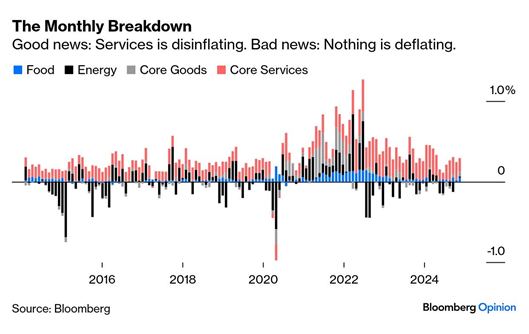
The latest U.S. inflation data for 2024 suggests the battle against rising prices is not yet definitively won. Headline inflation edged slightly higher to 2.7% from 2.6%, remaining within the Federal Reserve’s target range. However, a closer look reveals that persistent price increases in services, particularly core services, continue to pose challenges. Resolving this inflation uncertainty in the coming months could have significant implications for the global economy and may even necessitate adjustments to proposed Trump 2.0 tax and trade policies. Source: Bloomberg.

As always, we appreciate your support and value your trust in LNKD Investment Managers. 

Weekly Insights: French Government Collapses After No-Confidence Vote

French Prime Minister Michel Barnier’s minority government collapsed after Parliament passed a no-confidence motion led by the National Rally and the left-wing New Popular Front, blocking the 2025 deficit-reduction budget. This political turmoil caused the yield spread between German 10-year bunds and French 10-year OATs—a key indicator of eurozone risk—to spike to 90 basis points, its highest level since 2012. The spread later narrowed below 80 basis points after President Emmanuel Macron announced plans to appoint a new prime minister soon and to work with political leaders across the spectrum to form a “government of general interest.”

Elsewhere on the political front, South Korea’s Kospi Index lost only 0.5% on the week after an attempt by President Yoon Suk Yeol to declare martial law quickly fizzled when the country’s parliament voted 190-0 to rescind the declaration. Yoon is likely to face impeachment proceedings and be removed from office, setting the stage for fresh elections.

In the U.S., nonfarm payrolls increased by 227,000 in November, rebounding sharply from October’s hurricane-affected slowdown. The unemployment rate ticked up to 4.2% from 4.1%, while average hourly earnings grew 4% year-over-year. Despite the strong payrolls data, markets focused on a significant drop in household employment, which increased expectations for a December rate cut to around 90%.

As trade tensions between the United States and China escalated, China announced a ban on the export of certain rare earth minerals to the U.S. These minerals are essential for the production of advanced semiconductor chips. This decision came shortly after the U.S. Department of Commerce imposed new restrictions on the sale of high-bandwidth memory chips produced by American and foreign companies to China. The ban includes critical materials such as gallium, germanium, and antimony, which have significant applications in both civilian technology and military sectors.

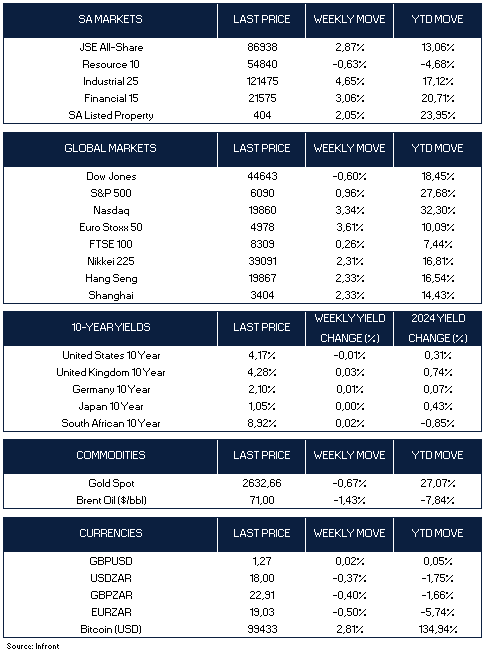
On the market front, major indexes were mostly higher this week. The  S&P 500 (+0.96%), the Nasdaq Composite (+3.34%) and the Dow Jones (-0.60%) all hit fresh highs during the week. Sector performance varied, with consumer discretionary, communication services and information technology stocks rising over 3% for the week. In contrast, energy, utilities, and materials sectors—traditionally more value-focused—declined by more than 3%. Shares in Europe rose 3.61% (Euro Stoxx 50) while the FTSE 100 gained 0.26%.

Chinese stocks rose in response to expectations of new stimulus measures. The Shanghai Composite Index increased by 2.33%, while in Hong Kong, the Hang Seng Index saw a 2.33% rise. In Japan, the Nikkei 225 gained 2.31% over the week. Brent oil prices declined by 1.43%, while gold dropped by 0.67%.

Market Moves of the Week:

South Africa’s Q3 2024 GDP fell by 0.3% q/q, missing Bloomberg’s forecast of 0.4% growth. The decline was mainly due to a 29% drop in agricultural output. Southern Africa has faced its worst drought in decades this year, hurting economic output across the region. GDP Growth for the year so far is just 0.4%, and achieving the 1.1% annual target would require a 2.9% rebound in Q4, which seems unlikely. Bloomberg has revised their 2024 growth forecast to 0.7%, with agriculture and retail spending, influenced by two-pot withdrawals, being key factors to watch.

South Africa’s manufacturing activity declined in November, with Absa’s PMI dropping to 48.1 from 52.6 in October, signalling a contraction. Despite lower local inflation and interest rates, demand remains volatile. Global demand provided some support, but a weaker rand and domestic uncertainties pose ongoing risks. Absa also noted global political and trade concerns following Donald Trump’s U.S. presidential election victory.

The All-Share Index rose by 2.87% this week, driven largely by gains in Industrials (+4.65%) and Financials (+3.06%). The local currency marginally strengthened against the U.S. dollar, strengthening to R18.00/$ from last week’s R18.07/$ level. SA government bonds remained relatively stable, as yields on the 10-year rose 0.02% over the week.

Chart of the Week:

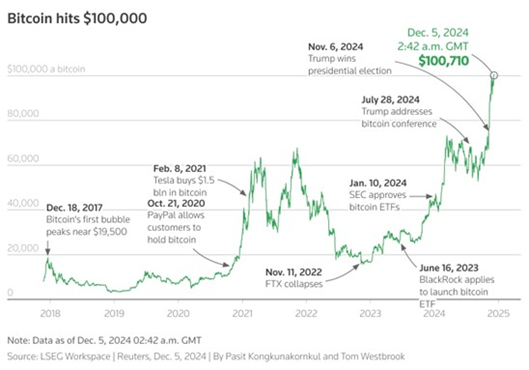
Bitcoin catapulted above $100,000 for the first time on Thursday, a milestone hailed even by sceptics as a coming-of-age for digital assets as investors bet on a friendly U.S. administration to cement the place of cryptocurrencies in financial markets. Source: Reuters

As always, we appreciate your support and value your trust in LNKD Investment Managers.

Weekly Insights: US Economy Remains Resilient

The Federal Open Market Committee’s November 7 minutes showed broad support for moving toward a neutral monetary policy stance, though uncertainty remains about the neutral interest rate level. Policymakers noted core inflation remains elevated but are confident it is moving toward the 2% target, though some warned the process could take longer. The labour market showed stability, and downside risks to growth and employment have eased. Markets see a 67% chance of a 0.25% rate cut at the December 18 meeting.

The Fed’s preferred inflation measure, the PCE price index, rose 2.3% year-over-year in October, up from 2.1% in September, while core PCE edged higher to 2.8%. Both figures met expectations. Personal income surged 0.6% in October, doubling forecasts, while spending increased by 0.4%. Separately, the second Q3 GDP estimate was unchanged at 2.8%, though personal consumption was revised slightly downward to 3.5% annualized growth from 3.7%.

Trade tensions dominated investor sentiment as President-elect Trump issued tariff threats targeting Mexico, Canada, and China, prompting declines in the Mexican peso and Canadian dollar. However, markets found some reassurance in Trump’s nomination of Scott Bessent, a seasoned hedge fund manager, as Treasury Secretary, a move seen as signalling a pragmatic approach to fiscal and financial policy.

Eurozone annual inflation rose to 2.3% in November, up from 2.0% in October, based on a preliminary estimate. Services inflation eased slightly to 3.9% from 4.0%, while core inflation, which excludes food, energy, alcohol, and tobacco, remained stable at 2.7%.

The People’s Bank of China injected RMB 900 billion into the banking system via its medium-term lending facility, maintaining the lending rate at 2%. With RMB 1.45 trillion in loans set to mature next month, the operation resulted in a net withdrawal of RMB 550 billion for November. Increased local government bond issuance is expected to add liquidity pressures as Beijing intensifies efforts to stimulate the economy.

On the economic front, industrial firm profits fell 10% year-on-year in October, improving from the 27.1% drop in September. This slower decline was partly driven by government support and stronger profit growth in the equipment and high-tech manufacturing sectors.

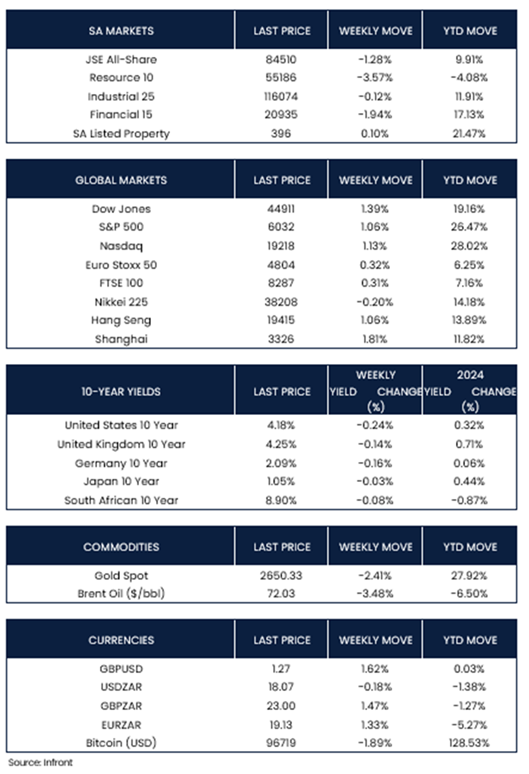
US stocks posted gains for the week, largely unaffected by US President-elect Donald Trump’s tariff threats. Trading was closed on Thursday for Thanksgiving Day and ended early on Friday. The Dow Jones rose 1.39%, while the Nasdaq Composite and S&P 500 gained 1.13% and 1.05%, respectively.

In Europe, the STOXX Europe 50 Index ended 0.32% higher, while the UK’s FTSE 100 rose 0.31%, despite uncertainty around US trade tariffs and interest rates.

 In Asia, Chinese equities rose on hopes for government support, with the Shanghai Composite up 1.81% and Hong Kong’s Hang Seng Index gaining 1.05%. In contrast, Japan’s Nikkei 225 slipped 0.2% in the week.

Market Moves of the Week:

Producer price inflation (PPI) in South Africa fell by 0.7% month-on-month in October, resulting in a year-on-year decline of -0.7%. This was significantly lower than market expectations, following a 1.0% increase in September. The sharp drop in producer inflation can largely be attributed to substantial fuel price cuts, with petrol and diesel prices falling by 22.2% and 26.9% year-on-year, respectively, in October.

The International Monetary Fund (IMF) has once again urged South Africa to pursue its economic reforms with greater urgency, stressing the need to prioritise reforms in the electricity and logistics sectors, which are key barriers to higher growth Following its Article IV consultation from 11 to 25 November, the IMF forecasted growth of 1.1% for 2024 and 1.5% for 2025. The 2024 forecast aligns with the National Treasury’s projection, while the 2025 forecast is slightly below the 1.7% outlined in the Medium-Term Budget Policy Statement.

In company news, grocery retailer Pick n Pay raised R8.5 billion by selling a 34.4% stake in its discount chain Boxer at R54 per share through an initial public offering. This marks the second and final phase of CEO Sean Summers’ recapitalisation plan to reduce the group’s debt and address challenges in its underperforming core Pick n Pay supermarkets business.

Unlike its global counterparts, the JSE All-Share Index declined by 1.28%, primarily driven by a 3.57% drop in the resources sector. The financial sector also underperformed, falling 1.94%, while the industrial sector saw a modest decline of 0.12%. The property sector was the only sector to post a gain, rising by 0.10%. By Friday’s close, the rand strengthened by 0.18% against the U.S. dollar, trading at R18.07.

Chart of the Week:

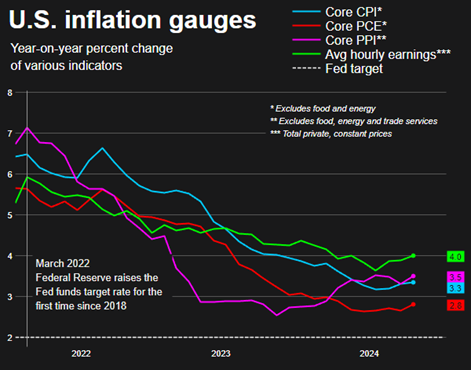
Inflation continues to cool, but at a slower pace. The personal consumption expenditures (PCE) price index rose 0.2% in October, matching September’s gain. Year-on-year, the PCE increased 2.3%, up from 2.1% in September, while the core PCE edged up 2.8%. Source: LSEG Datastream.

As always, we appreciate your support and value your trust in LNKD Investment Managers. 

Weekly Insights: Geopolitical Risks Mount

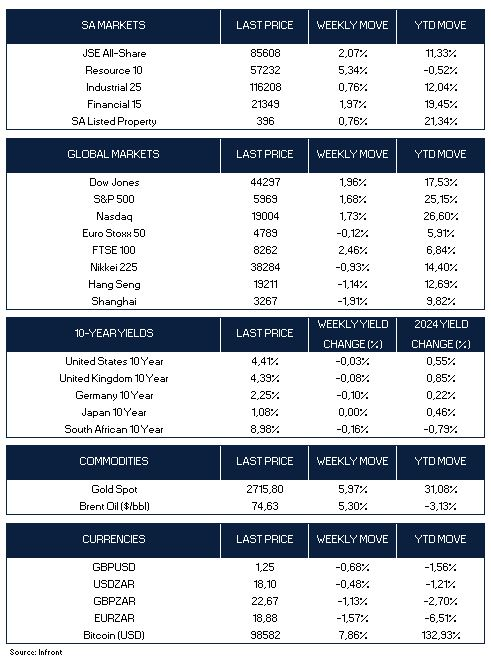
The Dow Jones Industrial Average closed at a new record on Friday, ending the week 1.96% higher, while the S&P 500 and the technology-heavy Nasdaq each added about 1.7%. That marks a turn from last week, when Wall Street’s postelection rally stalled.

The market gains were despite continuing uncertainty around the incoming Trump administration’s policies and escalating geopolitical tensions with threats of nuclear war rising over Ukraine. The escalation followed decisions by outgoing US President Biden and, reportedly, UK PM Starmer to allow Ukraine to fire American and British long-range missiles to strike targets within Russia.

In response, Russia lowered the threshold for its use of nuclear weapons. The new doctrine allows for a nuclear response to what it deems aggression by non-nuclear states that are supported by other nuclear powers. On Wednesday, Reuters reported that Russian President Vladimir Putin is open to discussing a Ukraine ceasefire deal with President-elect Trump but ruled out making any major territorial concessions and insisted that Kyiv abandon ambitions to join NATO. By Thursday, Russia ratcheted up pressure by using a long-range ballistic missile capable of carrying a nuclear warhead for the first time in its conflict with Ukraine.

During the week President-elect Donald Trump announced the nomination of Howard Lutnick, CEO of Cantor Fitzgerald and co-head of the president elect’s’ transition team, to lead the US Department of Commerce. Lutnick had been in the running for Treasury secretary before being appointed to head the Commerce Department, where he will play a pivotal role in tariff policy. On Friday Trump followed with his intention to nominate hedge fund executive Scott Bessent as his Treasury secretary, Bessent, 62, will be both the U.S. fiscal watchdog as well as a key official to help Trump enact his ambitious economic agenda.

The euro slumped to a two-year low against the dollar on Friday morning after preliminary purchasing managers’ indices for November contracted more than expected. The data fuelled concerns that the European economy is stagnating and increased expectations that the European Central Bank will cut rates by a half-point when it meets on 12 December. The pan-European STOXX Europe 50 Index ended 0.12% lower for the week.

In the UK, inflation accelerated more than expected in October mainly on the back of higher household energy bills. The year-over-year change in consumer prices increased from 1.7% in September to 2.3%—the highest since April and above economists’ forecasts of 2.2%. The UK’s FTSE 100 Index advanced 2.46% for the week.

In Asia, Japan’s benchmark Nikkei 225 index lost ground over the week, falling 0.93% with heightened geopolitical tensions denting risk appetite. With the timing of the Bank of Japan’s (BoJ) next interest rate hike (likely in December or January) still finely balanced, the yield on the 10-year Japanese government bond (JGB) approached 1.1%, nearing a 13-year high.

Chinese equities declined for the week as concerns about the incoming Trump administration curbed risk appetites. The Shanghai Composite Index fell 1.91%, while in Hong Kong, the benchmark Hang Seng Index lost 1.01%.

Market Moves of the Week:

South African consumer inflation slowed to 2.8% year on year in October from 3.8% in September, Stats SA said on Wednesday, with fuel and transport prices leading the way. This was the lowest read since 2.2% in June of 2020, when demand pressures in the economy were impacted by lockdowns to contain the Covid-19 pandemic.

Following the more bullish inflation print, the South African Reserve Bank (SARB) unanimously decided to lower its policy benchmark by 25 basis points Thursday to 7.75%. This is the SARB’s second consecutive 25bp cut, which will see SA’s prime interest rate of commercial banks drop to 11.25%.

The SARB only marginally tweaked its growth and inflation forecasts. It marginally increased its 2025 growth forecast and sees the growth risks as biased upwards in the medium term. Its inflation forecasts were marginally lowered in the near term (till mid- 2025) and marginally increased thereafter.

SARB Governor Lesetja Kganyago, in his final monetary policy press conference of the year, declined to comment directly on the US election but said that additional trade protectionism could have implications for interest rates.

The rand has lost almost 4% against the dollar since the Nov. 5 U.S. election, as emerging market currencies have come under pressure, as investors bet Trump’s pledge to raise tariffs and cut taxes will prompt the Federal Reserve to lower rates less than it had forecast, boosting the US currency.

On the Johannesburg Stock Exchange, the JSE All Share Index gained just over 2% for the week, with resource counters rebounding strongly (+5.34%). The Gold price was also up strongly on the week, gaining nearly 6%, as investors sought safe-haven assets as Russia-Ukraine tensions escalated.

By Friday’s close, the rand was trading at R18.10 against the US dollar.

Chart of the Week:

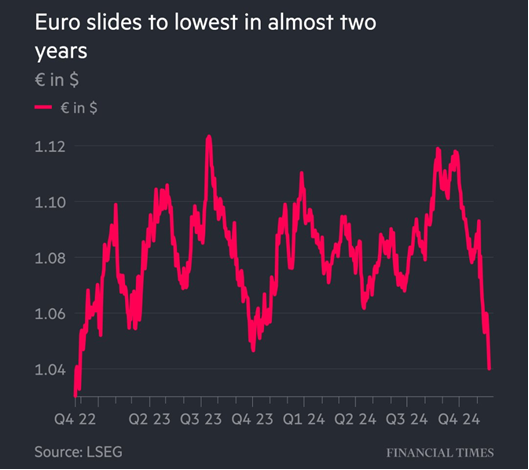
The euro fell to its lowest level since 2022 against the dollar after the purchasing managers gauge of service providers and manufacturers weakened. Political crises in Germany and France, as well as events in Ukraine this week and the threat of tariffs from a Donald Trump presidency in the US, all weighed on the currency.

As always, we appreciate your support and value your trust in LNKD Investment Managers. 

Weekly Insights: Markets Decline as Fed Signals Caution on Rate Cuts

U.S. equity markets partially reversed the prior week’s gains as uncertainty surrounding the incoming administration’s policies weighed on sentiment. The “Trump Trade” drove notable sector disparities, with financials and energy stocks gaining on optimism about deregulation and potential merger approvals. The S&P 500 briefly surpassed 6,000 points on Monday, a historic milestone, before retreating later in the week.

The U.S. Consumer Price Index (CPI) increased by 0.2% in October for the fourth consecutive month, with an annual rise of 2.6%, marking the first yearly increase since March. Core inflation, which excludes food and energy, rose 0.3% for the third month in a row, maintaining an annual rate of 3.3%. U.S. CPI data aligned closely with expectations; the data strengthens the case for a Federal Reserve rate cut in mid-December. Federal Reserve Chair Jerome Powell, speaking on Thursday, tempered market sentiment by stating that “the economy is not sending any signals that we need to be in a hurry to lower rates.” His remarks suggest a cautious approach to monetary easing, even as inflation trends appear contained.

In political news, the Republican Party is expected to retain its slim majority in the U.S. House, positioning Donald Trump’s administration to control both elected branches of government. Trump has named Elon Musk and Vivek Ramaswamy to lead a newly formed Department of Government Efficiency, with a focus on reducing bureaucracy and cutting regulatory burdens.

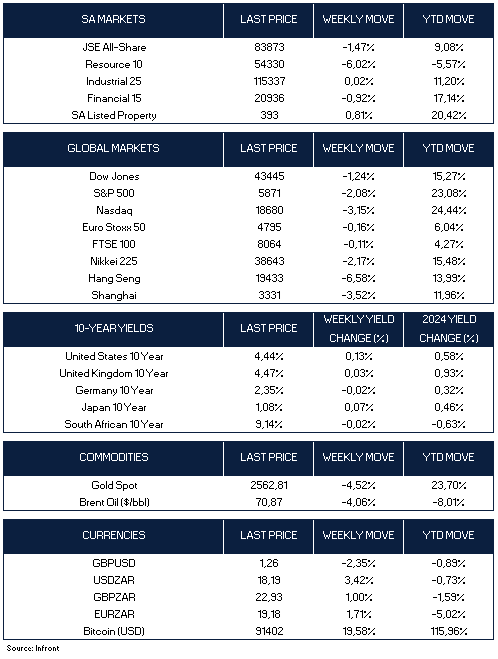
All the major US equity indexes ended the week lower, the S&P 500 -2.08%, Dow Jones -1.24%, and the tech heavy NASDAQ composite the worse performer for the week, closing down -3.15%. 

OPEC has lowered its oil demand growth forecasts for both 2023 and 2024 for a fourth straight month, reflecting a delayed recognition of slowing demand in China, the world’s largest oil consumer. The organisation now anticipates global oil consumption will grow by 1.8 million barrels per day, or nearly 2%, in 2024—107,000 barrels per day below its previous forecast.

Bank of England (BOE) Chief Economist Huw Pill indicated that potential interest rate cuts will depend on the UK economy avoiding any significant disruptions, especially given global uncertainties following Trump’s return to the U.S. presidency and renewed trade war concerns. Pill suggested that the BOE could ease monetary policy further if inflation continues to cool, but cautioned about “potential sources of big disturbances” that could impact economic stability.

The UK economy slowed more than expected in Q3, with GDP growth at 0.1%, down from 0.5% in the prior quarter and below the 0.2% forecast. A 0.1% contraction in September, driven by weaker manufacturing output, was a key factor. While the construction sector grew 0.8% and services expanded 0.1%, these gains were insufficient to offset broader economic weakness.

October saw a rise in UK grocery price inflation, with supermarket prices increasing by 2.3% year-over-year, up from 2% in September, amid high consumer activity. Additionally, wage growth in the UK remains strong, per the Office for National Statistics, which could fuel hawkish arguments for a cautious BOE approach to rate cuts given sustained price and wage pressures. The FTSE 100 index marginally declined this week, closing -0.11%.

In Europe, market sentiment was dampened by concerns over the incoming Trump administration’s trade policies and political instability in Germany. Adding to the uncertainty were cautious remarks from Federal Reserve Chair Jerome Powell regarding U.S. interest rates. Economic data bolstered optimism for a potential soft landing. Eurostat’s second GDP estimate confirmed a robust 0.4% expansion in Q3. The European Commission forecasts 0.8% growth for 2024, despite expectations that Germany’s economy will shrink by 0.1%. Meanwhile, the labour market showed resilience, with employment rising 0.2% in Q3 following a 0.1% increase in the previous quarter. The Eurostoxx 50 index close lower this week, down -0.16%.

Japanese Prime Minister Shigeru Ishiba retained his position after winning a parliamentary runoff vote, leading a minority government. Ishiba expressed eagerness to meet with U.S. President-elect Trump soon. In economic developments, Japan announced plans to invest $65 billion in domestic chip plants and unveiled a substantial $87 billion stimulus package to boost economic growth. Japan’s GDP growth slowed in Q3 2024, rising 0.2% quarter-on-quarter, compared to 0.5% in Q2. On an annualised basis, the economy expanded 0.9%, down from 2.2%. The growth was primarily fuelled by increased private consumption, which benefited from a one-off income tax cut and higher summer bonuses. This marked the second consecutive quarter of economic expansion. Japanese stocks experienced a decline over the week, with the Nikkei 225 Index down -2.17%.

China’s retail sales are projected to reach a record 4.5 trillion yuan ($623 billion), helped by a surge in domestic travel during a weeklong holiday. However, spending growth remains modest compared to pre-pandemic levels, as consumer caution and entrenched deflation prompt people to delay purchases in anticipation of lower prices. To further boost the struggling housing market, the Chinese government is reportedly preparing to cut deed taxes on home purchases in mega cities like Shanghai and Beijing, potentially reducing the rate from 3% to as low as 1%. Local governments would have some discretion in applying these tax cuts.

China’s consumer price index (CPI) increased by a modest 0.3% year-on-year in October, down from 0.4% in September, as declining food and energy prices weighed on inflation. Meanwhile, the producer price index (PPI) fell by 2.9%, exceeding the expected 2.5% drop and deepening from September’s 2.8% decline. This marks a continuation of deflation in factory gate prices that has persisted since late 2022.

Chinese equity markets ended the week lower, with the Shanghai Composite index closing -3.52% and Hong Kong’s benchmark Hang Seng Index taking a major hit closing the week down -6.58%.

Market Moves of the Week:

South Africa’s Minister of Water and Sanitation, Pemmy Majodina, announced a series of measures to secure Johannesburg’s water supply. The city will focus on improved revenue collection, incentivising efficient water use, upgrading pressure management, and replacing outdated infrastructure, including pipes and water meters, to locate and address water losses more effectively.
 
Separately, South African authorities have temporarily halted processing at the Lebombo border post amid escalating protests in Mozambique. The Border Management Authority and Trans African Concessions, operator of the N4 highway, confirmed that no vehicles can currently cross into Mozambique at this checkpoint.
 
The JSE ALSI also ended the week lower, down -1.47%, driven by weak returns from the Resource sector, which was down -6.02% for the week. Financials also contributed to the broader market decline, closing down -0.92%. Industrials and Listed Property both showed some resilience this week, closing up 0.02% and 0.81% respectively. The Rand closed weaker against the Dollar, ending the week at R18.19/$, depreciating 3.42%.

Chart of the Week:

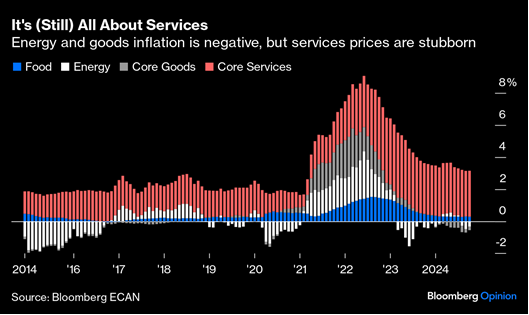
 US inflation data indicates that overall inflation is under control, with energy and goods prices showing slight declines and food prices rising modestly. However, services inflation remains a concern due to its persistence and its strong link to wage growth. This “sticky” services inflation continues to anchor overall inflation at higher levels, making it a key metric to monitor in the coming months. Source: Bloomberg. 

As always, we appreciate your support and value your trust in LNKD Investment Managers.