Weekly Insights: A Decisive Win for Trump

The U.S. election concluded with a clear victory for Donald Trump, securing Republican control of the presidency and Senate, and potentially the House as well. This “red sweep” fuelled market optimism around a pro-business agenda focused on corporate tax cuts and regulatory easing, sparking a rally that lifted the S&P 500 to its best-ever post-election gain of 2.5%. Meanwhile, the Federal Reserve announced a 0.25% rate cut this week, its first since September. Fed Chair Jerome Powell emphasised that the Fed would remain independent in its policy approach and wouldn’t respond pre-emptively to possible shifts under the new administration.

Globally, central banks moved to address evolving economic conditions. The Bank of England (BoE) reduced its interest rate by 0.25% to 4.75% for the second time this year, citing slowing inflation, with Governor Andrew Bailey signalling the possibility of further cuts. Sweden’s Riksbank also cut rates by 0.5% in response to weak economic conditions, while Norway held steady. In the eurozone, business activity showed signs of stabilising, but business confidence hit its lowest level of 2024.

In Asia, Japan’s yen strengthened following the U.S. election, with officials signalling vigilance toward excessive currency moves. China’s markets surged on new stimulus from Beijing, including a substantial RMB 10 trillion program to address local government debt and a mid-year debt ceiling increase. China also posted a robust 12.7% rise in October exports, though analysts warned that trade tensions with the U.S. could pose challenges as Trump prepares to take office in 2025.

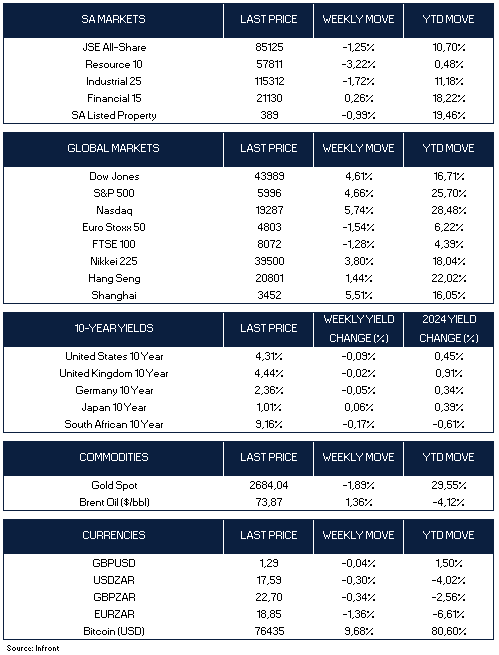
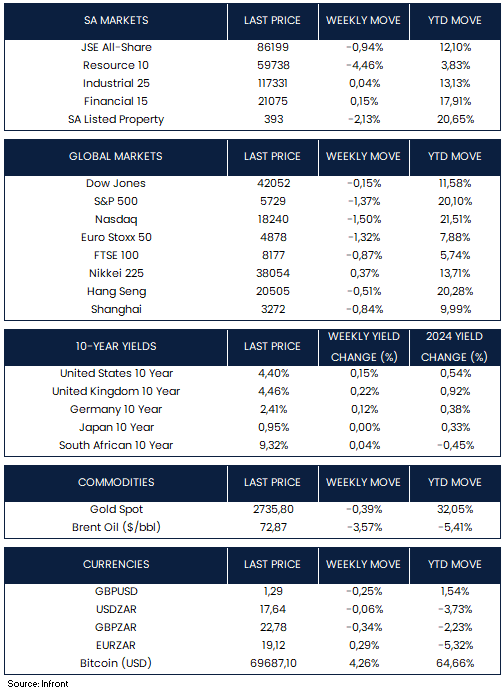
Global stock markets showed varied performance. U.S. indices recorded significant gains following Trump’s Re-election, with the Dow Jones rising by 4.61%, the S&P 500 up 4.66%, and the Nasdaq climbing 5.74%. In contrast, European markets saw downward pressure, as the Euro Stoxx 50 slipped 1.54% and the FTSE 100 declined 1.28%. Asian markets also performed well, with Japan’s Nikkei 225 advancing 3.80%, the Hang Seng gaining 1.44%, and the Shanghai Composite Index posting an impressive 5.51% increase. Meanwhile, gold prices fell 1.89% to $2,684 per ounce but remain up 29.55% for the year.

Market Moves of the Week:
In South Africa, Eskom issued a notice of intention to interrupt power supply to the City of Johannesburg and City Power over unpaid debts totalling R4.9 billion, excluding an additional R1.4 billion due at the end of November. Eskom stated that it can no longer continue absorbing the financial strain caused by the non-payment, as it forces the utility to borrow at higher premiums to cover operational costs. A final decision on power supply interruptions will be made on December 12 following consultations. Meanwhile, the closure of the Lebombo border post between South Africa and Mozambique has led to an estimated R5 billion in losses, disrupting cargo movement through the Maputo Port.

In the financial markets, South Africa saw a pullback with the JSE All Share Index declining 1.25%. The industrial (-1.72%) and resource (-3.22%) sectors saw the largest losses, while the financial sector posted a slight gain of 0.26%. The rand remained steady, closing at R17.59 to the U.S. dollar by the end of the week.

Chart of the Week:
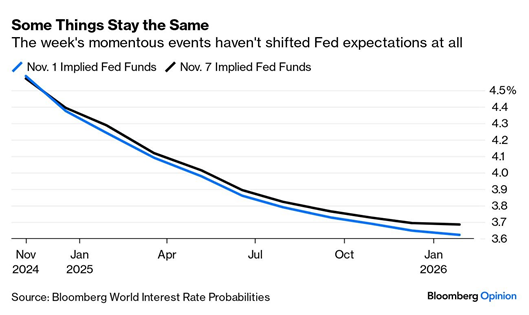
This chart illustrates the expected path of U.S. interest rates before and after the latest FOMC meeting and U.S. election. Although the Federal Reserve cut the fed funds rate by 0.25% as anticipated, their outlook for future rate changes saw little adjustment. In his press conference, Chair Jerome Powell’s remarks left room for flexibility in future rate cuts, pending upcoming inflation reports. Meanwhile, markets responded with a continued post-election rally in equities and a reversal of recent increases in bond yields, reflecting stable investor sentiment following limited surprises from the Fed. Source: Bloomberg

As always, we appreciate your support and value your trust in LNKD Investment Managers.

Weekly Insights: Earnings and data-heavy week pushes stocks lower

Major U.S. indexes closed mostly lower after a particularly eventful week for economic and earnings announcements. Growth stocks generally underperformed value shares, partly due to cautious earnings reports from Meta Platforms and Microsoft. Small-cap stocks also fared notably better than large-caps. The S&P 500 fell 1.37% w/w, while the Dow Jones Industrial Average dipped -0.15%. The tech-heavy Nasdaq Composite dropped by -1.50% over the week. The yield on the U.S. 10-year Treasury note rose by 0.11% from a week ago to 4.30% despite soft U.S. payrolls.

U.S. nonfarm payrolls increased by only 12,000 in October, well below expectations. The numbers were likely skewed by hurricane impacts and a Boeing machinist strike, which cut 44,000 jobs. Despite the noise in these figures, other indicators, like weekly jobless claims, don’t suggest broad weakness. Markets have priced in a 0.25% rate cut by the Federal Reserve next week, with another likely in December.

The Institute for Supply Management (ISM) reported that its manufacturing index fell for the seventh consecutive month in the U.S., reaching 46.5, a 15-month low. The ISM chair noted that demand remains weak as companies hesitate on capital and inventory investments, citing concerns over inflation and uncertainties in federal monetary policy amid proposed fiscal policies from both major parties.

The PCE price index, a key inflation measure for the Fed, rose 0.1% in August, bringing the annual inflation rate to 2.2%. This was below Wall Street expectations and marked the lowest level since early 2021.

The eurozone economy grew 0.4% in the third quarter, twice the pace of the previous quarter and above the 0.2% consensus forecast. Germany unexpectedly avoided a recession with growth of 0.2%. Annual headline inflation rose to 2% in October, up from 1.7% in September, slightly surpassing expectations. The Euro Stoxx 50 fell 1.32% over the week.

The yield on two-year UK gilts increased by over 0.25% following Chancellor Rachel Reeves’s announcement of the Labour Party’s inaugural budget. The plan will increase taxes by £40 billion annually by 2030 and spending by £74 billion. A revised debt definition will enable the government to borrow an additional £100 billion, primarily for infrastructure projects. Additionally, the employer’s National Insurance tax will increase, raising concerns among economists about potential negative impacts on employment and wage growth. Moody’s and S&P expressed scepticism regarding the new debt definition. The FTSE 100 dipped by -0.87% w/w.

The Standing Committee of China’s National People’s Congress will meet next week to discuss boosting domestic demand and meeting GDP growth targets, as stated by Vice Finance Minister Liao Min. Analysts expect the upcoming stimulus to stabilize growth, with over ¥10 trillion ($1.4 trillion) in new bonds projected. Notably, the manufacturing PMI rose to 50.1 in October, marking its first expansion since April, and residential property sales also increased year-on-year for the first time in 2024.

Chinese stocks retreated despite data showing a pickup in economic activity. The Shanghai Composite Index fell -0.84% w/w. Elsewhere in Asia, Japan’s stock markets rose over the week, with the Nikkei 225 Index gaining 0.37%, as the Bank of Japan (BoJ) held rates steady amid political uncertainty.

Market Moves of the Week:

In South Africa, The Midterm Budget Policy Statement (MTBPS) was delivered on Wednesday, revealing that South Africa’s finances are facing challenges. Key points included:

  • Growth Forecasts: Treasury has slightly lowered South Africa’s GDP growth forecast to 1.1% for 2024 due to weak early-year activity, with small adjustments for the following years. Growth is expected to average around 1.8% from 2025 to 2028, helped by global stability and domestic reforms.
  • Revenue Shortfall: This year’s tax revenue is expected to be R22 billion lower than projected, mostly because of a weak job market and reduced demand for imports.
  • Higher Spending: Government spending will increase by 6% this year, above earlier projections, due to more spending on infrastructure, wages, and debt. Future spending will be moderated but still high due to social welfare needs.
  • Budget Deficit and Debt: The budget deficit will widen to 5% of GDP. Debt will peak at 75.5% of GDP and decline slowly over the next decade. Finance Minister Enoch Godongwana emphasized the need for fiscal discipline to manage debt and ensure long-term fiscal stability.
  • Policy Moves: A fiscal rule to manage spending changes is being developed, with recommendations expected in early 2025. A review of the inflation-targeting framework is also underway.

In other news, The Absa Purchasing Managers’ Index (PMI) dipped to 52.6 points in October from 53.3 in September, marking the second month above 50 (>50 indicates an expansion). The business activity index, which provides a more focused view of how much activity is taking place in the manufacturing or services sector, rose significantly by 4.1 points to 55.6, indicating improved production and a recovery in the manufacturing sector.

The All-Share Index dipped by 0.94% this week, dragged down by Resources (-4.46%). The local currency marginally strengthened against the U.S. dollar, dropping to R17.64/$ from last week’s R17.65/$ level. SA government bonds remained relatively stable, as yields on the 10-year rose 0.04% over the week.

Chart of the Week:

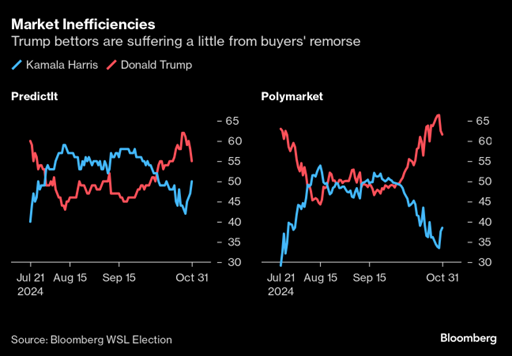
Market Sentiment Shifts: Confidence in Trump’s Chances Wavers as Betting Markets Adjust Odds – Polymarket remains more bullish than PredictIt, but both have pared down his prospects this week. Buyers’ remorse suggests traders may have overplayed their hand. Source: Bloomberg.

As always, we appreciate your support and value your trust in LNKD Investment Managers.
Weekly Insights: South Africa’s CPI Hits Lowest Level Since March 2021

According to its updated World Economic Outlook, the International Monetary Fund (IMF) projects global economic growth of 3.4% for both 2024 and 2025, slightly below the pre-pandemic average of 3.8% per year. The IMF also anticipates a decline in the global inflation rate to 4.3% by the end of next year, down from a peak of 9.4% in 2022, with advanced economies expected to achieve price stability sooner than their emerging and developing counterparts. While the growth outlook for the United States has been upgraded from earlier forecasts, other large, developed economies have seen their projections downgraded. The IMF highlights that risks to this growth outlook remain tilted to the downside due to elevated policy uncertainty. Additionally, the IMF predicts that the growth divergence between the U.S. and the European Union will continue to widen, driven by weak productivity and an aging workforce in Europe.

U.S. business activity experienced a positive uptick in October, driven by robust demand. According to S&P Global, the flash U.S. Composite PMI Output Index rose to 54.3 this month, up from 54.0 in September, reflecting continued expansion as the index remains above the neutral threshold of 50. This momentum persists despite challenges in the manufacturing sector, where the Manufacturing PMI edged up to 47.7, indicating ongoing contraction but at a moderated pace. Conversely, the services sector remains a key growth driver, with its PMI increasing to 55.3 from 55.2 last month.

In the UK, business activity growth showed signs of deceleration for the second consecutive month in October, with the S&P Global UK PMI Composite Output Index slipping from 52.6 in September to 51.7, marking the lowest reading in 11 months. Although this index remains above the neutral threshold of 50, signalling continued expansion, this decline indicates waning momentum as the economy enters Q4. The latest flash PMI suggests that the UK economy is expanding at a quarterly rate of just 0.1%, down from 0.2% in September and 0.25% for Q3 overall.

The Eurozone’s composite PMI remained relatively stable, rising slightly from 49.6 to 49.7 in October, reflecting a persistently weak economic environment characterised by slowing inflation due to softening demand. This stagnation in the PMI, which has been on a downward trend since June, raises concerns about the fragile recovery from the energy crisis. In response, the European Central Bank is set to accelerate its rate-cutting cycle, highlighting the urgency of addressing these economic challenges

The People’s Bank of China (PBOC) injected RMB 700 billion into the banking system through its medium-term lending facility (MTLF) while maintaining the lending rate at 2%. This move comes as RMB 789 billion in loans are set to expire next month, resulting in a net withdrawal of RMB 89 billion from the banking system for October. Additionally, Chinese banks lowered their one- and five-year loan prime rates by 25 basis points to 3.1% and 3.6%, respectively, making borrowing cheaper for consumers. These rate cuts align with a broader stimulus package introduced by the PBOC in late September aimed at revitalising the economy. The central bank has also indicated potential further easing measures, including another cut to the reserve requirement ratio, depending on liquidity conditions. 
 
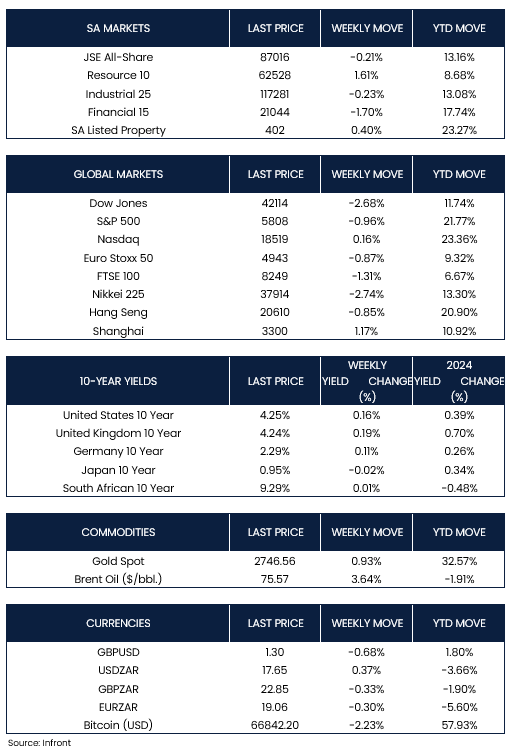
The broad market S&P 500 Index declined by 0.96%, ending a six-week streak of gains. Equities appeared influenced by the U.S. Treasury market, where futures pricing now suggests a more gradual Fed rate-cutting cycle. Tesla emerged as the top performer in the S&P 500, surging 22% on strong earnings, which helped mitigate further losses in the index. The Dow Jones Industrial Average recorded significant weekly losses, down 2.68%, while the tech-heavy NASDAQ showed resilience with a slight gain of 0.16%. In local currency terms, the pan-European STOXX Europe 50 Index fell 0.87%, driven by expectations of a slower pace in Federal Reserve monetary easing. The UK’s FTSE 100 Index also declined by 1.31%.

In Asia, Chinese equities rose as the central bank introduced additional stimulus measures to support the economy. The Shanghai Composite Index gained 1.17%, whereas the benchmark Hang Seng Index in Hong Kong dropped 0.85%. Japan’s stock markets also lost ground over the week, with the Nikkei 225 Index decreasing by 2.74%.

Market Moves of the Week:

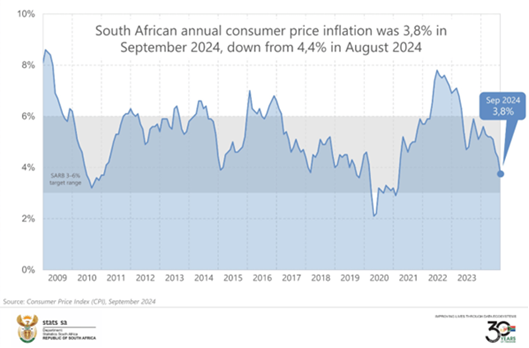
South Africa’s consumer price index (CPI) significantly declined to 3.8% year-on-year in September, down from 4.4% in August, marking the lowest level since March 2021. Released by Statistics South Africa (Stats SA), this data indicates a favourable environment for the South African Reserve Bank (SARB) to consider further interest rate cuts in the coming months, particularly as transport costs, including fuel, have decreased substantially. The next monetary policy meeting is set for November 21, 2024.

The 2024 BRICS Summit, held from October 22 to 24 in Kazan, Russia, focused on several key issues aimed at enhancing cooperation among member states. Russian President Vladimir Putin opened the summit by emphasising the need for deeper financial collaboration, including the development of alternatives to Western-dominated payment systems. Leaders discussed expanding BRICS membership, highlighting interest from over 30 countries, and addressed strategies for sustainable development amid climate challenges. Political and security issues were also on the agenda, particularly concerning the Ukraine conflict. President Cyril Ramaphosa underscored the importance of BRICS as a platform for promoting equitable global governance and enhancing ties among developing nations. The summit concluded with a commitment to strengthen economic ties and create a new BRICS investment platform to support the Global South.

During the week, the JSE All-Share Index experienced a modest decline of 0.21%, primarily driven by losses in the financial sector (-1.7%) and the industrial sector (-0.23%). Conversely, the resource sector posted strong gains, increasing by 1.61%; while the property sector recorded moderate gains of 0.40%. By the close of trading on Friday, the rand weakened further against the U.S. dollar, trading at R17.65, marking a weekly depreciation of 0.37%.

Chart of the Week:

South Africa’s CPI falls to 3.8% in September, the lowest since March 2021, signaling potential for SARB interest rate cuts.

As always, we appreciate your support and value your trust in LNKD Investment Managers. 
Weekly Insights: U.K. and Eurozone Inflation Surprise to the Downside

As of Friday, approximately 11% of S&P 500 constituents have reported their Q3 2024 earnings. The blended earnings per share (EPS), which includes both reported results and estimates for those yet to announce, indicates earnings growth of about 2.8% compared to the same quarter in 2023, according to FactSet. This marks a significant slowdown from the 11.2% growth recorded in Q2. Meanwhile, sales growth for the S&P 500 is up 4.4% year-over-year.

Retail sales in the U.S. increased by 0.4% in September, slightly exceeding forecasts. Additionally, initial jobless claims for the week ending October 12 totalled 241,000, around 20,000 below expectations, signalling a more robust labour market.

The Philadelphia Fed’s manufacturing index also rose more than anticipated in October. While the index showed mixed-to-strong results, with increases in shipments and new orders, the employment component declined. The elevated jobless claims in states affected by Hurricanes Helene and Milton contributed to some volatility in the labour data.

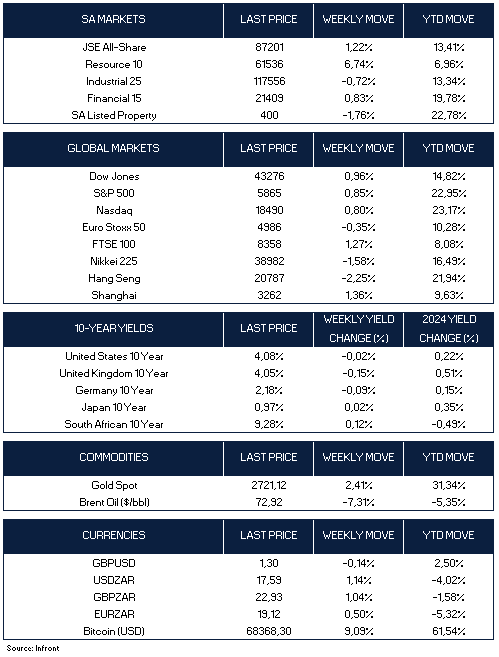
All the major US equity indexes ended the week higher, the S&P 500 0.85%, Dow Jones 0.96%, and the tech heavy NASDAQ composite closing the week up 0.80%. 

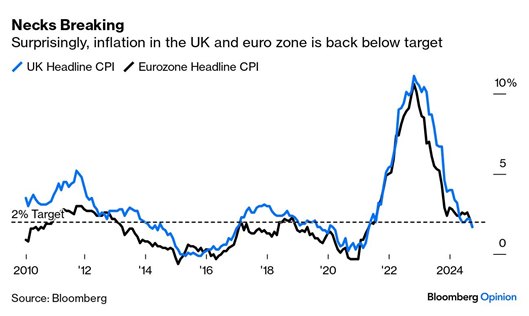
UK inflation fell to 1.7% in September, dropping below the Bank of England’s 2% target for the first time in over three years, down from 2.2% the previous month. This unexpected decline, driven by lower airfares and petrol prices, has increased expectations for faster interest-rate cuts, with markets now betting on reductions in November and December. Services inflation slowed to 4.9%, falling below the BOE’s forecast. However, concerns remain about inflation potentially rising again in the coming months. 

The FTSE 100 index advanced this week, closing up 1.27%.

In the Eurozone, final inflation data for September showed headline inflation at 1.74% year-on-year, slightly down from the earlier estimate of 1.77%. Core inflation also fell to 2.67%. Services inflation remained the primary contributor to headline inflation, driven by hospitality, leisure, and miscellaneous services. A notable drag came from the transport sector, largely due to lower prices in fuels and lubricants. As expected, the European Central Bank (ECB) cut policy rates by 25 basis points. The ECB reiterated its cautious, data-driven approach, acknowledging that the disinflationary process is “well on track” amid recent economic weakness.

The Eurostoxx 50 index was the only major western market to close lower this week, down -0.35%.

Japan’s national core consumer price index (CPI), which excludes fresh food and energy, rose by 2.1% year-on-year in September, slightly accelerating from the 2.0% increase in August and surpassing market expectations. The rise was largely attributed to a sharp 45% year-on-year increase in rice prices, driven by stockpiling in response to disaster warnings in August.

On the other hand, energy inflation decelerated sharply due to the reintroduction of government price control measures on electricity and gas. This resulted in the broader core CPI (excluding fresh food) slowing to 2.4% in September, down from 2.8% in August, though still above the market forecast of 2.3%.

Japanese stocks experienced a decline over the week, with the Nikkei 225 Index down -1.58% and the broader TOPIX Index registering a -0.64% loss, easing domestic inflation led to speculation that the Bank of Japan (BoJ) may be less likely to raise interest rates again this year.

Chinese President Xi Jinping has urged government officials to intensify their efforts in the final quarter of 2024 to ensure the country meets its annual growth target of around 5%. Xi emphasized the need to “conscientiously implement” existing policies to support both economic and social development, as pressure mounts on China’s economy.

At a recent stimulus press conference, officials outlined measures aimed at boosting the economy. An adjustment to mortgage rates is expected to benefit fifty million households, saving them 150 billion yuan in total expenditure. China will expand the credit scope for the property sector to 4 trillion yuan and aims to renovate 1 million houses in urban villages. Although these actions are aimed at providing relief, they fell short of market expectations.

September’s economic activity data showed modest improvement, with Q3 GDP growth of 4.6% year-on-year, slightly above consensus. Industrial production growth also strengthened to 5.4% in September, despite weaker-than-expected exports due to the impact of Typhoon Bebinca. This suggests a slight improvement in sequential growth momentum.

Chinese equity markets ended the week mixed, with the Shanghai Composite index closing higher, up 1.36%, and Hong Kong’s benchmark Hang Seng Index closing in negative territory, down -2.25%.

Market Moves of the Week:

South Africa mourns the passing of Tito Mboweni, a key economic figure who served as the South African Reserve Bank Governor, Minister of Finance, and Minister of Labour. Mboweni, known for driving critical economic reforms, passed away on October 12, 2024, at 65 after a short illness.
 
In corporate news, BHP’s CEO Mike Henry met with South African government officials, sparking speculation that the company may revive its previous £39bn bid for Anglo American. Anglo American share price again responded positively to these developments, closing the week at R546.64 per share, up 3.44%.
 
Additionally, South African Reserve Bank (SARB) Governor Lesetja Kganyago argued for lowering the inflation target band, aiming to anchor inflation expectations at 4.5%, which could lead to permanently lower inflation and interest rates. SARB has used the 3%-6% target band since 2000, with the focus shifting to the midpoint in recent years.
 
The JSE ALSI also ended the week higher, up 1.22%, driven by strong returns from the Resource sector, which was up 6.74% for the week. Financials also contributed to the broader market performance, closing up 0.83%. Industrials and Listed Property both detracted from performance, closing -0.72% and -1.76% respectively. The Rand closed weaker against the Dollar, ending the week at R17.59/$, depreciating 1.14%.

Chart of the Week:

To the surprise of market participants, both Eurozone and UK headline inflation fell below the official 2% target last month. This drop in inflation provides the European Central Bank (ECB) and the Bank of England (BOE) with more room to cut interest rates. However, this shift in expectations has impacted currency markets, as both the British pound and the euro have weakened against the U.S. dollar. The trade-off between lower inflation and anticipated interest rate cuts is driving this movement in currency valuations for both regions. Source: Bloomberg. 

As always, we appreciate your support and value your trust in LNKD Investment Managers. 

Weekly Insights: US stock market continues to forge ahead

The S&P 500 and the Dow scored record closing highs this week, buoyed by a positive start to the third-quarter earnings season and expectations for a U.S. Federal Reserve rate cut in November. Shares of JPMorgan Chase and Wells Fargo rose on Friday after both banks reported smaller-than-expected declines in third-quarter profits.

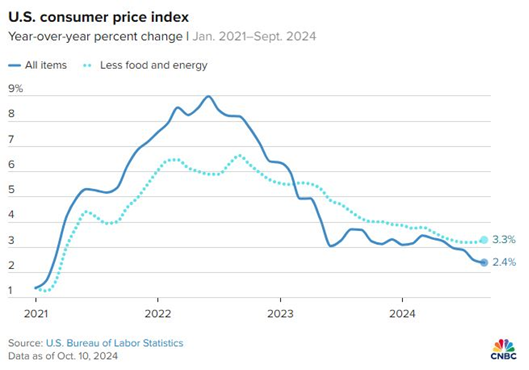
On Thursday, the Labor Department reported modest surprises in both headline and core inflation. In September, headline inflation rose 0.2% month-over-month and 2.4% year-over-year, while the core rate increased by 0.3% from the previous month and 3.3% from a year ago. Significant price increases in medical care (up 0.7%) and transportation services (up 1.4%) offset a 1.9% drop in energy prices. Additionally, the Labor Department reported a surprise rise in weekly jobless claims to 258,000, the highest level in 14 months.

Following the inflation report, the producer price index released on Friday remained flat for the month but increased by 1.8% year-over-year, contrary to economists’ expectations of a 0.1% monthly gain after a 0.2% rise in August. Long-term bond yields ended the week higher, with the yield on the benchmark 10-year U.S. Treasury note reaching its highest intraday level (4.12%) since July 31.

Florida residents woke up to the devastation caused by Hurricane Milton on Thursday morning. The combined impact of Milton and Helene has claimed around 250 lives, displaced thousands from their homes, and left millions of Floridians and businesses without power, with many facing extended outages that could last for weeks.

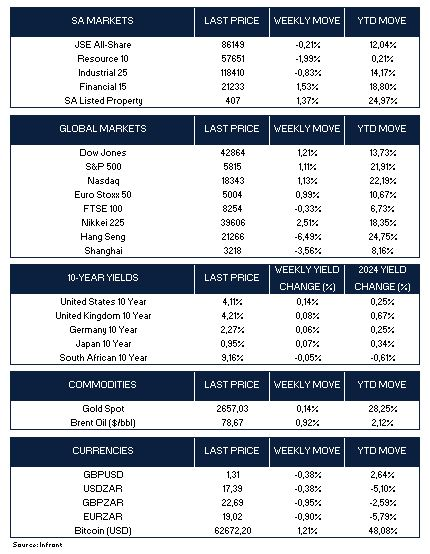
In Europe, the pan-European STOXX Europe 50 Index rose by 0.99% on hopes that the European Central Bank (ECB) might cut interest rates sooner, alongside expectations of increased economic stimulus from China. However, the UK’s FTSE 100 Index dipped by 0.33%. The ECB indicated that it anticipates inflation will trend toward its 2% target by year-end, suggesting that a gradual reduction in borrowing costs may be appropriate if upcoming inflation data aligns with its forecasts.

In Asia, Japanese stock markets gained over the week, with the Nikkei 225 Index rising 2.45%, supported by a weaker yen that enhanced profit prospects for exporters. In contrast, Chinese equities declined in a holiday-shortened week as optimism about Beijing’s stimulus measures faded. The Shanghai Composite Index fell by 3.56%, while the benchmark Hang Seng Index in Hong Kong dropped by 6.49%. At a press conference on Tuesday, the National Development and Reform Commission of China announced plans to accelerate countercyclical measures to support growth, reiterating its commitment to boost investment and provide direct support to low-income groups and new graduates.

The dollar gained strength for a second week in a row, while gold prices saw a slight increase, remaining well-supported around the $2,600 mark. Brent crude closed the week at $78.67 per barrel, rising by nearly 1% amid ongoing tensions in the Middle East.

Market Moves of the Week:

In local news, South African Reserve Bank Governor Lesetja Kganyago stated that inflation could drop below 4% in the coming months, providing more opportunities for action following the interest rate cut in September. “We expect the next two or three reports could show a three-handle, which gives us policy space,” Kganyago remarked on Thursday. He noted that the decline in headline inflation is largely due to waning global supply shocks.
 
The central bank forecasts consumer price growth to settle at 3.6% in the final quarter of this year, with an average of 4% anticipated for 2025. Core inflation, which excludes food and energy costs and slowed to 4.1% in August, indicates that “the disinflation process is firmly underway,” according to Kganyago. He expressed optimism about South Africa’s economic outlook, suggesting that the economy likely continued its recovery in the third quarter, following a 0.4% expansion in the previous three months.
 
The South African Revenue Service (SARS) has received over 1.2 million applications for tax directives related to pension fund withdrawals under the two-pot system, totaling R21.4 billion in payouts so far. In a statement released late Friday, SARS reported that of the 1,213,646 applications, 1,148,729 tax directives were approved for fund releases. The two-pot retirement system, implemented at the beginning of September, divides pension fund contributions into a one-third savings pot and a two-thirds retirement pot. Members can withdraw from their savings pots once a tax year, while contributions to the retirement pot remain preserved.
 
On Friday, the South African rand continued to gain ground, following U.S. data that bolstered expectations for a Federal Reserve interest rate cut next month. Year-to-date, the rand has strengthened by 5.1%.

On the stock market, the JSE All Share Index closed the week slightly lower (-0.21%), primarily due to losses in resource counters (-1.99%), while the banking and financial sectors saw robust gains (+1.5%).

Chart of the Week:

Inflation decreased in September, as falling gasoline prices and diminishing price pressures in areas like housing provided some relief for consumers, according to the U.S. Bureau of Labor Statistics. The consumer price index, a key measure of inflation, rose by 2.4% last month compared to September 2023, down from 2.5% in August, indicating a slowdown in price growth. This marks the lowest annual rate since February 2021. Inflation has significantly decreased from its pandemic peak of 9.1% in June 2022, approaching policymakers’ long-term target of around 2%.

As always, we appreciate your support and value your trust in LNKD Investment Managers. 
Weekly Insights: Volatility Marks the Start of the 4th Quarter

Financial markets began the fourth quarter on a volatile note, driven by a complex mix of global uncertainties. This week, four key factors took centre stage: escalating tensions in the Middle East, the threat of U.S. port strikes, uncertainty surrounding the U.S. labour market, and the upcoming U.S. presidential election.

Concerns about a broader conflict in the Middle East escalated after Iran launched nearly 200 missiles at Israel, heightening fears of an extended war in the region. However, markets found some relief midweek when the worst-case scenarios didn’t materialise. Investors also had to contend with a major disruption to U.S. trade. The International Longshoremen’s Association initiated a strike that effectively shut down ports along the East and Gulf Coasts. These ports handle nearly half of the U.S.’s trade volume, sparking fears of broken supply chains and renewed inflationary pressures. But by Thursday, news of a temporary deal to delay the walkout until January calmed markets.

The U.S. labour market was another major focal point. The latest nonfarm payrolls report revealed a surprise surge in hiring, with 254,000 jobs added in September—nearly double the expected figure and the highest since March. This reinforced the resilience of the U.S. economy. Fed Chair Jerome Powell noted that interest rates will likely come down “over time” but stressed that future policy decisions would depend on incoming economic data.

Across the Atlantic, Europe faced its own challenges. Weaker-than-expected economic growth data and a decline in inflation to 1.8% in September—below the ECB’s 2% target—fuelled expectations for an interest rate cut at the European Central Bank’s next meeting. ECB officials hinted at a potential policy shift toward more aggressive easing. The Bank of England echoed similar sentiments, with Governor Andrew Bailey stating that the central bank could move more decisively to lower borrowing costs if inflation continued to cool.

In Asia, Japan’s markets saw a sharp drop early in the week following political developments. Shigeru Ishiba’s unexpected victory in the Liberal Democratic Party leadership race, making him the new prime minister, unsettled markets. Ishiba’s slightly hawkish stance on monetary policy briefly strengthened the yen, sending stocks lower. On the economic front, Japan’s unemployment rate fell to 2.5%, while manufacturing PMI data remained in contraction territory.

Meanwhile, China was the week’s standout, with its stock markets experiencing their largest rally in over a decade. The Hang Seng Index surged by more than 10%, and the Shanghai Composite gained over 8%, driven by optimism around Beijing’s expansive stimulus measures. This came despite continued weak economic data, including a fifth consecutive month of contraction in factory activity. The manufacturing PMI rose slightly in September but remained below the 50-mark, indicating contraction, while the non-manufacturing PMI dropped to a 21-month low. However, positive sentiment emerged after three of China’s largest cities relaxed home-buying restrictions in response to the government’s stimulus efforts, helping lift market confidence.

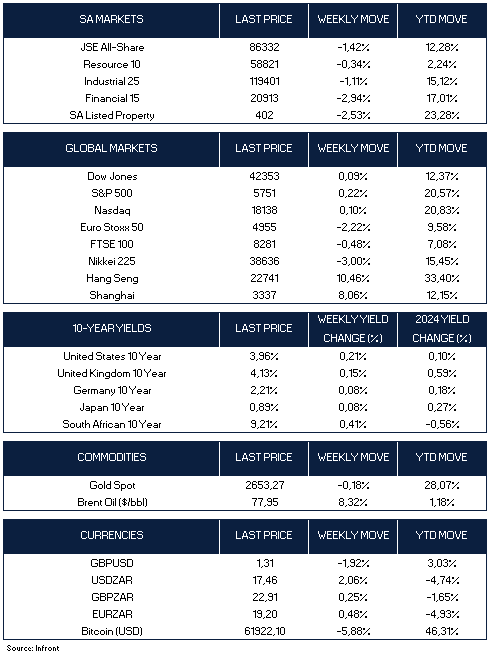
Global stock performances were mixed. U.S. markets posted modest gains, with the Dow Jones up 0.09%, the S&P 500 rising 0.22%, and the Nasdaq advancing 0.10%. European markets faced more pressure, as the Euro Stoxx 50 fell by 2.22%, and the FTSE 100 edged down 0.48%. In Asia, Japan’s Nikkei 225 slid by 3.00%, while Chinese markets outperformed significantly. Brent crude oil prices surged 8.32%, driven largely by geopolitical risks, while gold saw a slight decline of 0.18%.

Market Moves of the Week:

South Africa’s trade surplus narrowed sharply in August, falling to R5.63 billion from R17.07 billion in July. However, there was positive news on the economic front as the country’s Purchasing Managers’ Index (PMI) rose to 52.8 in September from 43.6 the previous month. This signals renewed momentum in the manufacturing sector, which benefited from increased demand and improved sentiment following an interest rate cut. According to the Absa-sponsored PMI survey, both domestic and export demand showed signs of recovery, and the rate cut has bolstered expectations for stronger consumer demand in the months ahead.

Despite some encouraging economic data, the South African market saw a pullback this week after several months of strong performance. The JSE All Share Index fell by 1.42%, with all major sectors experiencing declines. Industrials dropped 1.11%, Financials fell by 2.94%, and Resources slipped by 0.34%. Meanwhile, the yield on the 10-year South African bond increased by 0.41%, and the rand depreciated by 2.06% to R17.46 to the U.S. dollar.

Chart of the Week:

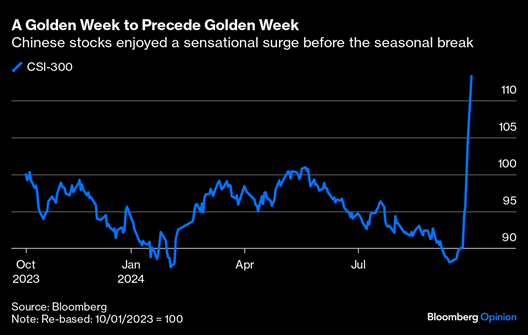
China’s stimulus packages, unveiled just before Golden Week, led to a sharp 25% rally in Chinese domestic stocks over six days, as of Monday’s close. While markets surged, the broader economic benefits will take time to materialise. Nevertheless, the sudden rebound is causing issues for emerging market managers who had positioned themselves underweight in China, as the trade swiftly turned against them. Source: Bloomberg.

As always, we appreciate your support and value your trust in LNKD Investment Managers.
Weekly Insights: China Rolls Out Stimulus

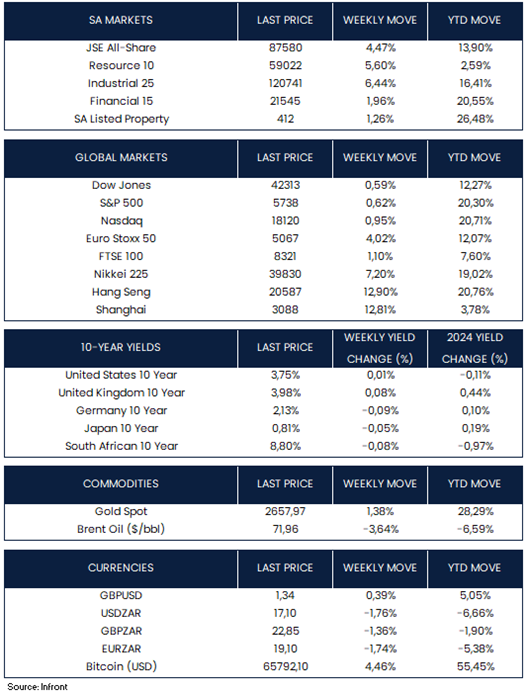
China has responded to mounting public pressure by implementing a series of significant policy actions after months of gradual measures. The initial steps centered on monetary policy, quickly followed by fiscal pledges, some aimed directly at boosting the stock market. This unexpectedly strong response triggered a surge in Chinese equities. By the end of the week, the Politburo also committed to further fiscal support to stabilize the housing market, marking the first time officials explicitly targeted the property sector. On Friday, the central bank implemented policy rate cuts, underscoring the government’s urgency. The Shanghai Composite Index and Hang Seng Index jumped 12.81% and 12.90% respectively over the week.

Some positive U.S. inflation news sparked an early rally on Friday. The Commerce Department revealed that the core personal consumer expenditures price index (the Fed’s preferred inflation measure), which excludes food and energy, increased by just 0.1% in August, slightly lower than expected. Year-over-year, the index rose by 2.2%, nearing the Federal Reserve’s target of 2.0% and marking the lowest level since February 2021. Additionally, both personal incomes and spending fell short of expectations in August, indicating a further easing of inflation pressures.

The Dow Jones Industrial Average (+0.59% w/w) and the S&P 500 (+0.62% w/w) reached record highs, buoyed by new stimulus measures in China. Chemicals and materials stocks performed strongly, driven by optimism for a rebound in Chinese demand. Technology stocks also excelled, aided by reports of a potential Intel takeover and NVIDIA’s CEO halting his share sales. The tech-heavy Nasdaq Composite gained 0.95% over the week. 

Business activity in the eurozone unexpectedly declined in September due to a significant drop in new orders, as reported by S&P Global’s purchasing managers’ indexes (PMIs). The initial reading of the HCOB Eurozone Composite PMI Output Index decreased to 48.9 from 51.0 in August, indicating contraction since a reading below 50 signifies a decline. Notably, German business activity fell the most in seven months, suggesting the economy may be headed for a second consecutive quarterly output drop. The Euro Stoxx 50 index finished 4.02% higher on the week as signs of slowing business activity raised expectations for interest rate cuts. In the UK, the FTSE 100 climbed 1.10% w/w.

Japan’s stock markets rose this week, with the Nikkei 225 Index climbing 7.20%. The Bank of Japan’s dovish comments weakened the yen, creating a favourable environment for stocks. Additionally, optimism stemmed from China’s stimulus measures. Given that many Japanese exports go to China, the announcements boosted companies that directly or indirectly benefit from the Chinese economy.

Market Moves of the Week:

In South Africa, producer price inflation fell to its lowest level in over a year. Headline producer inflation (PPI) eased to 2.8% y/y in August, its lowest level since July 2023, from 4.2% in July. The outcome was far below market forecasts of 3.5%.

Foreign investors have demonstrated strong confidence in the South African market by injecting R2.3 billion into local equities over the past two weeks, following the national elections at the end of May. This renewed optimism is further underscored by the substantial R17.4 billion that foreigners have allocated to local bonds during the same period, according to data from the JSE.

Eskom has requested the National Energy Regulator to authorize a 36% price increase for its financial year 2026, significantly exceeding the country’s inflation rate. While this increase could enhance Eskom’s cash flow and benefit bondholders, it poses serious risks for consumers and businesses, potentially exacerbating inflationary pressures and hindering economic growth. Investors note that years of mismanagement and an unsustainable cost structure have left Eskom in a position where it must catch up.

The All-Share Index rose by 4.47% this week, driven by strong gains in Industrials (+6.44%) and Resources (+5.60%), both buoyed by optimism surrounding China. The local currency strengthened against the U.S. dollar, dropping to R17.10/$ from last week’s R17.41/$ level. SA government bonds continued their rally, as yields on the 10-year dipped -0.08% over the week.

Chart of the Week:

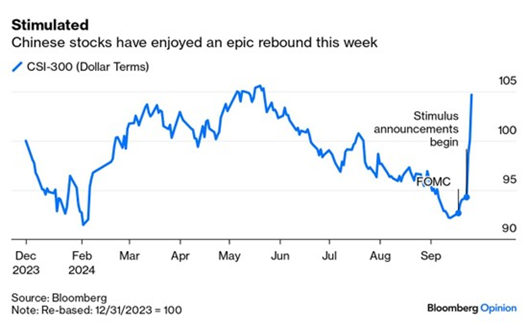
The CSI-300, an index of the biggest mainland A-shares traded in Shanghai and Shenzhen, has rallied by more than 10% this week and it’s nearly back to its high for the year. That rally extended Friday after the central bank confirmed it was cutting the reserves that banks must hold, with the CSI-300 gaining another 2.7% in the morning session. : Source: Bloomberg

As always, we appreciate your support and value your trust in LNKD Investment Managers

Weekly Insights: U.S. Begins Rate-Cutting Cycle

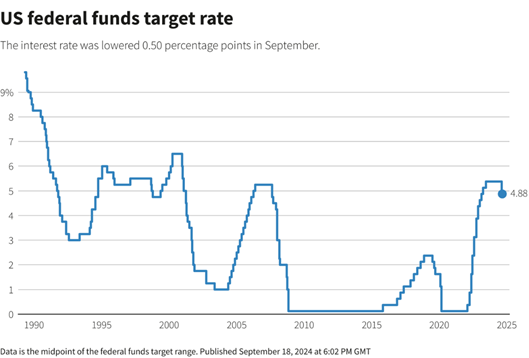
This week saw significant monetary policy shifts across major economies, with the Federal Reserve and the South African Reserve Bank (SARB) implementing their first interest rate cuts in years. The U.S. Federal Reserve made its first rate cut in over four years, reducing its key lending rate by 0.5 percentage points to 4.75%-5%. Fed Chair Jerome Powell called the move “strong,” citing the need to address easing inflation and growing concerns in the labour market.

In South Africa, the Reserve Bank lowered its repo rate by 25 basis points to 8.0%, bringing the prime lending rate to 11.50%. While further cuts are expected, the Monetary Policy Committee remains cautious, emphasizing close monitoring of inflation risks.

In contrast, the Bank of England held its interest rate at 5%, with an 8-1 vote from the Monetary Policy Committee, where only one member called for a cut to 4.75%. Similarly, the Bank of Japan maintained its monetary policy stance, avoiding further market disruption while leaving the option for future rate hikes open.

In related economic news, U.S. retail sales experienced a slight uptick in August, driven by solid e-commerce activity, which offset a decline in auto sales. This reflects stable consumer demand throughout much of the third quarter. Data from the Commerce Department showed that nominal retail sales increased by 0.1%, following a revised 1.1% gain in July. On an annual basis, retail sales expanded by 2.1% in August.

Concurrently, U.S. factory production rose in August, primarily driven by a rebound in motor vehicle output, although July’s data was revised downward. The Federal Reserve reported a 0.9% increase in factory output for August, following a downwardly revised 0.7% contraction in July. On a year-over-year basis, output rose by 0.2%. The manufacturing sector, which accounts for 10.3% of GDP, continues to face headwinds from elevated borrowing costs. However, the ongoing monetary easing by the Federal Reserve may alleviate some of these pressures.

UK inflation held steady in August, though services inflation, a key focus for the Bank of England, saw a notable uptick. The headline consumer price index (CPI) remained consistent with the previous reading of 2.2% in July. Core inflation, which excludes volatile energy, food, alcohol, and tobacco, rose to 3.6%, up from 3.3% in July. Services inflation—critical due to its prominence in the UK economy and its reflection of domestically generated price pressures—increased to 5.6% in August, compared to 5.2% in July.

A week after the ECB’s rate cut, inflation in the eurozone slowed to its weakest pace in three years. Eurostat reported that annual inflation in August was 2.2%, down from 2.6% in July and 5.2% a year ago. Services drove inflation higher with a 1.8% increase, while food, alcohol, and tobacco prices rose 0.46%. Core inflation, excluding food and energy, eased to 2.8%, approaching the ECB’s 2% target.

China’s industrial production growth moderated to 4.5% year-on-year in August, falling below the previous month’s figure and missing the 4.8% consensus forecast. The deceleration was driven by weakness in key sectors such as commodities and autos. Retail sales growth also softened, dropping to 2.1% from 2.7% in July, as weak car sales weighed on consumer demand. Meanwhile, the unemployment rate ticked up unexpectedly to 5.3% from 5.2% in July. The softer economic data further highlight a decelerating GDP growth trajectory for the third quarter, raising concerns about the country’s ability to achieve its 5% growth target for 2024.

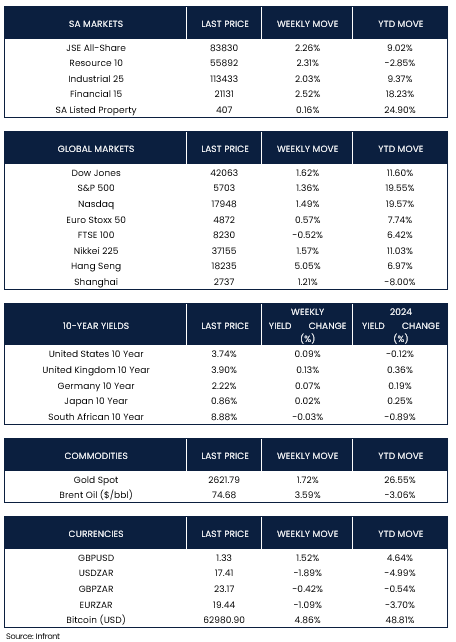
U.S. indices hit record highs as investors embraced the start of what many anticipate to be a prolonged Federal Reserve rate-cutting cycle. The Dow Jones Industrial Average (+1.62%), Nasdaq Composite (+1.49%), and S&P 500 Index (+1.36%) all surged to new peaks. In Europe, gains were more subdued, with the initial rally following the Fed’s cut fading as investors grew cautious about future monetary policy. The pan-European STOXX 50 Index closed 0.57% higher, while the UK’s FTSE 100 Index slipped 0.52%.

Chinese equities rose in a holiday-shortened week, buoyed by the Fed’s rate cut despite weak domestic economic data. The Shanghai Composite Index rose 1.21%, and Hong Kong’s Hang Seng Index surged 5.05%. Japan’s Nikkei 225 Index also posted strong gains, rising 1.57% for the week.

Market Moves of the Week:

South Africa’s Consumer Price Index (CPI) slowed to 4.4% year-on-year in August, down from 4.6% in July, marking the slowest pace in almost three and a half years. This is the lowest level since April 2021, when it also registered at 4.4%. The data, released by Statistics South Africa (Stats SA), signals that the SARB’s monetary policy measures over the past 12 to 18 months are starting to take effect. With CPI remaining within SARB’s 3%-to-6% target range for two consecutive months, inflation appears to be more firmly anchored.

Retail sales in South Africa advanced by 2% year-on-year in July, following a 4.1% rise in June, according to data from Stats SA. This marked the fifth consecutive month of expansion. Economic activity is expected to gain momentum heading into the year-end festive period, underpinned by easing interest rates and increased liquidity from workers accessing savings through the Two-Pot retirement system.

The JSE All-Share Index benefited from positive global trends and the SARB’s interest rate cut, posting a weekly gain of 2.26%. Financials led the advance with a 2.52% return, while the Property sector experienced more modest growth, rising by 0.16%. The rand strengthened by 1.89% against the US dollar, closing the week at R17.41/$.

Chart of the Week:

The Fed implemented a 50 basis point rate cut on Wednesday, marking the first reduction in over four years. The move was framed as a proactive measure to support the economy’s resilience, rather than a response to recent labour market concerns. Investor expectations fluctuated leading up to the decision, with opinions nearly evenly split by the time of the announcement. Sources: Federal Reserve, LSEG

Weekly Insights: Gold hits all-time highs

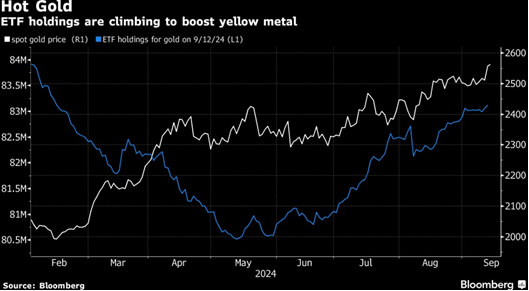
Gold surged to new record highs this week, driven by a weakened US dollar. Spot gold closed the week at $2,577 per ounce, marking a 3.2% increase. The rise in the gold price is attributed to an expected interest rate cut from the Federal Reserve’s meeting on September 17-18, along with easing inflationary pressures. Typically, zero-yielding assets like gold benefit from lower interest rates.

Wall Street is now looking ahead toward the Fed’s policy meeting next week, where the central bank is largely anticipated to lower interest rates by 25 basis points. Currently, the Fed’s target rate is sitting at 5.25% to 5.5%. The Fed decision on Wednesday, is followed by the Bank of England (BoE) and the Bank of Japan (BoJ) meetings on Thursday and Friday, respectively. Markets are currently pricing in a 72% chance of a 25-basis-point U.S. rate cut at next week’s meeting, and a 28% chance of a 50-bps cut, the CME FedWatch tool showed this week.

According to a report released by the Bureau of Labor Statistics on Thursday, headline US CPI inflation (Consumer Price Index) eased to +2.5% in August (YoY), testing levels not seen since February 2021. Inflationary pressures pulled back from July’s reading of +2.9%. On a MoM basis, headline CPI inflation rose +0.2% in August, matching both market expectations and prior data. Core inflation which excludes volatile food and energy components, rose +3.2% in August, as expected, and unchanged from July’s release. However, core CPI was slightly higher than expected between July and August, increasing +0.3% from +0.2% (+0.2% consensus).

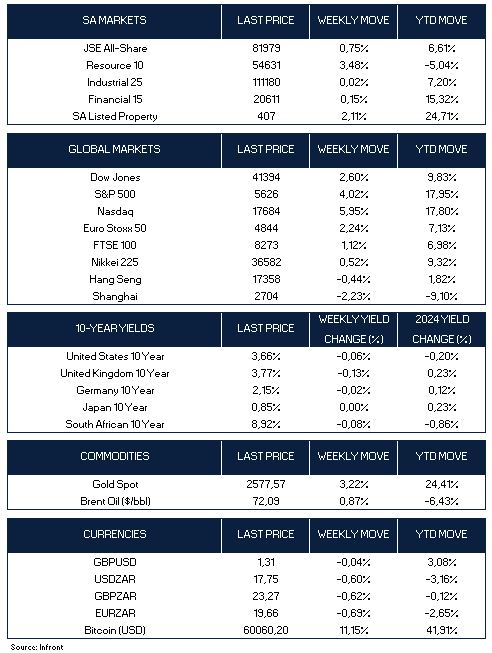
On a weekly basis, the S&P 500 rose 4% and the tech-heavy Nasdaq Composite gained 5.9%, the best week this year for both indices. The Dow advanced 2.6% for the week. Growth stocks outpaced value shares for the week, helped by a strong performance from technology stocks. Treasury yields strengthened during the week with the yield on the benchmark 10-year Treasury note trading at year-to-date lows.

China’s top legislative body has approved a proposal to raise the country’s retirement age to tackle the economic pressure of a shrinking workforce. The retirement age will be raised for men to 63 years old from 60, while for women in white collar work it would be raised to 58 years from 55. For women in blue collar work it will be increased to 55 from 50. The changes are set to come into force on Jan. 1, 2025 and be implemented over a 15 year period.

In Europe, the pan-European STOXX Europe 50 Index ended the week 2.24% higher, lifted by an interest rate cut from the European Central Bank (ECB). The UK’s FTSE 100 Index was also firmer, gaining 1.12% for the week.

The European Central Bank lowered interest rates on Thursday, trimming the key deposit rate by 25 basis points to 3.5%. This was the second rate cut in the current rate-lowering cycle. “We shall remain data-dependent,” ECB President Christine Lagarde told reporters in Frankfurt, adding that Thursday’s decision was unanimous. The ECB’s announcement follows a plunge in inflation to 2.2% in August and figures showing the rapid wage increases driving price gains are slowing. The ECB is being cautious and has signalled it will take a slow approach to further cuts with markets expecting a further rate cut in December.

In Asia, Japan’s stock markets registered mixed performances over the week, with the Nikkei 225 Index gaining 0.5%. Chinese stocks declined for the week, as weak inflation data weighed on investor sentiment. The Shanghai Composite Index ended the week 2.23% lower.

Market Moves of the Week:

The South African Reserve Bank is expected to cut its repo rate by 25 basis points to 8.00% at its Sept. 19 meeting as slowing inflation bolsters prospects of easing monetary policy. Eighteen of 21 economists surveyed in the past week said the SARB would cut by 25 basis points (bps) next week, while three expected rates to be held at 8.25%.

Inflation has slowed to an over three-year low in July to 4.6%, close to the central bank’s 3%-6% midpoint. Inflation is expected to average 4.7% this year and slow to 4.3% in 2025.

The international credit ratings agency Fitch Ratings has again kept SA’s credit rating unchanged, saying that while the formation of the government of national unity (GNU) has lowered short-term policy uncertainty, risks to political stability remain due to contentious issues such as the implementation of the national health insurance (NHI). Fitch’s rating remains at BB- with a stable outlook.

The JSE tracked global markets firmer for the week, gaining 0.75% as investors look ahead to next week’s Federal Reserve policy meeting. Resource counters and listed property led the gains. The rand firmed on Friday against a weaker dollar, trading at R17.75$ level at the close.

Chart of the Week:

As per the chart above, bullion prices are likely to continue rising, bolstered by a fourth consecutive month of inflows into global Gold ETFs in August, as reported by the World Gold Council last week. This upward momentum is supported by anticipated interest rate cuts from the Federal Reserve next week, along with ongoing geopolitical tensions from conflicts in the Middle East and the Russia-Ukraine war, which further strengthen gold’s appeal as a safe-haven asset.

As always, we appreciate your support and value your trust in LNKD Investment Managers. 

Weekly Insights: Weak U.S. Economic Data Weighs on Sentiment

The S&P 500 Index experienced its steepest weekly decline in 18 months, driven by growing concerns over an economic slowdown. The information technology sector led the downturn, with Nvidia shares particularly hard hit. Energy stocks also suffered as oil prices fell, further weighing on the index.

The week’s economic data releases largely fell short of expectations, intensifying fears that the Federal Reserve may have delayed too long in easing monetary policy. This combination of disappointing data and uncertainty around future Fed actions contributed to the broader market’s negative sentiment.

Investors closely monitored the U.S. jobs report, expecting nonfarm payrolls to rise by 165,000 and the unemployment rate to improve slightly to 4.2%. However, August’s payrolls increased by only 142,000, missing expectations and highlighting job losses in key sectors. This weaker-than-expected report may increase calls for a more aggressive monetary response, including a potential 50-basis point rate cut by the Federal Reserve later this month.

The slowdown in hiring suggests that the U.S. economy may be experiencing a soft landing—where economic growth slows but avoids a full-blown recession—so long as the deterioration in the labour market does not accelerate.

The U.S. trade deficit expanded to a two-year high in July, driven by a significant increase in goods imports. According to data released by the Commerce Department on Wednesday, the trade gap in goods and services grew by 7.9% from the previous month, reaching $78.8 billion. This figure aligned with the median forecast from a Bloomberg survey of economists.

In corporate news, Nvidia’s share price plummeted by 9.5%, erasing $278.9 billion in market value, marking the largest single-day loss in value for a U.S. stock. The decline extended to 14% over three sessions following earnings that failed to meet investor expectations. Adding to the company’s challenges, the U.S. Department of Justice issued subpoenas to Nvidia’s management as part of an investigation into potential antitrust violations.

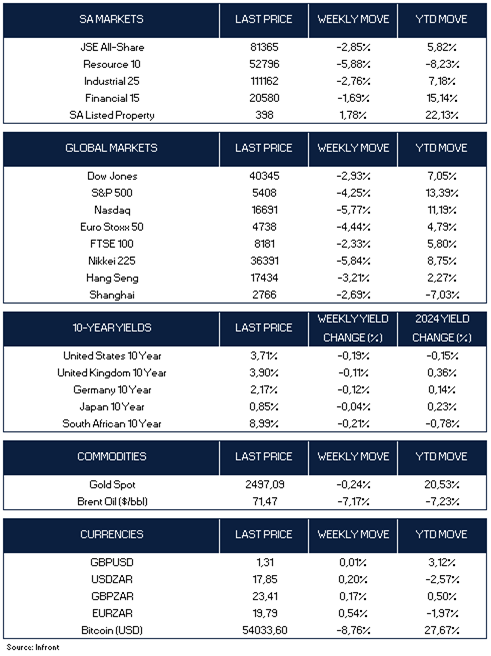
All the major US equity indexes ended the week lower, the S&P 500 -4.25%, Dow Jones -2.93%, while the tech heavy NASDAQ composite was the worst performer, closing the week down -5.77%.

The International Monetary Fund (IMF) has projected that Saudi Arabia’s current account balance is poised to shift into deficit due to declining oil prices and increasing imports tied to large-scale projects aimed at transforming the economy. The IMF’s latest Article IV review of Saudi Arabia’s economy forecasts a current account deficit of 0.1% of gross domestic product (GDP) for this year, expanding to 1.1% in 2025. The deficit is expected to average 2.9% from 2026 to 2029. This marks a stark reversal from 2022, when a surge in crude prices to nearly $130 a barrel, following Russia’s invasion of Ukraine, propelled Saudi Arabia’s current account surplus to nearly 14% of GDP.

Meanwhile, oil prices have recently hovered near a nine-month low as OPEC+ members deliberated on whether to increase supply amid ongoing concerns about global demand. This context adds pressure to Saudi Arabia’s fiscal outlook, given the nation’s heavy reliance on oil revenue.

In the Eurozone, European Central Bank (ECB) Governing Council member Gediminas Šimkus indicated in an interview that he sees a “clear case” for an interest rate cut in September. However, he expressed that the likelihood of an additional cut in October is “quite unlikely.” This statement suggests that while the ECB may continue easing monetary policy but will remain data dependent over the medium-term. The Euro Stoxx 50 closed lower, down -4.44%.

No major news out of the UK this week, however the FTSE 100 followed global peers ending the week lower, -2.33% on renewed fears about a deterioration in the outlook for the global economy.

The Japanese yen appreciated to the mid-142 range against the USD, strengthening from around JPY 145 at the end of the previous week. This movement is driven by expectations of a narrowing interest rate differential between Japan and the U.S. Market participants are increasingly anticipating that the Bank of Japan (BoJ) will raise interest rates further this year, while the U.S. Federal Reserve appears likely to cut rates in September. This shift in monetary policy outlooks has bolstered the yen against the dollar.

Japanese stocks experienced a decline over the week, with the Nikkei 225 Index down -5.84% and the broader TOPIX Index registering a 4.2% loss, yen strength posing a headwind for Japan’s export-oriented companies.

China is reportedly considering a significant interest rate cut on up to $5.3 trillion in mortgages, aiming to lower borrowing costs for millions of families while also managing the impact on the banking sector’s profitability. Financial regulators have proposed reducing rates on outstanding mortgages nationwide by approximately 80 basis points. This initiative is part of a broader package that includes speeding up the timeline for when mortgages become eligible for refinancing, according to sources familiar with the matter.

China’s official Manufacturing Purchasing Managers’ Index (PMI) fell to 49.1 in August, down from 49.4 in July, according to the National Bureau of Statistics. This decline was lower than expected and highlights deepening contractions in production and new orders, signalling ongoing challenges in the manufacturing sector as the economic slowdown continues to weigh on activity.

The Shanghai Composite index and Hong Kong’s benchmark Hang Seng Index both closed in negative territory, down -2.69% and -3.21% respectively. 

Market Moves of the Week:

In South Africa, business sentiment has risen to its highest level in nearly two years, buoyed by the resumption of stable power supply, economic optimism, and political certainty following the May 29 elections. The Rand Merchant Bank and Stellenbosch University’s Bureau for Economic Research’s quarterly business confidence index increased to 38 in the three months ending September, up from 35 in the previous quarter. This improvement was primarily driven by retailers and new vehicle dealers who are anticipating a boost from expected interest rate cuts later this month.

The country’s headline GDP grew by a modest 0.4% in the second quarter of 2024, following a stagnant first quarter. The trade and finance sectors showed solid growth, rising by 1.2% and 1.3%, respectively. However, the primary sector disappointed with declines in both agriculture and mining, reflecting an economy still facing significant challenges.

On a positive note, South Africa’s current account deficit narrowed more than expected in the second quarter. The deficit reduced to an annualized 0.9% of GDP, or R64.6 billion, from a revised 1.5% in the previous quarter, driven by an increase in the rand price of exported goods and services.

Additionally, September 1st marked the beginning of a new era for the retirement savings industry with the introduction of the Two Pot system. This reform allows retirement fund members to access a portion of their assets before retirement age, providing liquidity for emergency funding needs, particularly in the wake of the pandemic. While similar reforms have been implemented in other countries, the impact on South Africa’s collective investment market and economic stimulus will be closely monitored by all market participants.

The JSE ALSI also ended the week lower tracking the risk off sentiment from global peers, down -2.85%. All the major sectors were lower this week, led by Resources down -5.88%, followed by Industrials down -2.76%, while Financials fared best, but still closed in negative territory down -1.69%.  The SA Listed Property sector was the outlier this week closing in the green, up 1.78%. The Rand closed slightly weaker against the Dollar, ending the week at R17.85/$. 

Chart of the Week:

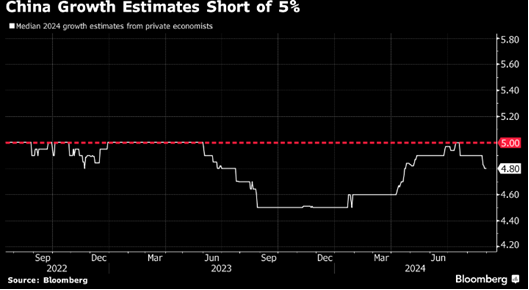
Analysts are increasingly doubtful that China will achieve its 5% economic growth target for 2024. The median forecast for full-year GDP growth among economists surveyed by Bloomberg has declined to 4.8%, down from 4.9% in mid-August. This shift in sentiment follows weaker-than-expected second-quarter growth of 4.7% reported in July, which prompted several leading financial institutions to lower their growth projections. Goldman Sachs, Citi, and Barclays all adjusted their forecasts in July, reducing their targets from 5% to 4.9%, 4.8%, and 4.8% respectively. JPMorgan is even more cautious, anticipating growth of just 4.6% for the year. Source: Bloomberg and Financial Times.

As always, we appreciate your support and value your trust in LNKD Investment Managers.