Weekly Insights: G20 leaders reach minimum corporate tax agreement

In a meeting of the G-20’s finance ministers and central bank governors on Saturday, the group advocated for a tax plan that would cover how multinational enterprises reallocated profits and the rollout of a global minimum tax. The plan would call for a 15% global minimum corporate tax, in an effort to stop multinational corporations taking advantage of lower tax countries. Large companies such as Apple and Microsoft would be taxed based on partially where they sell their products and services and not where their headquarters are situated. The leaders are aiming to get the plan approved at a G-20 summit in October this year. 

U.S. President Joe Biden signed an executive order on Friday which is aimed to tackle anticompetitive practices. The president is calling for fairer competition amongst U.S. companies in various sectors, from technology to healthcare. The order contains 72 initiatives that will counter practices that have driven up prices and disadvantaged workers.

Moves in the U.S. yield this week drove market attitude, with investors interpreting falling 10 year treasury note yields first as an opportunity for risk assets but later in the week, as a possible warning sign of slowing economic growth. The reasons being mentioned in the market for the drop vary from fears of the Delta variant spreading to inflation peaking in the near term. Continuing with the topic of inflation, the Federal Open Market Committee’s June meeting resulted in member’s highlighting that tapering bond buying was going to be implemented earlier than anticipated as inflation had run hotter than members expected. Nonetheless, they maintain the argument for inflation to be transitory. 

China’s central bank this week made a surprise move and lowered its reserve requirement ratio, the amount of cash banks must hold in the central bank’s reserve, on banks by 0.5%. Approximately $150 billion in long-term liquidity is expected to be released into the market as a result. This move is intended to make more liquidity available to banks in order to boost lending to businesses while supporting the real economy. Concerns still remain over China’s stock market however, as the nation’s cybersecurity crackdown continues with their focus remaining on company data risks, including how tech companies collect and store their consumer data. 

Big Tech was also a theme present in Honk Kong this week. Facebook, Twitter, and Google privately warned Hong Kong’s government that if they proceed with planned changes to data protection laws, they could stop offering their services in the city, Dow Jones reports. 

Japan found themselves in a fourth Covid-19 state of emergency this week as the spread of virus picked up pace, forcing the government to make the move. Following this move, Tokyo’s Olympic spectators were banned from watching the events, meaning the multi-sport event is now set to take place with no fans. 

The U.K. announced plans this week to end social distancing and capacity limits at venues in England from July 19, saying that people must learn to live with coronavirus. Britons who are fully vaccinated will get more freedom to travel abroad starting 19 July. Covid-19 cases continue to rise in the nation, but hospitalizations remain low thanks to vaccinations. 

The European Central Bank (ECB) set a new inflation target on Thursday and put a spotlight on their future role in the fight against climate change. The ECB set their inflation target to 2% from their previous target of “below but close to 2%”, indicating a more flexible policy framework, much like the Fed’s structure they implemented a year ago. This means that the Union’s loose policy outlook is here to stay longer. 

U.S indices mostly managed slight gains after negative moves earlier in the week. The Dow Jones (0.24%), the S&P 500 (0.40%) and the Nasdaq (0.43%) just outperformed most their international peers, avoiding ending the week in the red. The Euro Stoxx 50 (-0.40%), FTSE 100 (-0.02%) and Nikkei 225 (-2.93%) all ended the week down. The Shanghai (0.15%)  index manged to end the week in the green. Gold (1.17%) saw a slight rally, while brent crude (-0.62%) dipped as confusion remains over OPEC’s disagreement. 

Market Moves of the Week:

In South Africa, Former President Jacob Zuma turned himself over to the police on Thursday to begin serving a 15-month prison term. Zuma handed himself over to authorities to obey the country’s highest court, the Constitutional Court, that he should serve a prison term for contempt. Twenty eight people were arrested and a highway was closed in KwaZulu-Natal, Zuma’s home province, as protests erupted following the arrest. On Friday, Zuma lost a bid to overturn his arrest, yet another legal challenge will be heard on Monday. Zuma was not the only ANC member to lose a court bid this week, Ace Magashule’s bid to have his suspension set aside was rejected by the high court on Friday too.

The Government has finally made a public pay offer that the trade unions are considering. Public servants are being offered a revised wage offer that amounts to a 1.5% increase plus a R1000 cash allowance, resulting in an effective 11.7% increase for the lowest paid public servants. 

The current alcohol ban is predicted to cost the alcohol industry R6.1 billion in lost retail sales and the extension of the current lockdown remains a key threat for the industry. Premier David Makhura has stated that Gauteng is nearing the peak of its Covid-19 infections during the third wave, meaning that cases may be likely to decline soon. 

The JSE All Share Index ended the week up by 0.09%. The rand strengthened to end the week at R14.17 to the U.S. Dollar.

Chart of the Week:

European policymakers agreed to raise their inflation target to 2.0% and allow room for an overshoot when needed, which would give more room for ultra-loose monetary policy for longer. The decision is part of the biggest overhaul in ECB monetary policy in two decades.

Whilst volatility is likely to continue amid current market uncertainty over the coronavirus pandemic, our message to all investors remains the same – stay calm in making decisions that are aligned with your long-term goals, not current market conditions. In any market environment, we strongly believe in the importance of having a portfolio that contains a variety of asset classes, including stocks and bonds, balanced in a way that reflects the investors risk tolerance and investment timeline.

As always, we appreciate your support and value your trust in LNKD Investment Managers..

The information included above as well as individual companies and/or securities mentioned should not be construed as investment advice, a recommendation to buy or sell or an indication of trading intent on behalf of any LNKD product. LNKD Investment Managers is an authorised financial services provider (FSP 51257).

Weekly Insights: Positive jobs report confirms US recovery

The U.S. economy added 850,000 jobs in June versus economists’ estimates of around 700,000, the most in 10 months. The unemployment rate, however, rose to 5.9% against the 5.6% expectation. Hospitality continued to be the prime beneficiary of the reopening accounting for as much as 40% of the gains as workers returned to jobs at bars, restaurants and hotels. Wage gains also accelerated with average hourly earnings increasing 0.3% for the month and 3.6% year over year.

More than 22 million Americans were laid off in March and April of 2020 amid government-imposed business restrictions, with the total employment level remaining 7 million short of its pre-pandemic level.

On Thursday the Democratic-controlled U.S. House of Representatives approved a $715 billion surface transportation and water infrastructure bill.  The bill authorizes spending for roads, bridges, highway safety, electric vehicle charging stations, rail, transit, drinking and wastewater infrastructure. The 221-201 vote sends the legislation to the Democratic-led Senate.

European equity markets remained subdued on worries of increasing inflation and the increasing spread of the highly infectious delta variant. The rise in infections came even as Europe had vaccinated 60% of its adult population with at least one dose in June and was on track to reach 70% in July, data from the European Centre for Disease Prevention and Control showed. In local currency terms, the pan-European STOXX Europe 50 Index was down 0.88% while the UK’s FTSE 100 Index gave up 0.18% of its value.

In contrast major US indices continued to move to new highs amid favourable economic data, the passing of the latest infrastructure bill and positive sentiment around the recovering labour market. The Dow Jones (+1.02%), S&P 500 (+1.67%) and Nasdaq (+1.94%) were all up strongly on the week.

Japan’s Nikkei 225 Index ended the week down 0.97% on continuing concerns around rebounding coronavirus infection rates and the possible extension of restrictions currently in place. Chinese stocks were also down on the week with the Shanghai Composite Index ending the week 2.46% in the red.

Oil prices remained near their two year highs after officials at the OPEC+ meeting struggled to reach an agreement on production output.

Market Moves of the Week:

On Tuesday the Constitutional Court ruled that former President Jacob Zuma was in contempt of court and handed down a 15-month sentence. He was given until Sunday to submit himself to be taken into custody. On Friday the former President made an urgent application to the high court in Pietermaritzburg to stay an order to turn himself in by Sunday or be arrested, and to interdict the police from arresting him pending his rescission application to the Constitutional Court. Given the heightened tensions, the ANC’s weekend national executive committee (NEC) meeting was postponed.

SA saw its highest ever number of single-day Covid-19 infections on Friday, with 24,270 new cases recorded in 24 hours. Gauteng again led in terms of new daily infections, accounting for 14,198 cases. The Western Cape was next with 2,606 cases. While Gauteng remains the epicentre of the Covid-19 pandemic, acting health minister Mmamoloko Kubayi-Ngubane has warned that many provinces in the country are almost at red alert as infections continue to increase. Over 120,000 people were vaccinated in the last 24 hours, with KwaZulu-Natal leading the pack, followed by Gauteng, then the Eastern Cape and Western Cape.

The SA Health Products Regulatory Authority (Sahpra) has given the go ahead for the use of the CoronaVac Covid-19 vaccine, which is manufactured by the Chinese biopharmaceutical company Sinovac. CoronaVac is administered as two doses, with the second dose administered between 14 and 28 days after the first dose.

On Friday airline operator Comair, operators for Kulula and British Airways, temporarily suspended all flights for the next three weeks following the adjusted level 4 lockdown and prohibition on all non-essential travel in and out of Gauteng.

The JSE All Share Index ended the week slightly up +0.16%, with all the major sectors moderately stronger over the week, except for the financial sector. By Friday close, the rand was trading at R14.25 to the U.S. Dollar after touching the R14,50 level earlier in the day.

Chart of the Week:

Nonfarm payrolls jumped by 850,000 last month, bolstered by strong job gains in leisure and hospitality, a Labor Department report showed Friday. The unemployment rate edged up to 5.9% because more people voluntarily left their jobs and the number of job seekers rose.

Whilst volatility is likely to continue amid current market uncertainty over the coronavirus pandemic, our message to all investors remains the same – stay calm in making decisions that are aligned with your long-term goals, not current market conditions. In any market environment, we strongly believe in the importance of having a portfolio that contains a variety of asset classes, including stocks and bonds, balanced in a way that reflects the investors risk tolerance and investment timeline.

As always, we appreciate your support and value your trust in LNKD Investment Managers..

The information included above as well as individual companies and/or securities mentioned should not be construed as investment advice, a recommendation to buy or sell or an indication of trading intent on behalf of any LNKD product. LNKD Investment Managers is an authorised financial services provider (FSP 51257).

Weekly Insights: New highs after the Fed calms markets

After moving sideways for most of the last two months, the S&P 500 had its best week since February, reaching a new all-time high, suggesting that the market’s anxiety regarding the Federal Reserve’s hawkish tilt earlier this month has eased. Similarly, the technology-heavy Nasdaq Composite index recorded new all-time highs.

Federal Reserve Chair Jerome Powell’s testimony to Congress on Tuesday, in which he restated policymakers’ belief that the recent spike in inflation will prove temporary, seemed to reassure investors with the U.S. Dollar giving back some ground this week, whilst commodity prices bounced off recent lows.

Weekly economic data may have also helped calm fears about economic overheating and inflation with U.S. data showing a healthy expansion, albeit below market expectations. Initial jobless claims eased to 411,000, lower than the market’s expectation of a drop to 380,000.

President Joe Biden announced on Thursday that a bipartisan group of 10 Senators had agreed on a plan for USD 973 billion in infrastructure spending over the next five years. The bill has however yet to be drafted, with many expecting it to face resistance from both ends of the political spectrum.

U.S. banks are set to announce a deluge of dividend increases and stock buybacks after the industry passed the Fed’s stress test. Lenders can announce their plans for distributing capital after the market closes on June 28. The regulator placed restrictions on dividend payments and share repurchases last year due to Covid-19. Early estimates indicate the six biggest U.S. banks, including JPMorgan Chase, Bank of America Corp. and Citigroup Inc., could return more than $140 billion to shareholders.

The number of Covid-19 cases in the UK rose to more than 16,000, the highest since February, mostly due to infection by the delta variant of the coronavirus. Meanwhile, the Bank of England voted to keep the key interest rate at 0.1% and to maintain the asset purchase program until the end of the year.

Ivermectin, a drug used to treat parasite infections in humans and livestock will be investigated as a possible treatment for Covid-19 in a large U.K. study at the University of Oxford. Its preliminary study has shown that the drug can reduce viral load, the amount of virus in the respiratory tract, and the length of symptoms in those with a mild infection, according to a statement from the university.

Bitcoin fell below $30,000 on Tuesday as China cracks down on crypto currencies. China summoned officials from its biggest banks to a meeting to reiterate a ban on cryptocurrency services. Bitcoin has lost more than 50% of its value from its mid-April high of almost $65,000.

It was a strong week for global equities with major indices posting decent weekly gains. In the U.S., the Dow Jones (+3.44%), S&P 500 (+2.74%) and the Nasdaq (+2.35%) all ended the week stronger. Similarly, in Europe, the Euro Stoxx 50 (+0.91%) and FTSE 100 (+1.69%) posted positive returns, along with China’s Shanghai Composite Index (+2.34%), whilst Japan’s Nikkei 225 (+0.35%) was more muted.

Market Moves of the Week:

Two South African brothers have vanished with $3.6 billion of bitcoin in what could be the biggest crypto heist in history. Ameer Cajee and his younger brother, Raees Cajee, founded Africrypt in 2019. The siblings, along with 69,000 bitcoins worth roughly $4 billion (R56 billion) at their April peak, are nowhere to be found. The Financial Services Conduct Authority (FSCA) has reiterated that crypto assets are currently not regulated in terms of any financial sector law in South Africa and consequently the FSCA is not in a position to take any regulatory action.

South African headline inflation increased to 5.2% on a year-on-year basis in May, in line with market expectations. The increase was mainly driven by higher fuel prices. In April year-on-year inflation was recorded at 4.4%.

Residential vacancy levels in Cape Town increased to 28.8% in the second quarter, according to data from TPN. These unprecedented levels pushed up the province’s vacancy rate to 14.4%, the first time this has been in double digits.

The JSE All Share Index ended the week up +0.88%, with the resource sector (+5.09%) leading the market higher compared to the industrial (-1.78%) and financial (+0.66%) sectors that were mixed. By Friday close, the rand was trading at R14.15 to the U.S. Dollar, strengthening against all major developed currencies this week.

Chart of the Week:

The number of births in the United States fell by 4% in 2020, with 3.6 million babies born during the year. This is a decrease from about 3.75 million births in 2019 and 3.8 million births in 2018 and marks the largest annual decline in the number of births since 1973.Births had been falling by about 2% a year already, but the 2020 coronavirus pandemic brought a greater decline, as reported by the CDC’s National Center for Health Statistics.

Whilst volatility is likely to continue amid current market uncertainty over the coronavirus pandemic, our message to all investors remains the same – stay calm in making decisions that are aligned with your long-term goals, not current market conditions. In any market environment, we strongly believe in the importance of having a portfolio that contains a variety of asset classes, including stocks and bonds, balanced in a way that reflects the investors risk tolerance and investment timeline.

As always, we appreciate your support and value your trust in LNKD Investment Managers..

The information included above as well as individual companies and/or securities mentioned should not be construed as investment advice, a recommendation to buy or sell or an indication of trading intent on behalf of any LNKD product. LNKD Investment Managers is an authorised financial services provider (FSP 51257).


Weekly Insights: Fed update surprises market

The U.S. Federal Reserve held a policy meeting from the 15th to the 16th of June which resulted in surprisingly hawkish outcomes. The Fed Chairman, Jerome Powell, said policymakers have started talking about talking about tapering bond buying and that they would eventually start the process of slowing the purchases. This would be the Fed’s first step towards tightening monetary policy. The Fed further surprised markets by announcing that it will most probably hike rates twice in 2023 after previously predicting no hikes until 2024. 

Following the Fed’s announcements, a visible repositioning in global financial markets occurred, as investors reacted to the likelihood of a less accommodative environment. The value orientated reflation trade came under pressure as investors fled shares tied to economic growth (cyclical companies and commodities). As a result, growth stocks outperformed value stocks over the week. This outperformance was strengthened after comments were made by the St. Louis Fed President James Bullard which suggested that the Fed’s first rate hike may occur earlier than anticipated, in late 2022. 

The G7 Summit conducted last weekend resulted in the formation of significant global agreements. Leaders of the G7 countries said they will back a western rival to the China’s Belt and Road Initiative, with a plan to deploy billions of dollars to help developing countries tackle climate change. Joe Biden, the U.S. president, also highlighted the importance of offering poor countries a new source of infrastructure finance. In an effort to improve the global vaccination movement, the G7 leaders offered further help for emerging markets by promising to deliver at least 1 billion extra doses of vaccines over the next year.

The UK delayed fully reopening the country, which was due on June 21, by another four weeks due to the significant rise in Covid-19 cases linked to the delta variant. The UK, on Thursday, recorded the most coronavirus cases in one day since mid-February, highlighting the severity of the new delta variant and its high degree of transmissibility. On the global trade front, the UK and Australia announced a free trade agreement between the two nations, the first since the UK quit the European Union. 

China has been aggressively increasing measures to control risks to its financial system. State firms have been ordered to limit their overseas commodities exposure, domestic banks have been forced to hold more foreign currencies, a cap on thermal coal prices has been contemplated by authorities, searches for crypto exchanges have been censored and brokers were banned from reporting bullish equity-index targets.

For the week, global equity markets mostly finished in the red. In the U.S., the Dow Jones (-3.45%) suffered its worst week since October, while the S&P 500 (-1.91%) and Nasdaq (-0.28%) also ended lower. Similarly, the Euro Stoxx 50 (-1.05%), FTSE 100 (-1.63%) and Shanghai Composite Index (-1.80%) all ended the week down. The outlier that managed to end the week in the green was the Nikkei 225 (0.05%). Gold (-6.12%) suffered its worst week since the 2020 Covid-19 outbreak while brent crude (0.83%) managed a slight gain.

Market Moves of the Week:

In South Africa, President Cyril Ramaphosa is finally delivering on his promises to enact policy reforms, providing glimmers of hope while suggesting that change may be coming for the struggling economy. The ruling ANC party suspended its main rival and secretary general Ace Magashule last month, which cemented Ramaphosa’s control of the party, giving him more leeway to take tough decisions. Since then, his administration has sold a majority stake in SAA (the state airline) and taken a crucial step to tackle ongoing energy shortages. The government also managed to reduce its debt exposure of Eskom (the state power utility) and a fund that compensates road-accident victims – the government’s two biggest contingent liabilities. 

The country has now moved to virus alert level 3 from level 2 to contain the surge in Covid-19 cases. Offsite alcohol sales are only permitted Monday to Thursday from 10am to 6pm. Gatherings are restricted to 50 people indoors, 100 outdoors. While curfew hours are now from 10pm to 4am.

The JSE All Share Index ended the week down by 3.08% as commodities sold-off following the Fed’s comments during the week. The rand weakened to end the week at R14.35 to the U.S. Dollar.

Chart of the Week:

The June ‘dot plot’ revealed Federal Reserve members, on average, now expect two rate hikes before the end of 2023. Each horizontal line represents a 25-basis-point increment. Dots on the lowest level indicate that interest rates will be between 0% and 0.25% by the end of 2023 etc.. From this we can see that there is little agreement in the committee on where rates will be 30 months from now but the strong consensus that they would remain negligible until then has decisively broken.

Whilst volatility is likely to continue amid current market uncertainty over the coronavirus pandemic, our message to all investors remains the same – stay calm in making decisions that are aligned with your long-term goals, not current market conditions. In any market environment, we strongly believe in the importance of having a portfolio that contains a variety of asset classes, including stocks and bonds, balanced in a way that reflects the investors risk tolerance and investment timeline.

As always, we appreciate your support and value your trust in LNKD Investment Managers..

The information included above as well as individual companies and/or securities mentioned should not be construed as investment advice, a recommendation to buy or sell or an indication of trading intent on behalf of any LNKD product. LNKD Investment Managers is an authorised financial services provider (FSP 51257).

Weekly Insights: G7 leaders meet to discuss vaccines and climate change

The 47th G7 (Group of Seven) summit is currently taking place from 11–13 June 2021 in Cornwall in the United Kingdom. The G7 is an organisation of the world’s seven largest so-called advanced economies comprising of Canada, France, Germany, Italy, Japan, the UK and the United States. Expected topics of discussion include developing a response to the COVID-19 pandemic and climate change. Last week finance leaders from the G7 agreed to back a new global minimum tax rate of at least 15 percent that companies would have to pay regardless of where they locate their headquarters.

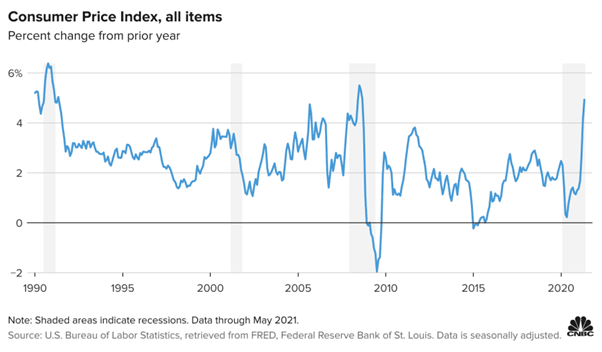
On Thursday, bond yields jumped briefly after the Labor Department reported that consumer prices jumped more than expected in May, rising by 5% on a year-over-year basis, the highest since the summer of 2008, when oil prices were skyrocketing. Excluding food and energy, core CPI rose 3.8% year over year, the highest pace since 1992. Fed officials have described the current period of high inflation as transitory, meaning it should be brief or short-lived. There is reason to support the Fed’s view that these inflation numbers will reduce before long given that much of the extreme inflation has been caused by the re-opening sectors (return of tourism), the increase in commodity prices (supply disruptions) and there is still little evidence of real wage pressure.

Shares in Europe gained ground supported by the European Central Bank’s (ECB) commitment to leaving its key policy measures unchanged and continuing its bond-buying program. ECB President Christine Lagarde said at a press conference that inflation would accelerate this year and then slow in 2022. The ECB expects eurozone inflation of 1.9% in 2021, up from the previous estimate of 1.5%.

For the week, global equity markets were mixed. In the U.S., a decrease in long-term bond yields helped push the broad-based S&P 500 to a new record high while the Nasdaq gained 1.85%. Similarly, the pan-European STOXX 50 Index ended 0.91% higher while the UK’s FTSE 100 Index gained 0.92%. Japan’s stock market returns were broadly unchanged for the week, with the Nikkei 225 Index up 0.02% while in China the broader based Shanghai Composite Index edged down 0.06%.

Market Moves of the Week

South Africa’s GDP officially grew by 4.6% in the first three months of 2021 exceeding the Bloomberg consensus estimate of 3.1% q/q. Improved household spending and robust activity in SA’s mining and finance industries helped the economy grow at the better-than-expected pace.

In a surprise announcement earlier this week, President Cyril Ramaphosa announced that the cap on self-generation power without a licence will be raised to 100MW. The aggregate effect of this change in policy is expected to have a massive impact for the SA economy with Andre De Ruyter (Eskom CEO) estimating that this could add as much as 5,000MW over the next 12-18 months. This is a welcomed and long-awaited development given SA’s current power supply crisis.

A consortium comprising of Johannesburg based Global Airways (which owns recently launched domestic airline Lift) and private equity firm Harith General Partners will take a 51% shareholding in South African Airways, Public Enterprises Minister Pravin Gordhan said on Friday. The government will retain a minority stake.

The JSE All Share Index ended the week marginally lower amid a new surge in Covid-19 infections while the SA listed property sector enjoyed another strong week gaining over 4%. The rand ended the week with a 2.28% loss against the U.S. dollar trading at R13.73/$ at the close.

Chart of the Week:

The U.S. Labor Department announced that last month’s increase in the consumer-price index was the largest since August 2008, when the reading rose 5.4%. The core-price index, which excludes the often-volatile categories of food and energy, jumped 3.8% in May from the year before—the largest increase for that reading since June 1992. Fed officials expect the current period of high inflation to be transitory since they are mainly centered in areas impacted by the pandemic.

As always, we appreciate your support and value your trust in LNKD Investment Managers..

The information included above as well as individual companies and/or securities mentioned should not be construed as investment advice, a recommendation to buy or sell or an indication of trading intent on behalf of any LNKD product. LNKD Investment Managers is an authorised financial services provider (FSP 51257).

Weekly Insights: Stocks up, Dollar down on Jobs Report

The U.S. jobs report remained in the spotlight this week, with Friday bringing the closely watched monthly nonfarm payrolls report. The U.S. added 559,000 jobs in May, below consensus forecasts of around 650,000. Whilst the number missed estimates, it was strong enough to shake off fears of a substantial slowdown in hiring after April’s disappointing monthly report, but not enough to spur higher inflation concerns – as a result, we saw stocks rally with the S&P 500 reaching a new all-time high and the dollar weakening on Friday.

The Bureau of Labor Statistics said that the unemployment rate had fallen to 5.8% from 6.1% in April, still significantly higher than the 3.8% unemployment rate recorded in February 2020 before Covid 19 hit. ADP payroll employment numbers released the day earlier came in well above estimates at 978,000 vs. 650,000 estimated.

Despite mixed employment signals, Federal Reserve officials once again reiterated that significant slack remained in the economy and that the Fed was far from achieving its inflation and employment targets but stressed that the Fed would be quick to act if inflation does not prove to be “transitory”.

President Biden has pitched Republicans the idea of a 15% minimum tax rate on U.S. corporations. It also sets aside Biden’s orginal proposal to raise the headline corporate income rate to 28% from 21%, a non-starter for Republican lawmakers. In return, Republicans would have to agree to at least $1 trillion in new infrastructure spending.

At the same time, the G7 group of nations are set to agree on a common position on taxing multinational companies, ending a three-decade race to the bottom in corporate taxation which would raise extra revenue for governments around the world. The G7 are nearing a deal to pursue a minimum corporate tax rate of at least 15% in international negotiations but remain at odds over how to treat global technology companies.

Eurozone inflation rose to 2% in May, the first time it surpassed the ECB target in more than two years, complicating policymakers decision next week on whether to maintain its ultra-loose monetary policy. The unemployment rate also eased unexpectedly to a level of 8.0% in April. In the prior month, unemployment was recorded at 8.1%.

China suprisingly relaxed its current two-child policy on May 31, allowing couples to have a third offspring. In January 2016, China relaxed its one-child policy to allow two children per family.

A second major cyberattack on critical U.S. infrastructure has taken place in less than a month. Hackers, alleged to be from Russia again, took the world’s largest meat producer, JBS offline this week. JBS’s five biggest beef plants in the U.S. halted processing following the weekend attack, equal to one-fifth of all of America’s meat production.

Oil prices surged on Wednesday, hitting their highest level in more than a year from a decision by OPEC+ and allies to stick to the plan to gradually restore supply, despite the alliance anticipating tighter oil markets going forward.

With the exception of Asia, global equities were modestly stronger this week. In the U.S., the Dow Jones (+0.66%), S&P 500 (+0.61%) and Nasdaq (+0.48%) were all stronger. Similarly, the Euro Stoxx 50 (+0.46%) and FTSE 100 (+0.66%) were positive, whilst the Nikkei 225 (-0.71%) and Shanghai Composite Index (-0.25%) were outliers.

Market Moves of the Week:

Locally, the Competition Commission ruled that the proposed takeover of Burger King by a U.S. private equity fund be prohibited due to the lack of BEE in the new ownership structure. While the Commission found that the proposed transaction was unlikely to impact Competition in SA, the Commission found that ”…the merger would lead to a significant reduction in the shareholding of historically disadvantaged persons in the target firm…”.

South African unemployment hit a record high with over 7 million people without a job. The official unemployment rate for the first quarter of this year reached 32.6%. Among the hardest hit are the South African youth with 74.4 percent of them facing unemployment.

The JSE All Share Index ended the week up +0.40%, with all three of the major sectors including resources (+0.49%), industrials (+0.55%) and financials (+0.11%) marginally stronger. The rand continues to strengthen and leads other emerging markets as the strongest currency against the U.S. Dollar year-to-date. As of Friday’s close, the rand was trading at R13.42 to the U.S. Dollar.

Chart of the Week:

The surge in early retirements spurred by the pandemic is increasing inequality among Baby Boomers in the U.S. At least 1.7 million older workers retired early, according to a report by the New School for Social Research’s Retirement Equity Lab.The Covid-19 health crisis is creating two classes of early retirees: people who have investments and are taking advantage of the unprecedented surge in shares and home prices; and low-paid workers without much retirement savings finding themselves forced out of their jobs with little prospect of finding employment again.

Whilst volatility is likely to continue amid current market uncertainty over the coronavirus pandemic, our message to all investors remains the same – stay calm in making decisions that are aligned with your long-term goals, not current market conditions. In any market environment, we strongly believe in the importance of having a portfolio that contains a variety of asset classes, including stocks and bonds, balanced in a way that reflects the investors risk tolerance and investment timeline.

As always, we appreciate your support and value your trust in LNKD Investment Managers..

The information included above as well as individual companies and/or securities mentioned should not be construed as investment advice, a recommendation to buy or sell or an indication of trading intent on behalf of any LNKD product. LNKD Investment Managers is an authorised financial services provider (FSP 51257).

Weekly Insights: Inflation fears subside

U.S. Federal Reserve officials this week again stressed that the current higher inflation rate wouldn’t last long enough to put pressure on the U.S. economic rebound. The term transitory thus remained the key theme surrounding inflation, which helped calm investors nerves about the U.S. tightening its monetary policy. Continuing with this theme, mixed U.S. economic data released this week, such as the fall in weekly jobless claims and lower than expected manufacturing gauges, further calmed investors worried about an overheating U.S. market. Although long-term inflation concerns have subsided, the U.S. Department of Commerce announced on Friday that the core personal consumption expenditures index increased 3.1% year over year. Fed officials attributed this temporary rise to base effects and production bottlenecks. 

President Biden proposed the largest U.S. budget ($6 trillion) since World War 2. If successful, total spending would rise to $8.2 trillion by 2031 while deficits would run above $1.3 trillion over the next 10 years. Forecasts also suggest that total U.S. debt would rise to 117% of gross domestic product by 2024. The plan assumes a steady inflation rate and a capital gains tax hike in 2021. 

In a similar story to the Gamestop saga, retail investors continued to show their influence on the market as the share price of the “meme stock” AMC skyrocketed this week on the news that large influential investors were shorting the stock. Short sellers are estimated to have lost a massive $1.2 billion this week. Bitcoin remained extremely volatile this week as numerous events surrounding the crypto currency took place: Iran banned the mining of cryptocurrencies, Elon Musk tweeted that he is pushing to make crypto mining more sustainable, and Cathy Wood’s ARK Invest bought $20M worth of the currency.

European markets moved positively on the news that accommodative monetary policies were there to stay. On another positive note, a Dutch court ruled that Royal Dutch Shell has to take accountability for its contribution to climate change and ordered the company to lower its CO2 emissions. This increases the support for the worldwide sustainability movement as the ruling was the first of its kind.

China and Washington held their first trade talks since the election of Joe Biden, with both sides agreeing on the importance of their bilateral trade relationship. Earlier this week, China banned the selling of commodities to retail investors in an attempt to halt the current surge in commodity prices. 

Japan remains in a state of emergency as their recent widespread Covid-19 outbreak continues. As a result, doubt has risen over Tokyo’s plan to host the Olympics in less than two months. Japan’s vaccination programme and their ability to contain this outbreak will remain in the spotlight over the coming weeks. 

For the week, global equity markets were positively steady. In the U.S., the Dow Jones (0.94%), S&P 500 (1.16%) and Nasdaq (2.06%) were all stronger. Similarly, the Euro Stoxx 50 (1.11%), FTSE 100 (0.06%), Nikkei 225 (2.94%) and Shanghai Composite Index (3.28%) all ended the week in the green.

Market Moves of the Week:

In South Africa, power utility Eskom managed to reduce its debt by almost a fifth, which was well received by the market. This was due to the company managing to repay matured loans while benefiting from a more favourable exchange rate. On a negative note, South Africa reported a 33% jump in daily Covid-19 infections on May 26. The government has been considering bringing back some stricter lockdown measures to try help curb the recent spike in infections.

The JSE All Share Index ended the week at its best level in three weeks up 1.99%, after South African companies’ results continued to surprise to the upside with improved corporate earnings.

Chart of the Week:

U.S. market-based inflation expectations for the period 2026 to 2031 have calmed down of late, after a spike to 2.4% earlier this month. Since then, expected rates have fallen back  closer to 2.2%, the kind of level that the Fed now says  it would be happy to tolerate. 

Whilst volatility is likely to continue amid current market uncertainty over the coronavirus disease, our message to all investors remains the same – stay calm in making decisions that are aligned with your long-term goals, not current market conditions. In any market environment, we strongly believe that investors should stay properly diversified across a variety of asset classes and that clients financial plan supports their long-term goals, time horizon and tolerance for risk.

As always, we appreciate your support and value your trust in LNKD Investment Managers.

The information included above as well as individual companies and/or securities mentioned should not be construed as investment advice, a recommendation to buy or sell or an indication of trading intent on behalf of any LNKD product. LNKD Investment Managers is an authorised financial services provider (FSP 51257).

Weekly Insights: Crypto’s Sell-off

LNKD Insights Crypto’s Sell-off

On Wednesday, bitcoin dived 30% to nearly $30,000 at one point, before paring some of those losses. The move lower was driven by mixed signals from Elon Musk and Tesla’s decision to reverse a decision to allow bitcoin as payment for cars, pointing to the environmental impact of bitcoin mining. Also weighing on bitcoin’s price Wednesday was the news that China had banned financial institutions and payment firms from providing cryptocurrency-related services, reiterating its tough stance on digital currencies.

After staging a rebound on Thursday, Bitcoin cut gains after the US Treasury Department said it is taking steps to crack down on cryptocurrency markets and transactions and said it will require any transfer worth $10,000 or more to be reported to the Internal Revenue Service.

This week’s crypto crash has helped erase almost 40% from bitcoin’s price from a peak of almost $65,000 in mid-April to current levels of $36,500.

Equities were mixed in the U.S. over the week with the tech-heavy Nasdaq (+0.31%) gaining a little ground and the other major U.S. indices (S&P 500 and Dow Jones) ending modestly lower. Investors continue to be concerned that strong U.S. growth could result in higher prices (inflation), forcing the Federal Reserve to pare back its accommodative monetary stance earlier than planned. The minutes of the April meeting of the Federal Open Market Committee revealed that a number of members were “thinking about” discussing tapering bond purchases “at some point in upcoming meetings.” According to a number of economists, the base effects caused by the global lockdowns, as well as transitory supply chain bottlenecks and the presence of significant labour market slack justifies the Federal Reserve’s outlook given that U.S. unemployment is still 5% below pre-pandemic levels. With this in mind, we continue to expect the Federal Reserve to ultimately maintain its credibility and sustain its accommodative monetary policy stance.

Shares in Europe rose on signs that the economy is rebounding with the Eurozone May flash services PMI 55.1 vs 52.5 (expected) reaffirming the pick-up in services activity in the euro area as economies start to reopen and move on from virus restrictions. The pan-European STOXX 50 Index ended the week 0.21% higher.

Meanwhile, as the UK continued to lift lockdown controls retail sales rebounded strongly in April. Sales volumes jumped 9.2% month on month – twice the average forecast in a Reuters poll of economists and the biggest rise since June – after rising 5.1% in March. Clothing sales soared by almost 70%. The UK’s FTSE 100 Index fell 0.36% over the week as the pound strengthened on the back of the stronger economic data.

Japan’s stock markets finished the week higher, with the Nikkei 225 Index returning 0.83% while Chinese stocks recorded a mixed week with the benchmark Shanghai Composite Index shedding 0.1%.

Market Moves of the Week:

South Africa’s central bank left its repo rate unchanged at 3.5% in a unanimous decision on Thursday, saying it saw the inflation risk on the upside. Reserve Bank (SARB) Governor Lesetja Kganyago said a recent spike in consumer prices was temporary, but that the bank would not hesitate to tighten policy if it became permanent. At the meeting the bank trimmed its forecast for consumer price-growth in 2021, to an average of 4.2% from 4.3% in March. It left forecasts for CPI in 2022 and 2023 unchanged, at 4.4% and 4.5% respectively.

Both S&P Global Ratings and Fitch decided not to cut their rating of South Africa deeper into sub investment grade on Friday, with Fitch noting that South Africa’s state finances have “improved substantially” despite continued “substantial risks to debt stabilisation”. Fitch noted that strong commodity prices have helped South Africa to achieve a current-account surplus of 2,2% of GDP, the first since 2002. S&P also highlighted the boost of higher commodity prices but said that structural constraints, a weak pace of economic reforms and a slow vaccination rate will continue to constrain economic growth.

The JSE All Share Index recorded a loss of 0.54% for the week dragged down by the resource sector (-3.27%) which was sharply down on the week. The rand gained for a second day on Friday ending the week at R13.97 to the U.S. Dollar.

Chart of the Week:

Bitcoin is down about 25% since last Friday, though it’s up from a Wednesday plunge to as low as $30,000. The volatile week started with Elon Musk suspending acceptance of Bitcoin payments at Tesla Inc. This was followed on Wednesday by China’s central bank adding a statement warning against using virtual currencies. China has long expressed displeasure with the anonymity provided by Bitcoin and other crypto tokens and warned earlier that financial institutions weren’t allowed to accept it for payment. While on Thursday, it emerged the U.S. may require crypto transactions of $10,000 or more to be reported to tax authorities.

As always, we appreciate your support and value your trust in LNKD Investment Managers.

The information included above as well as individual companies and/or securities mentioned should not be construed as investment advice, a recommendation to buy or sell or an indication of trading intent on behalf of any LNKD product. LNKD Investment Managers is an authorised financial services provider (FSP 51257).

Weekly Insights: Covid-19 Vaccine Race

Covid-race

Equity markets were subdued this week as positive incoming vaccine news was offset against ever-growing economic restrictions in the U.S. and Europe, aimed at curbing the recent spike in virus cases. On the vaccine front, the world received more positive news, following on from Pfizer and BioNTech’s announcement last week, with Moderna stating that its Covid-19 vaccine candidate is 94.5 percent effective. Both vaccines are based on introducing genetic material, mRNA, into the human body in order to produce spike proteins which prevents the coronavirus from entering human cells.

Meanwhile, The University of Oxford confirmed that the Covid-19 vaccine it is developing with AstraZeneca Plc, produced strong immune responses in older adults, with pivotal findings from the final phase of trials expected in the coming weeks. In less positive news, the U.S. crossed a grim milestone with fatalities attributed to Covid-19 crossing 250,000.

U.S. economic data releases during the week were mostly soft. Weekly jobless claims rose for the first time in over a month, from 711,000 to 742,000. Retail sales excluding autos in October also missed expectations and grew at the slowest pace (0.2%) since April, whilst industrial production rose a bit more than expected in October, but regional manufacturing gauges indicated slowing expansion.

Whilst President Trump continues to refuse to concede the recent election, his efforts were dealt another blow with President-elect Biden’s victory in Georgia confirmed by a recount. The Democrats beat the Republicans in Georgia by 12,284 votes, according to the audit required by state law.

In Europe, Hungary and Poland blocked the EU planned EUR 1.8 trillion fiscal package. Both countries opposed a mechanism that would allow the EU to block disbursements to countries violating its rule of law principles. German Chancellor Angela Merkel said she would hold talks with the leaders of the two countries while defending the existing proposal.

Brexit trade deal negotiations are down to the wire and expected to continue through the weekend and possibly into next week. If both sides don’t sign a trade deal, Britain will default to trading with the EU on WTO terms. France, the Netherlands, and Belgium urged the EU to start implementing contingency measures in case there is no deal before the Brexit transition ends on December 31.

Japan’s economy grew by 21.4% (annualised) in the third quarter, ahead of consensus estimates for a 18.9% increase. Prime Minister Suga and the International Olympic Committee also agreed that the Tokyo Olympics should be held despite the latest surge in the pandemic. The Olympic games are scheduled to be held from July 23 to August 8, 2021.

U.S. markets ended the week mostly negative, with the Dow Jones Industrial Average (-0.73%) and S&P 500 (-0.77%) both in the red compared to a mildly positive Nasdaq (+0.22%). This compares to European and Asian markets which both managed to finish the week in positive territory. In Europe, FTSE 100 Index (+0.56%) and Euro Stoxx 50 (+1.04%) were stronger along with the Nikkei (+0.56%) and China’s Shanghai Composite Index (+2.04%).