Weekly Insights: Markets Rebound as Risks Ease

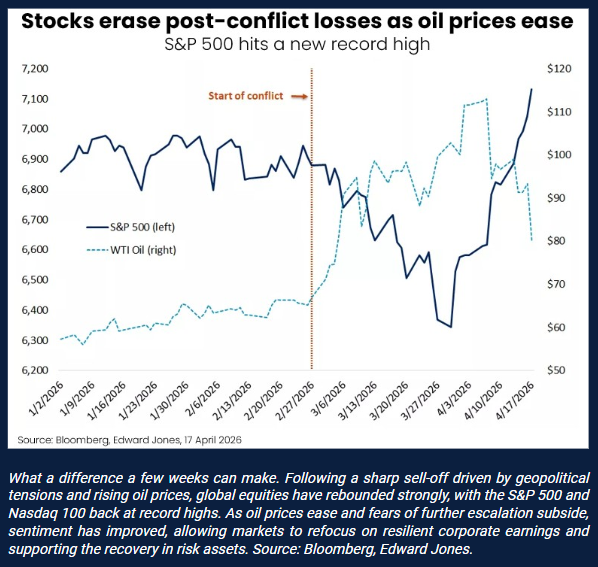
What a difference a few weeks can make. Markets have shifted rapidly from pricing in geopolitical shock and stagflation risk to a more constructive backdrop, with global equities rebounding sharply and major indices pushing back toward record highs. This recovery has been driven by easing oil prices, stabilising bond yields, and a reduction in immediate geopolitical risk. Importantly, corporate earnings have been resilient, continuing to provide a strong foundation for markets.

Developments in the Middle East remain central to market direction. A ceasefire agreement and signs of progress toward broader diplomatic engagement have helped ease immediate concerns around global energy supply, contributing to a pullback in oil prices. That said, the situation remains fluid, with earlier tensions briefly pushing Brent crude back toward $100 per barrel. The International Energy Agency estimates that around 13 million barrels per day of supply have been disrupted, highlighting the scale of the shock and the potential for further volatility should tensions re-escalate.

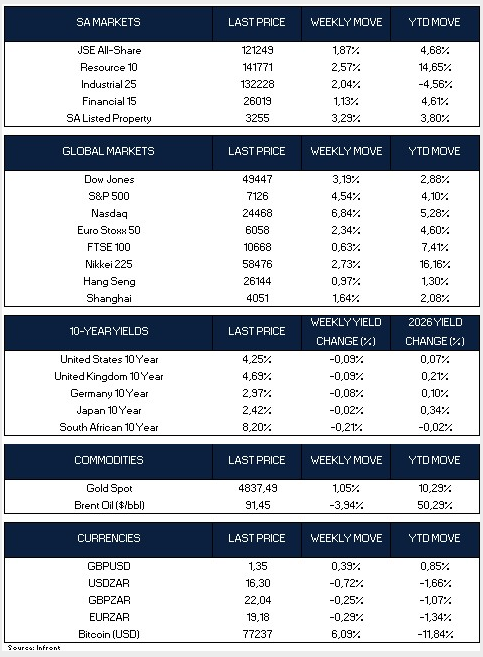
Against this backdrop, U.S. equity markets rebounded strongly, with the Dow Jones rising 3.19%, the S&P 500 gaining 4.54%, and the Nasdaq outperforming at 6.84%. The rally has been supported by a solid start to earnings season, particularly within the banking sector, alongside broadly stable economic data. Producer price inflation came in softer than expected at 0.5% month-on-month, while jobless claims declined to 207,000, pointing to a resilient labour market. Manufacturing indicators also improved, suggesting a pickup in activity. However, some areas remain under pressure, with industrial production declining 0.5% month-on-month and existing home sales falling 3.6%, highlighting ongoing weakness in housing.

In Europe and the UK, markets were also stronger this week, with the Euro Stoxx 50 rising 2.34% and the FTSE 100 advancing 0.63%. Economic data was mixed but generally supportive. UK GDP surprised to the upside, growing 0.5% month-on-month in February, while retail sales rose 3.1% year-on-year. Industrial production also improved modestly, although manufacturing output declined slightly. In the eurozone, industrial production returned to growth, rising 0.4% month-on-month. Inflation remains a key consideration, with headline inflation around 2.5% year-on-year, driven in part by energy prices. While underlying inflation pressures are gradually easing, risks remain tilted to the upside, and central banks continue to adopt a cautious, wait-and-see approach.

In Asia, performance remained positive but more moderate, led by Japan’s Nikkei 225 (+2.73%), while the Hang Seng (+0.97%) and Shanghai Composite (+1.64%) posted more modest gains. In Japan, policy expectations have softened, with the Bank of Japan maintaining a cautious stance amid uncertainty around energy prices and growth. The 10-year government bond yield remained around 2.41%, while the yen traded near 159 to the U.S. dollar. Business sentiment weakened notably, with manufacturing confidence recording its sharpest decline in over three years.

China’s economy continues to show signs of stabilisation, with first-quarter GDP expanding 5.0% year-on-year and 1.3% quarter-on-quarter. However, the underlying picture remains uneven. Industrial production rose 5.7% year-on-year, but retail sales slowed to 1.7%, pointing to weaker consumer demand. Fixed asset investment grew 1.7%, while property investment declined sharply by over 11%, underscoring ongoing pressure in the real estate sector.

Market Moves of the Week:
Locally, the story remains one of gradual stabilisation. Mining production surprised to the upside, rising 2.3% month-on-month and 9.7% year-on-year, supporting the growth outlook. Eskom’s three-year wage agreement provides further operational certainty, building on improved electricity supply conditions. While these developments are encouraging, structural challenges remain, particularly around the pace at which investment commitments translate into real economic activity.

South African markets ended the week firmer, with the JSE All Share Index gaining 1.87%. Resources led the advance (+2.57%), while industrials (+2.04%) and financials (+1.13%) also contributed positively. Listed property was a standout performer, rising 3.29% on the week. The rand strengthened modestly to around R16.30 against the U.S. dollar, while the South African 10-year government bond yield declined by 21 basis points to 8.20%, reflecting improved sentiment toward local fixed income.

Overall, markets have moved quickly from pricing in disruption to refocusing on fundamentals. While geopolitical developments remain a key near-term driver, the resilience of corporate earnings and signs of economic stabilisation continue to provide support. Periods of volatility are likely to persist, but the underlying picture remains constructive, reinforcing the importance of maintaining a diversified, long-term investment approach.

Chart of the Week:
As always, we appreciate your support and value your trust in LNKD Investment Managers. 

Weekly Insights: Ceasefire Sparks Rally as Oil and Inflation Risks Linger

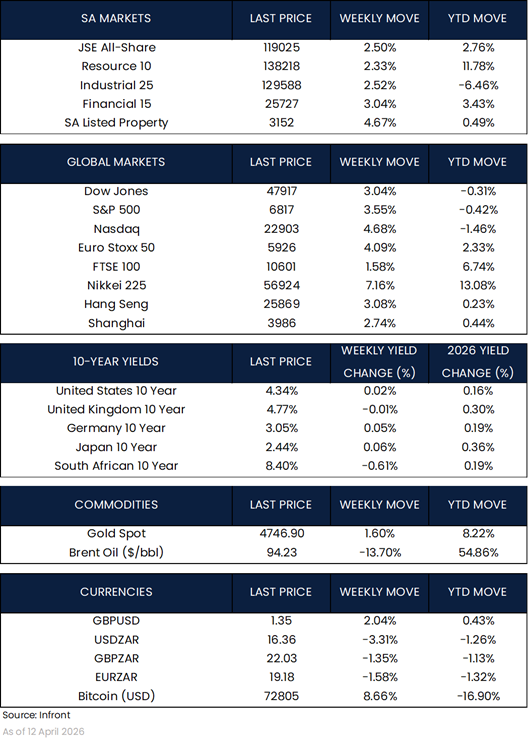
U.S. markets delivered another strong week of gains, marking a second consecutive week of positive performance. The S&P 500 rose 3.55%, the Dow Jones Industrial Average gained 3.04%, and the Nasdaq Composite led the way with a 4.68% increase.

Investor sentiment improved meaningfully as geopolitical tensions in the Middle East eased following news of a ceasefire agreement between the U.S. and Iran. This reduced concerns around oil supply disruptions and led to a sharp pullback in oil prices, which supported equity markets.

Technology stocks continued to drive performance, particularly those linked to artificial intelligence and semiconductors. Investors remain focused on long-term themes such as compute demand and infrastructure investment, which continue to underpin strong performance in this part of the market. Economic data was more mixed. Inflation picked up slightly, largely due to higher energy prices, while consumer sentiment weakened. This suggests that while markets are responding positively to global developments, underlying pressure on consumers remains.

European markets also moved higher during the week, supported by improving global sentiment. The Euro Stoxx 50 rose 4.09%, while the FTSE 100 gained 1.58%.

The rally was largely driven by easing geopolitical tensions, which encouraged investors to move back into equities. Gains were broad-based across the region, although performance varied between countries.

Despite the positive week for markets, the economic outlook remains uncertain. Policymakers have warned that growth forecasts may be revised lower, with risks of slower growth combined with rising inflation. This type of environment can be challenging for both businesses and consumers.

Recent data continues to reflect this mixed picture. Germany saw modest growth in factory orders, although below expectations, while services activity in France and Italy remained weak. In the UK, house price growth slowed, pointing to some pressure on the housing market. While markets have responded positively to global developments, underlying economic conditions in the region remain somewhat fragile.

Asian markets delivered strong gains during the week, supported by the improvement in global sentiment.

In Japan, the Nikkei 225 surged 7.16%, making it one of the best-performing major markets globally. The rally was led by technology and export-focused companies, which benefited from easing geopolitical tensions and improved global trade expectations.

A weaker yen continues to support exporters, although rising energy costs are beginning to feed into inflation. Consumer confidence declined during the week, highlighting growing pressure on households.

In China, markets also moved higher. The Shanghai Composite Index rose 2.74%, while the Hang Seng Index gained 3.08%. A notable development was the return of positive producer price inflation for the first time in several years, driven largely by higher commodity and energy prices. While this reflects rising cost pressures, it also suggests some stabilization in industrial pricing.

Market Moves of the Week:

South African markets had a strong week, in line with the broader recovery across emerging markets. The FTSE/JSE All Share Index rose 2.50%, supported by improved global sentiment and renewed investor appetite for risk.

Performance was broad-based across sectors. Financials led the way, with the FTSE/JSE Financial 15 Index gaining 3.04%, while Industrials also performed well, with the FTSE/JSE Industrial 25 Index up 2.52%. Resources lagged slightly but still delivered positive returns, with the FTSE/JSE Resource 10 Index rising 2.33%. Listed property was a standout, posting a strong gain of 4.67%.

The rand strengthened during the week, with USD/ZAR falling 3.31%, supported by a weaker U.S. dollar and improving global risk sentiment.

While markets performed well, the local economic backdrop remains under pressure, particularly from rising fuel costs. Petrol prices have surged to a two-year high, while diesel has reached record levels.

These pressures are expected to feed through the broader economy. Transport costs are rising, which impacts the entire supply chain from raw agricultural inputs through to finished food products. As a result, consumers are likely to feel the effects through higher prices on everyday goods.

Government has attempted to cushion the impact by temporarily reducing fuel levies, providing some relief to households and businesses. However, South Africa remains particularly vulnerable to global energy shocks due to its reliance on imported fuel and fertiliser.

This creates an interesting dynamic. While global factors are currently supporting local markets, particularly through improved risk sentiment and capital flows, rising input costs present a near-term challenge for the domestic economy. Overall, the week highlights the dual nature of South Africa’s position. The market benefits quickly from improving global conditions, but the local economy remains sensitive to external shocks, particularly those linked to energy prices.

Chart of the Week:

As always, we appreciate your support and value your trust in LNKD Investment Managers.

Weekly Insights: Iran Conflict Stokes Inflation Fears

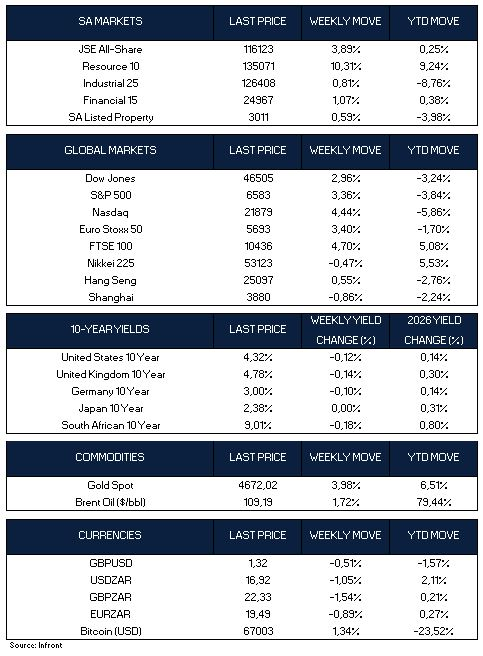
Global equity markets ended a volatile, holiday-shortened week in positive territory, with tentative signs of Middle East de-escalation lifting sentiment. The Nasdaq led the way, logging its best week since November, while the S&P 500 and Dow gained 3.36% and 2.96% respectively. European markets followed suit, with the STOXX 50 up 3.4% and the UK’s FTSE 100 gaining 4.7%.

The mood swung sharply through the week. Equities rallied early on hopes the US campaign in Iran was nearing its end, only to reverse after Trump’s Wednesday evening address threatened further escalation, including strikes on Iranian oil facilities over the next two to three weeks, while offering no plan to reopen the Strait of Hormuz. Markets largely recovered by Thursday’s close.

Brent crude surged above $109/barrel, its highest level in nearly four years on renewed supply disruption fears, while gold rebounded nearly 4% to around $4,672/oz as the dollar strengthened and rate cut hopes faded. US Treasuries advanced, with the 10-year yield falling from 4.44% to 4.31%, aided by Fed Chair Powell’s comments tempering near-term inflation concerns.

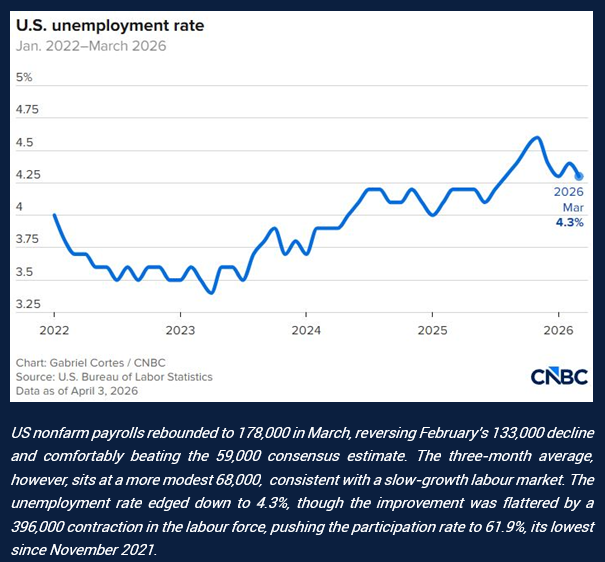
On the labour market, the US added 178,000 jobs in March, well ahead of the 59,000 consensus estimate and the unemployment rate dipped to 4.3%. However, the headline figures masked softer underlying trends: job openings fell to 6.9 million in February from 7.2 million in January, hiring slid to its lowest since 2020, and the labour force shrank by 396,000, with the participation rate dropping to 61.9%, its lowest since November 2021. Economists cautioned the Iran war is making businesses more hesitant to hire, with the full impact likely more visible in the April report. Markets now price virtually no Fed rate move through year-end, with futures pointing to a 77.5% probability of rates on hold.

Eurozone inflation jumped to 2.5% in March from 1.9% in February, above the ECB’s 2% target, driven by a 4.9% surge in energy costs. ECB President Lagarde signalled the central bank is monitoring the situation closely and stands ready to hike rates if necessary, even if the inflation spike proves temporary.

Japan’s Nikkei fell 1.7% amid expectations the Bank of Japan may raise rates at its April meeting in response to oil-driven inflation pressures. Chinese markets were mixed, while Beijing and Islamabad jointly proposed a five-point peace plan calling for a ceasefire and protection of Strait of Hormuz shipping lanes.

Next week, focus remains on the Iran conflict as it enters its sixth week, alongside US CPI, FOMC minutes, the PCE report, Michigan Consumer Sentiment, and monetary policy decisions from the Reserve Bank of India.

Market Moves of the Week:

South African Revenue Service (SARS) collected a net R2.01 trillion in tax for the fiscal year ended 31 March, 8.4% higher year-on-year and R24.7 billion above the 2025 budget forecast. The agency credited compliance initiatives, improved efficiency, and a strong contribution from the mining sector. For 2026/27, SARS is targeting R2.13 trillion, a 5.8% increase.

President Ramaphosa has appointed Ngobani Makhubu as the new SARS Commissioner for five years, effective 1 May. Makhubu, currently Deputy Commissioner for Taxpayer Engagement and Operations, takes over from Edward Kieswetter, who steps down after seven years at the helm.

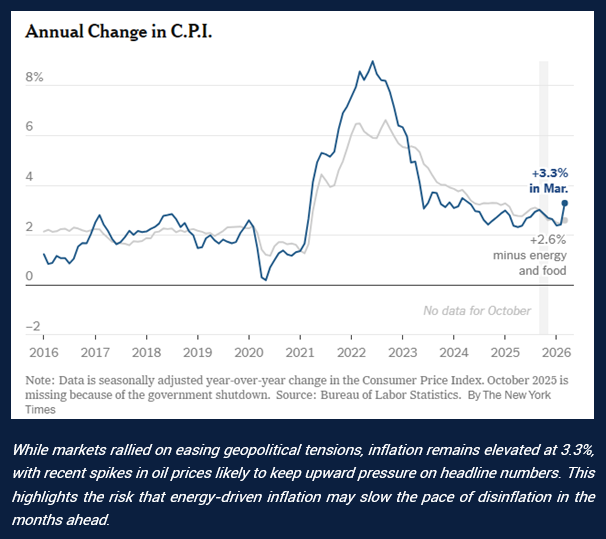
On the fuel front, petrol rose R3.06/litre to R23.25 from 1 April, while inland diesel hit a record R26.11/litre, up R7.51. The Iran conflict, which has pushed Brent above $100/barrel and pressured the rand, is the primary driver. A R3/litre fuel levy cut softened the blow, without it, economists warned the increase could have added at least 1.0 percentage point to annual CPI in April. February CPI came in at 3.0% year-on-year, bang on the SARB’s target, leaving little room for an unmanaged fuel shock.

Markets recovered some recent losses, with the FTSE/JSE All Share ending the holiday-shortened week 3.9% higher, buoyed by resource counters. The rand also firmed, gaining over 1% to close at R16.92/$.

Chart of the Week:

As always, we appreciate your support and value your trust in LNKD Investment Managers. 
Weekly Insights: Markets Navigate Rising Energy Risks

Global markets remained volatile this week. The conflict involving Iran continued to dominate sentiment, with markets reacting to every headline around ceasefire proposals, attacks on energy infrastructure and the prospects for a broader de-escalation. While hopes of diplomatic progress briefly improved sentiment early in the week, those gains proved short-lived as the parties remain far apart on the terms of any agreement. As a result, oil remained central to the market narrative, with investors increasingly concerned that a prolonged period of elevated energy prices could add to inflation pressures at a time when growth signals across major economies are already becoming more mixed.

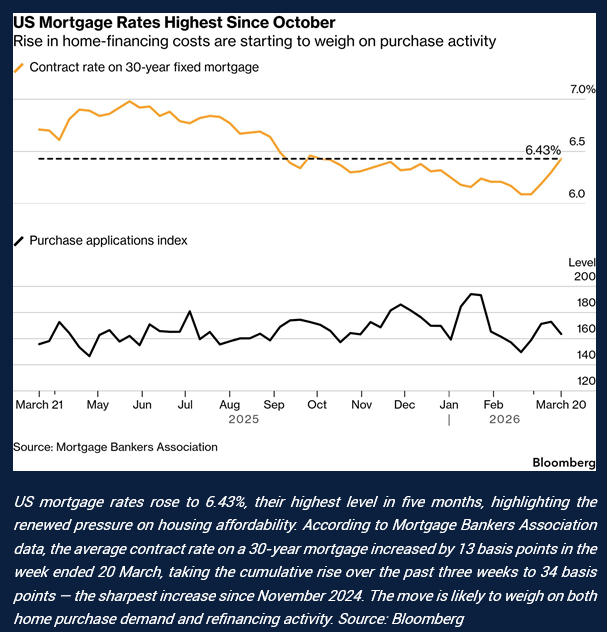
Higher energy prices are already starting to feed through into consumer and business expectations, complicating the outlook for central banks. If oil remains elevated for longer, policymakers may have less room to ease interest rates, even if economic momentum continues to soften. In the United States, for example, average gasoline prices have climbed to nearly $4 per gallon from around $2.80 at the start of the year, adding meaningful pressure to household budgets and reinforcing fears that higher energy costs could filter through into a broader range of goods and services.

In the United States, the economic backdrop remains mixed. Business activity is still expanding, but growth has slowed, with softer services activity offsetting some improvement in manufacturing. At the same time, pricing pressures have begun to pick up again, largely due to higher energy costs and supply chain disruptions linked to the Middle East conflict. This suggests that inflation risks may be re-emerging even as economic momentum moderates.

The labour market, however, continues to provide an important source of stability. Jobless claims remain relatively low and layoffs are still contained, indicating that businesses are not yet reacting aggressively to the more uncertain economic outlook. Even so, consumer sentiment weakened further in March as households grew more cautious about both the economic outlook and inflation. Against this backdrop, markets remained unsettled, with investors weighing two competing risks: slower growth on the one hand, and the possibility that the Federal Reserve may need to keep interest rates higher for longer if inflation proves more persistent.

In Europe and the UK, the economic backdrop is also becoming more fragile. Survey data pointed to slower growth in March, with eurozone business activity easing, German business confidence weakening and the OECD lowering its 2026 growth forecasts for both the eurozone and the UK. The common thread is that higher energy prices and geopolitical uncertainty are placing additional strain on economies that were already growing modestly.

At the same time, inflation remains sticky enough to limit how quickly central banks can respond. The European Central Bank has indicated that it stands ready to act if necessary, but policymakers say it is still too early to judge whether the recent rise in energy prices will translate into a more persistent inflation problem. In the UK, headline inflation held around 3% in February, while softer retail sales, weaker consumer confidence and slowing services activity suggest that households are becoming more cautious again.

In Japan, higher oil prices and yen weakness remained central to the outlook. As a major energy importer, Japan is particularly exposed to rising oil costs, both through higher business input costs and pressure on household spending. At the same time, the yen’s weakness has kept the risk of official currency intervention in focus for investors. Although inflation softened somewhat in February, much of the decline reflected temporary government energy relief measures rather than a meaningful easing in underlying price pressures. As a result, the Bank of Japan is likely to proceed cautiously with any further policy normalisation.

China entered this period of geopolitical uncertainty with some tentative signs of improving momentum. Industrial profits rose strongly in the first two months of the year and revenues also improved, suggesting that parts of the corporate sector began the year on a firmer footing. While these figures can be influenced by Lunar New Year timing effects, they nevertheless point to some stabilisation in business conditions, particularly among private firms where profit growth was notably stronger. Even so, China remains exposed to the broader global environment. Higher oil prices present a challenge for an economy that is a significant net importer of energy, prompting authorities to cap domestic fuel price increases to help cushion households and businesses. At the same time, trade tensions with the United States resurfaced, with Beijing initially striking a somewhat more conciliatory tone before later launching new investigations into US trade and supply chain practices.

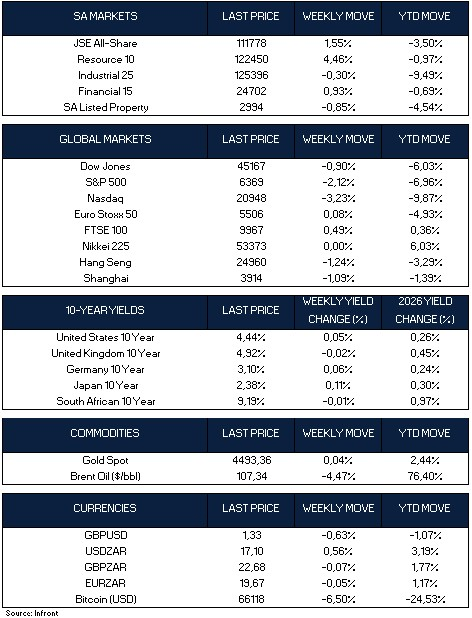
Overall, the week reflected a mixed but generally cautious tone across global markets. In the United States, equities remained under pressure, with the Dow Jones down 0.90%, the S&P 500 declining 2.12%, and the Nasdaq falling 3.23%. European markets were more resilient, with the Euro Stoxx 50 edging up 0.08% and the FTSE 100 gaining 0.49%. In Asia, performance was mixed, as Japan’s Nikkei 225 was broadly unchanged on the week, while Hong Kong’s Hang Seng fell 1.24% and China’s Shanghai Composite declined 1.09%. Bond yields moved modestly higher across most major developed markets as investors continued to weigh inflation risks and the interest rate outlook. In commodities, Brent crude oil fell 4.47% to $107.34 per barrel, although it remains sharply higher year to date, while gold was little changed on the week and is up 2.44% for the year.

Market Moves of the Week:

In South Africa, the SARB left the repo rate on hold at 6.75%, in line with expectations, but the tone of the decision was slightly more reassuring than markets had anticipated. Governor Kganyago described the Bank’s approach as prudent, reflecting greater confidence in the recent improvement in South Africa’s macroeconomic backdrop. This was supported by subdued producer inflation, with PPI flat month on month in February and slowing to 1.8% year on year, reinforcing the view that underlying domestic price pressures remain relatively muted.

That said, the SARB also made it clear that the outlook remains vulnerable to external shocks, particularly through a weaker rand or a prolonged rise in oil prices. While the base case remains for rates to stay unchanged throughout the rest of the year, the Bank signalled that a more sustained energy shock could justify a 25-basis point hike as early as May. Elsewhere, there were modest signs of improvement in domestic sentiment, with the leading business cycle indicator rising in January and consumer confidence improving slightly in the first quarter, suggesting that lower rates, firmer asset prices and a steadier currency provide some support to the broader economy.

Against this backdrop, South African markets ended the week firmer, diverging from the weaker tone seen across several major global equity markets. The JSE All Share Index gained 1.55%, supported primarily by a strong rebound in resource shares, while financials also posted a solid gain. Industrials were marginally weaker and listed property softened modestly. Despite the weekly improvement, year-to-date performance remains mixed, with most major sectors still in negative territory. The rand softened modestly to R17.10 against the US dollar, while the South African 10-year government bond yield edged slightly lower to 9.19%.

Chart of the Week:

As always, we appreciate your support and value your trust in LNKD Investment Managers.

Weekly Insights: Energy Shock Drives Hawkish Rate Repricing

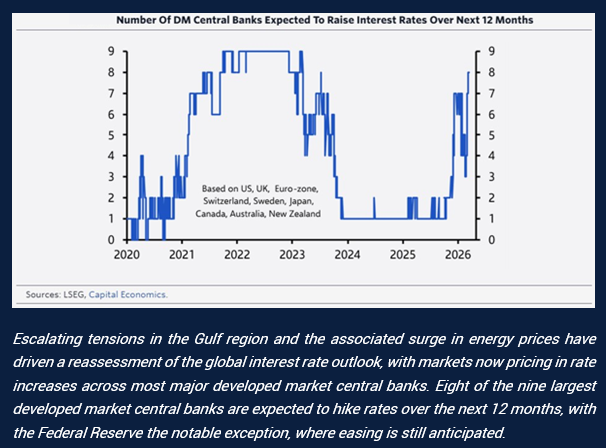
The Federal Reserve left its federal funds target range unchanged at 3.50%–3.75% at its March policy meeting, marking a second consecutive hold. The decision was near-unanimous, with eleven members voting to maintain rates and one in favour of a cut. The updated Summary of Economic Projections retained a median expectation of one rate cut in 2026, while forecasts for both inflation and GDP growth were revised higher. In his post-meeting press conference, Chair Jerome Powell highlighted elevated uncertainty around the economic outlook, pointing to geopolitical developments in the Middle East and the risk of an energy shock as key risks to inflation expectations.

Inflation concerns were reinforced by the latest producer price data, with the Bureau of Labor Statistics reporting a 0.7% increase in February, up from 0.5% in January and the highest monthly reading since July 2025. On an annual basis, PPI rose to 3.4% from 2.9%, with both measures exceeding consensus expectations.

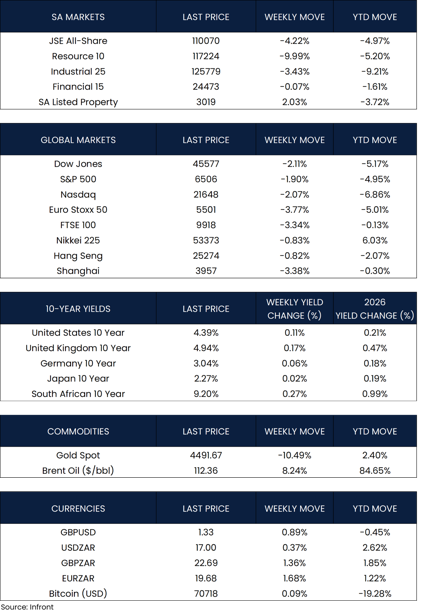
U.S. equity markets ended the week lower amid a confluence of headwinds, including escalating geopolitical tensions, energy price volatility, persistent inflationary pressures, and a hawkish read of the Fed’s latest policy guidance. The Dow Jones Industrial Average was the weakest performer, falling 2.11%, while the Nasdaq Composite shed 2.07% and the S&P 500 declined 1.90%. Gold and silver also declined as expectations for rate cuts eased, with markets shifting towards a more restrictive policy outlook. Brent crude surged 8.24% over the week to close at $112.36 per barrel.

In Europe, the European Central Bank also held rates steady, with President Christine Lagarde noting that elevated oil and gas prices are expected to have a material impact on near-term inflation. The ECB revised its 2026 inflation forecast higher to 2.6%, from 1.9% previously.

The Bank of England maintained its policy rate at 3.75%, in line with expectations, while cautioning that a sustained energy shock could prove inflationary and may require tighter policy. Separately, the Prudential Regulation Authority outlined proposals to strengthen liquidity buffers and enhance banking sector resilience during periods of market stress.

European equity markets declined over the week, with sentiment weighed down by escalating Middle East tensions, including disruptions to energy infrastructure. The STOXX Europe 50 Index fell 3.77% in local currency terms, while the FTSE 100 declined 3.34%. 
 
In Japan, the Bank of Japan held its policy rate at 0.75%, as expected, although the decision was not unanimous, with one member voting for a hike. The policy statement emphasised the need to monitor geopolitical developments, global market volatility, and oil price dynamics. While inflation may temporarily dip below the 2% target, the BoJ expects higher energy costs to support a rebound in price pressures and reiterated that further rate increases remain possible.

China’s combined January and February activity data — published together to adjust for Lunar New Year distortions — came in modestly ahead of expectations, pointing to tentative stabilisation in economic momentum. Industrial production expanded 6.3% year on year, retail sales grew 2.8%, and fixed asset investment grew 1.8%, supported by infrastructure spend which continued to offset weakness in the property sector. The data reduced the likelihood of near-term, large-scale policy stimulus.

In Asia, the Nikkei 225 declined by 0.83% in a holiday-shortened week. Chinese equity markets also moved lower, with sentiment weighed down by higher energy costs and ongoing concerns around subdued domestic demand. The Shanghai Composite fell 3.38% in local currency terms, while the Hang Seng Index was relatively more resilient, declining by 0.82%.

Market Moves of the Week:

South African inflation eased to 3.0% year on year in February 2026, down from 3.5% in January, largely due to base effects linked to a delay in medical aid adjustments. Housing and utilities were the main contributor, rising 4.8% and accounting for 1.1 percentage points of headline inflation. While the print came in softer, it is unlikely to shift the SARB’s near-term policy stance, with higher oil prices continuing to place upward pressure on inflation expectations.
 
Local equity markets retreated over the week, mirroring the weakness seen across global markets. The JSE All Share Index declined 4.22%, weighed down primarily by a sharp drop in resources, which lost 9.99% over the week. Industrials also ended lower, down 3.43%, while financials held up relatively well, slipping just 0.07%. Property was the standout performer, gaining 2.03% and providing some relief to the broader index. The rand continued to soften against the U.S. dollar, closing at R17.00 on Friday.

Chart of the Week:

As always, we appreciate your support and value your trust in LNKD Investment Managers. 
Weekly Insights: Middle East Conflict Dominates

Global markets faced a turbulent week as the escalating conflict in the Middle East continued to overshadow economic fundamentals, driving oil prices above $100 a barrel for the first time in over three years. The blockade of the Strait of Hormuz, which is a critical artery through which approximately 20% of the world’s daily oil supply passes has sent energy prices sharply higher, rattling investor confidence across virtually every major asset class and region. Against this backdrop, slowing US economic growth and sticky inflation added to an already complex investment environment.

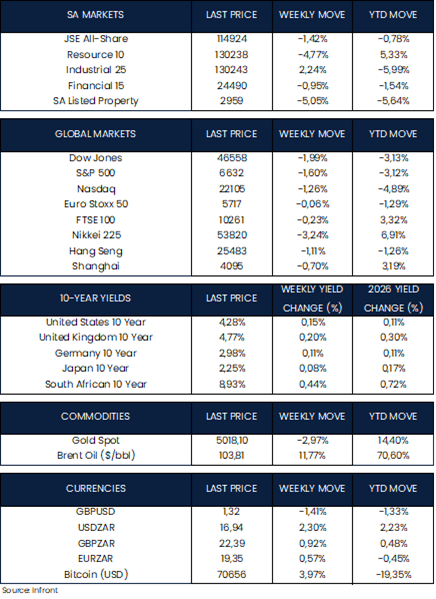
U.S. equity markets declined for a third consecutive week, with the benchmark S&P 500 ending the week 1.6% lower, recording its lowest level of 2026, while the Dow Jones Industrial Average lost approximately 2% and the Nasdaq Composite dropped 1.3%. Sentiment was further weighed down by concerns emerging in private credit markets, where several funds moved to cap withdrawals amid a wave of redemption requests.

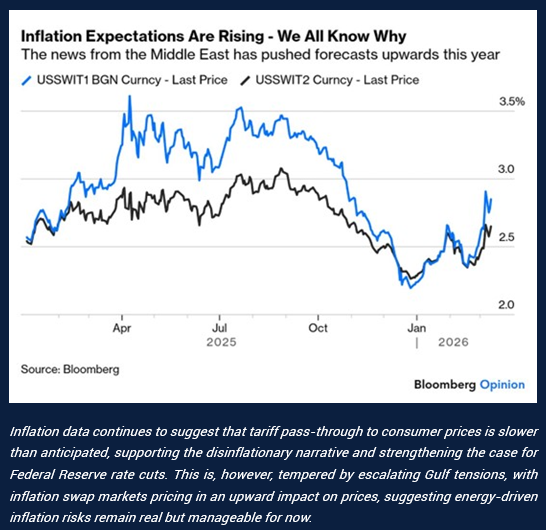
On the economic front, the data was sobering. US GDP growth for the fourth quarter of 2025 was revised sharply lower to just 0.7% annualised, well below expectations and a meaningful step down from the 2.8% growth recorded in 2024. Core PCE inflation, which is the Federal Reserve’s preferred measure rose 3.1% year-on-year in January, running above the Fed’s 2% target. Critically, this data predates the Middle East escalation, meaning the full inflationary impact of energy prices is yet to be captured in official figures.

Consumer confidence also deteriorated, with the University of Michigan Sentiment Index falling to 55.5 in March, its lowest reading in three months, as higher petrol prices weighed directly on household budgets.

Oil prices were the defining market story of the week. Brent crude settled above $100 a barrel for the second consecutive session, reaching its highest level in more than three years, as attacks on oil tankers and Iran’s warnings of further escalation removed any prospect of a quick resolution. Governments moved swiftly to respond, with a coordinated release of strategic reserves estimated at approximately 400 million barrels globally, which is equivalent to roughly 3 million barrels per day, alongside US efforts to ease sanctions on Russian oil and provide insurance support for shipping in the region.

European equity markets demonstrated relative resilience, though caution prevailed throughout the week. The pan-European STOXX Europe 50 Index edged marginally lower, slipping just 0.06%, while the UK’s FTSE 100 declined 0.23%. Investor focus centred on the likely duration of the Middle East conflict, the trajectory of energy prices, and the potential knock-on effects for European economic growth.

With several major central bank decisions scheduled for the week ahead, including the European Central Bank and the Bank of England, markets are also beginning to weigh how policymakers will respond to an environment of slowing growth and renewed inflationary pressure from energy costs.

In Asia, Japanese equity markets came under meaningful pressure, with the Nikkei 225 Index declining 3.24% over the week. Japan, as a major energy importer, is particularly exposed to rising oil prices, and Prime Minister Sanae Takaichi announced the release of a portion of Japan’s strategic oil reserves and introduced subsidies to help contain the rise in domestic petrol prices. The Bank of Japan’s rate decision in the coming week will be closely watched for any signal on how policymakers intend to balance inflation concerns against fragile economic momentum.

Chinese equity markets also retreated, with the Shanghai Composite falling 0.70% and Hong Kong’s Hang Seng Index declining 1.11%. Despite the broader weakness, Chinese export data offered a bright spot with exports surging 21.8% in the January to February period year-on-year, well ahead of analyst expectations. Consumer inflation also accelerated to its fastest pace in over three years, boosted by Lunar New Year holiday spending on travel and tourism.
 
Gold, typically a beneficiary of geopolitical uncertainty, had another volatile week. Despite edging higher on Friday, bullion was on track for its second consecutive weekly decline, losing 3% for the week. Surging energy prices have paradoxically reduced expectations for near-term US interest rate cuts which is a headwind for gold, which tends to perform better in lower-rate environments.

In the week ahead the war in the Middle East and its impact on energy supply will continue to dictate global markets and will play a key part in a series of rate decisions from major monetary authorities. In the US, The Federal Reserve is widely expected to hold interest rates steady at 3.50%–3.75%. Investors will focus closely on the updated FOMC economic projections and Chair Jerome Powell’s press conference for guidance on how the Fed is navigating the tension between slowing growth and renewed inflation risks. Rate decisions from the ECB, Bank of England, Bank of Japan, Swiss National Bank, Reserve Bank of Australia, Bank of Canada, and several other major central banks will also feature prominently.

Market Moves of the Week:

South African markets came under renewed pressure this week, with the rand, equities, and bonds all weakening as the ripple effects of the Middle East conflict continued to weigh on emerging market sentiment. Rising oil prices pose a particular challenge for South Africa as a net energy importer, amplifying inflation concerns at a time when the domestic economy is showing tentative signs of improvement.

Amid the challenges, there was a welcome bright spot with South Africa recording its first current account surplus in more than two years in the fourth quarter of 2025, meaning the country earned more from exports than it spent on imports. The surplus came in at 0.6% of GDP, swinging from a deficit of 0.9% the prior quarter, driven by a sharp widening of the trade surplus from R169 billion to R282.2 billion. The primary catalyst was higher global prices for precious metals, with the increase in the gold price playing a central role.

The JSE All Share Index declined 1.42% over the week, with resource counters among the notable underperformers. The broader market has now fallen approximately 10% since the start of March which is a sharp reversal that, if sustained, would represent the market’s first monthly decline after an impressive 14 consecutive months of gains.

The rand extended its losing streak for a second consecutive week, closing at approximately R16.95 to the US dollar, over 2% lower than the prior week. The weakness reflects both the global flight from emerging market assets and South Africa’s specific vulnerability as a net oil importer, with further pressure likely should energy prices remain elevated.

Domestically, investors will focus on the release of January inflation and retail sales data from Statistics South Africa. Inflation figures will be particularly closely watched given the recent surge in global oil prices and rand weakness both of which feed directly into domestic price pressures. Any upside surprise in inflation could complicate the SARB’s monetary policy outlook and reduce the likelihood of near-term rate relief for consumers.

Chart of the Week:

As always, we appreciate your support and value your trust in LNKD Investment Managers. 
Weekly Insights: Geopolitical Risks Weigh on Global Markets

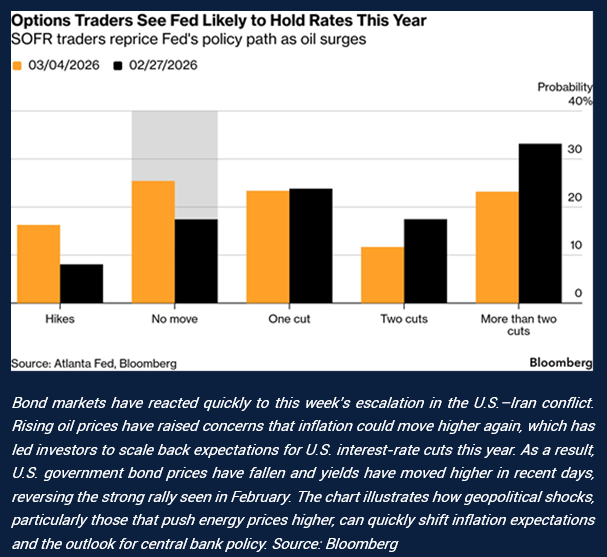
Global markets experienced a volatile week as a combination of geopolitical tensions and economic data created what many investors described as a “perfect storm” in markets. The escalation of the conflict in the Middle East following the United States’ military campaign against Iran pushed oil prices sharply higher, raising concerns about renewed inflation pressures at a time when global growth signals are becoming more mixed. Brent crude surged more than 30% during the week amid fears of potential supply disruptions, particularly as the Strait of Hormuz – through which roughly a fifth of global oil supply passes – faces potential disruption. Higher energy prices have historically been a challenge for both economies and financial markets, as they tend to lift inflation while simultaneously weighing on growth, a combination often referred to as stagflation.

The conflict has broadened into a regional confrontation, with Iran launching missile and drone attacks on several U.S. allies across the Gulf, while the United States and Israel have continued military strikes targeting Iran’s nuclear and military infrastructure. Attacks on vessels and energy infrastructure have already been reported, adding to concerns about the security of global energy supply routes. The human toll continues to rise, with casualties exceeding 1,000 people across the region. While diplomatic efforts have reportedly begun, the duration and ultimate scope of the conflict remain uncertain, leaving markets highly sensitive to further developments.

Against this backdrop, investors also digested a mixed set of economic data from the United States. Business activity indicators remained relatively resilient, with both manufacturing and services sectors continuing to expand. The ISM services index rose strongly to 56.1, its highest level since mid-2022, while manufacturing activity remained above the expansion threshold. Labour market data, however, sent a more cautious signal later in the week. Nonfarm payrolls unexpectedly declined by 92,000 in February, and the unemployment rate ticked up to 4.4%, raising questions about whether the labour market is cooling more quickly than previously anticipated. The weaker employment report complicates the Federal Reserve’s policy outlook, as policymakers must balance signs of slower growth against the risk that rising oil prices could push inflation higher again.

In Europe and the United Kingdom, investor sentiment also deteriorated as higher energy prices raised concerns about inflation and growth. European equities fell sharply over the week, with the STOXX Europe 600 index declining more than 5%. Inflation in the eurozone rose modestly to 1.9% in February, while unemployment fell to a record low of 6.1%, highlighting a mixed macroeconomic backdrop. In the UK, economic indicators suggested modest growth but ongoing fragility. Construction activity weakened and sterling fell to its lowest level in several months as markets assessed the potential economic impact of the conflict in the Middle East and rising energy costs.

Asian markets were similarly affected by the shift in global risk sentiment. Japanese equities declined sharply as investors assessed the potential inflationary impact of higher oil prices on an economy that remains heavily reliant on imported energy. Chinese markets were also weaker, with investors balancing geopolitical risks against domestic policy developments following the country’s annual National People’s Congress. Chinese policymakers set a GDP growth target of between 4.5% and 5% for 2026 and announced additional fiscal support measures aimed at boosting domestic demand and investment, particularly in technology and advanced manufacturing.

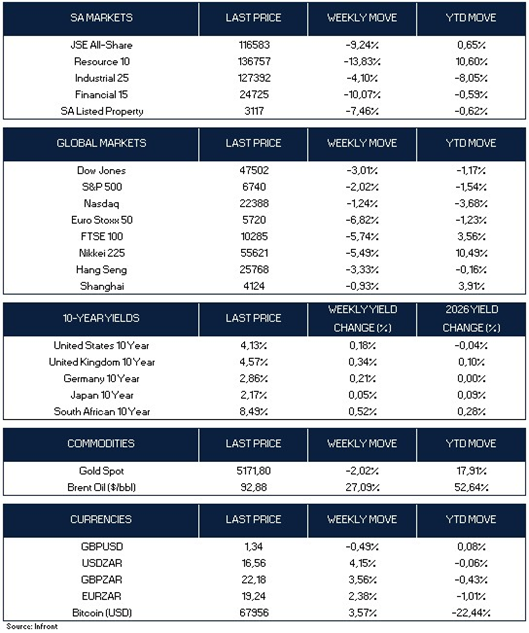
Overall, the week saw a broad risk-off move across financial markets. In the United States, the Dow Jones fell 3.01%, the S&P 500 declined 2.02%, and the Nasdaq eased 1.24%. European equities underperformed, with the Euro Stoxx 50 dropping 6.82% and the FTSE 100 falling 5.74%. In Asia, markets were also weaker, with Japan’s Nikkei 225 down 5.49%, Hong Kong’s Hang Seng declining 3.33%, and China’s Shanghai Composite slipping 0.93%. Bond yields moved higher across most developed markets, with the US 10-year yield rising to 4.13%, while UK and German 10-year yields increased to 4.57% and 2.86% respectively. In commodities, Brent crude oil surged 27.09% to $92.88 per barrel, reflecting supply concerns linked to Middle East tensions, while gold declined 2.02% but remains up 17.91% year-to-date.

Market Moves of the Week:

Recent economic data from South Africa presents a mixed but gradually improving picture. The manufacturing sector remains under pressure, with the ABSA Manufacturing PMI declining to 47.4 in February, signalling continued contraction. However, the S&P Global PMI held steady at 50.0, suggesting that activity across the broader private sector may be stabilising after a difficult period.

Business sentiment has shown some improvement. The Bureau for Economic Research (BER) business confidence index rose to 47 in the first quarter of 2026 from 44 previously – the strongest reading since 2015 outside of the post-COVID rebound. The improvement reflects a more stable political environment, supportive interest rate conditions and a relatively steady currency, although confidence remains below the neutral 50 level, indicating that businesses are still cautious about the economic outlook.

There have also been some encouraging developments on the investment and infrastructure front. A consortium of manganese producers is preparing a bid to build and operate a new export port at Ngqura in partnership with Transnet, which could significantly expand South Africa’s export capacity. At the same time, financiers are working on a R2 billion “water bond” aimed at funding projects to restore key water catchments and improve long-term water security. These initiatives highlight ongoing efforts to strengthen infrastructure and support the country’s longer-term economic resilience.

Local equities ended the week sharply lower, reflecting the broader global risk-off environment. The JSE All Share Index declined 9.24%, with losses broad-based across sectors. Resource stocks led the decline, falling 13.83%, while Financials dropped 10.07%, Listed Property declined 7.46%, and Industrials fell 4.10%. Despite the weekly weakness, performance on a year-to-date basis remains mixed, with Resources still up 10.60%, while Industrials (-8.05%), Financials (-0.59%), and Listed Property (-0.62%) remain slightly negative for the year. The rand weakened to around R16.56 against the U.S. dollar, while the South African 10-year government bond yield rose to 8.49%, reflecting the more cautious global risk backdrop.

Chart of the Week:

As always, we appreciate your support and value your trust in LNKD Investment Managers. 

Weekly Insights: Volatility Flares, Fundamentals Hold

Global markets experienced a more volatile week as investors digested a mix of economic data, earnings releases and ongoing geopolitical and trade uncertainty. While headlines around artificial intelligence and credit markets unsettled sentiment, underlying economic indicators continue to point to a global economy that is slowing in parts but remains broadly resilient.

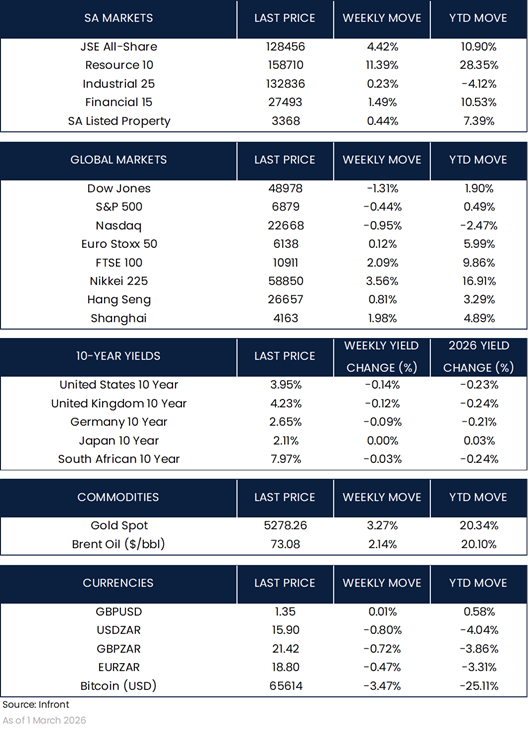
In the United States, equity markets ended the week lower. The Dow Jones declined 1.31%, the S&P 500 fell 0.44% and the Nasdaq lost 0.95%. Early in the week, markets sold off after a widely circulated research paper reignited concerns about the potential disruptive impact of artificial intelligence across various industries. The report amplified existing nervousness around whether AI could accelerate structural shifts in business models and earnings patterns. Sentiment stabilized midweek ahead of NVIDIA’s quarterly results. Although the company delivered earnings that beat expectations, the strong numbers were not enough to fully reverse the cautious tone, and markets drifted lower into the weekend.

On the economic front, producer price inflation surprised slightly to the upside, rising 0.5% month on month in January and 2.9% year on year, driven largely by services prices. Factory orders declined in December, reflecting some softness in parts of the manufacturing sector. Consumer confidence improved modestly to 91.2, suggesting households remain cautious but not overly pessimistic. Initial jobless claims edged up to 212,000 but continue to point to a labour market that remains relatively stable. U.S. government bond yields moved lower during the week, with the 10-year Treasury yield declining to 3.95%, as investors sought some safety amid equity market volatility.

In the United Kingdom and Europe, markets were more resilient. The Euro Stoxx 50 rose 0.12% for the week and is now up 5.99% year to date, while the FTSE 100 gained 2.09%, taking its year to date performance to 9.86%. European equities have continued to benefit from solid corporate earnings and investor interest in diversifying beyond the U.S. technology-heavy market. German business confidence improved again in February, while inflation readings across the region were mixed but generally consistent with gradual easing price pressures. In the UK, consumer confidence slipped slightly, reflecting ongoing cost pressures, although comments from Bank of England officials about potential interest rate cuts in 2026 provided some support. Bond yields in both the UK and Germany eased modestly over the week.

Asian markets delivered stronger performance. In Japan, the Nikkei 225 rallied 3.56%, extending its year to date gain to 16.91%. Investors remain constructive on Japan’s policy direction and corporate reform momentum. Inflation data in Tokyo came in slightly ahead of expectations, reinforcing the view that the Bank of Japan will likely continue with a gradual and measured approach to adjusting interest rates.

In China, markets also advanced, with the Shanghai Composite rising 1.98% and the Hang Seng gaining 0.81%. Trading volumes improved following the Lunar New Year break, and attention is turning to upcoming policy meetings where economic targets and stimulus measures are typically outlined. The People’s Bank of China adjusted certain foreign exchange policy settings in what is seen as a move to manage currency volatility rather than signal a major change in direction.

Market Moves of the Week:

South African markets were among the strongest performers this week. The JSE All Share Index rose 4.42%, bringing its year to date gain to 10.90%. The Resources sector led the advance with an 11.39% weekly gain and is now up 28.35% year to date, supported by firm commodity prices. Financials gained 1.49%, while Industrials edged up 0.23% but remain negative for the year. Listed property rose 0.44%. Gold increased 3.27% and Brent crude oil gained 2.14%, providing additional support to the local bourse. The rand strengthened to 15.90 against the U.S. dollar, while the South African 10-year government bond yield declined to 7.97%.

The national budget was broadly well received by markets. Government maintained its projection that debt will peak this fiscal year at 78.9% of GDP before gradually declining over the medium term. Although near term deficit projections were slightly wider, the overall debt path remains stable. A reduction in weekly government bond issuance supported the local bond market. Several tax changes were announced, including an increase in the annual Tax Free Savings Account contribution limit to R46,000, a higher annual capital gains tax exclusion of R50,000 and an increase in the primary residence capital gains exclusion to R3 million. The single discretionary allowance was increased to R2 million per calendar year, and further clarity was provided on the regulatory treatment of crypto assets.

Chart of the Week:

As always, we appreciate your support and value your trust in LNKD Investment Managers. 
Weekly Insights: US GDP Growth Slows

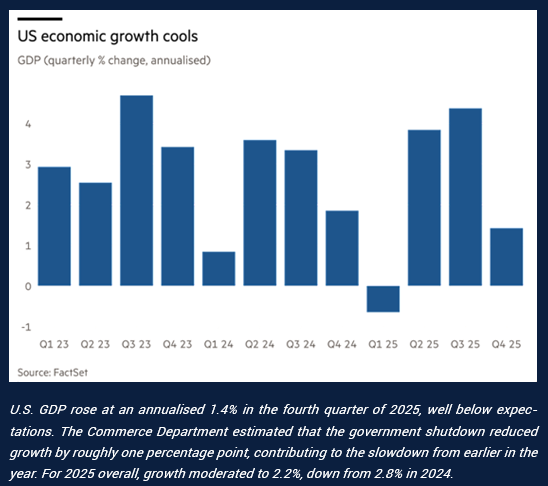
Data released by the Bureau of Economic Analysis (BEA) showed that U.S. growth slowed more than expected in the fourth quarter of 2025, with GDP expanding at an annualised 1.4%. The deceleration was largely driven by a sharp contraction in government spending amid the shutdown, which weighed on overall activity. Consumer spending remained comparatively resilient at 2.4%, though momentum softened relative to earlier in the year, while government spending declined 16.6%. For 2025 overall, economic growth moderated to 2.2% from 2.8% in 2024.

Separately, the BEA reported that headline PCE inflation rose 2.9% year-on-year in December, edging higher from the prior month and marking its highest level since March 2024. Core PCE — the Federal Reserve’s preferred gauge of underlying inflation, which excludes food and energy — increased 0.4% month-on-month and 3.0% year-on-year, accelerating from November’s 0.2% and 2.8%, respectively.

Minutes from the Federal Reserve’s January meeting, released on Wednesday, highlighted a clear split among policymakers over the next move in rates. While some members indicated that additional easing could be appropriate if inflation continues to cool, others pointed to “the possibility that upward adjustments” may be required should price pressures remain elevated. The minutes also noted that the “vast majority of participants” believe downside risks to employment have eased, though the risk of more entrenched inflation remains a concern.

In a 6–3 decision, the U.S. Supreme Court ruled that President Trump exceeded his authority in using the International Emergency Economic Powers Act (IEEPA) to impose tariffs on nearly all U.S. trading partners last year. President Trump responded critically to the decision and subsequently announced the implementation of a 10% global tariff, signalling continued intent to pursue an assertive trade stance despite the Court’s ruling.

UK CPI eased to 3.0% year on year in January, its lowest level in almost a year, partly due to lower fuel prices. Labour market data were also softer, with unemployment rising to 5.2% in the three months to December and wage growth slowing. The data have supported expectations that the Bank of England may cut interest rates at its March meeting, although inflation remains above the 2.0% target.

Seasonally adjusted industrial production in the eurozone declined 1.4% month on month in December, according to Eurostat, a sharper contraction than expected. In contrast, the preliminary February PMI surprised to the upside, with new orders expanding at their fastest pace in nearly four years
 
The International Monetary Fund expects China’s economy to grow 4.5% in 2026, slightly above its October forecast but below the 5% recorded in 2025. Following its Article IV consultation, the IMF noted that while growth has been resilient, structural challenges are intensifying and emphasised the need for a stronger shift toward consumption-led growth, supported by both macroeconomic measures and deeper reforms.

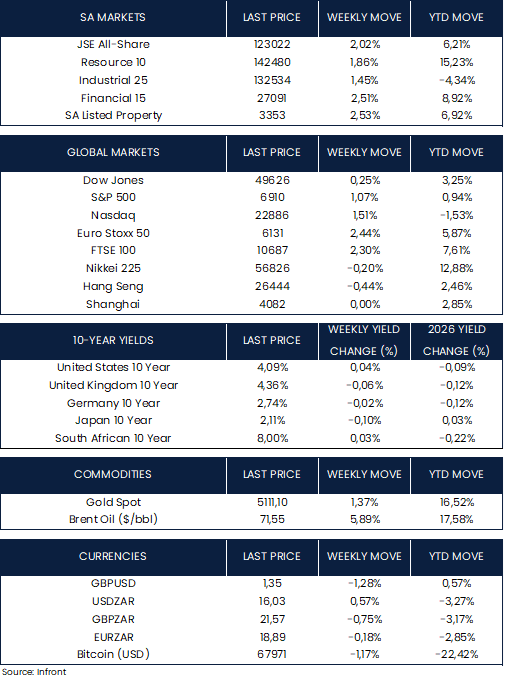
U.S. equity markets closed the holiday shortened week higher. The Nasdaq Composite led gains, advancing 1.51% and recording its first weekly increase since early January. The S&P 500 rose 1.07%, while the Dow Jones Industrial Average lagged the broader market, ending the week up 0.25%.

European equities delivered solid gains over the week, with the STOXX Europe 50 rising 2.44% in local currency terms. The FTSE 100 also advanced 2.30%, touching a fresh intraweek high.

In Asia, performance was more subdued. Japan’s Nikkei 225 edged 0.20% lower. Mainland Chinese markets were closed for the Lunar New Year from February 16 and will reopen on February 24. Hong Kong trading was suspended from February 17 to 19, following a half-day session on February 16, before resuming on Friday. The Hang Seng Index ended the week down 0.44%.

Market Moves of the Week:

Headline consumer price inflation in South Africa eased to 3.5% year on year in January 2026, down from 3.6% in December 2025, according to Statistics South Africa. The main contributors to the January reading were housing and utilities, food and non-alcoholic beverages, and insurance and financial services. Core inflation, which excludes food, non-alcoholic beverages, fuel and energy, increased to 3.4%, its highest in nearly a year.
 
Separately, Stats SA’s Quarterly Labour Force Survey reported that the official unemployment rate declined to 31.4% in the fourth quarter of 2025, from 31.9% in the third quarter, reflecting a modest improvement in labour market conditions. Overall, South Africa’s labour market shows improvements across multiple measures. However, unemployment levels remain exceptionally high, underscoring the persistence of the country’s structural jobs crisis.
 
The JSE All Share Index also ended the week in positive territory, gaining 2.02%, with broad based strength across all sectors. In contrast, the rand softened slightly, depreciating 0.57% against the U.S. dollar to close at R16.03 on Friday.

Chart of the Week:

As always, we appreciate your support and value your trust in LNKD Investment Managers. 
Weekly Insights: Inflation Cools While the US Labour Market Stays Resilient

The latest inflation data released in the U.S. by the Bureau of Labor Statistics showed further signs of easing price pressures in January. Headline consumer prices rose 0.2% month on month, down from 0.3% in December, while the annual inflation rate slowed to 2.4% from 2.7%, coming in below consensus expectations and marking the lowest level since May. The moderation was largely driven by a notable decline in energy prices, alongside favourable base effects as higher readings from a year ago dropped out of the annual calculation.

Core inflation, which excludes food and energy, increased 0.3% over the month—slightly firmer than December’s 0.2% reading and in line with forecasts. On an annual basis, core CPI rose 2.5%, matching expectations. While the headline data suggests that inflationary pressures are gradually easing, the steadier core reading indicates that underlying price dynamics remain somewhat sticky. Overall, the January report provides cautious optimism that inflation continues to trend in the right direction, even if progress remains uneven. This softer-than-expected inflation backdrop offered Wall Street a degree of relief during the week, strengthening expectations that the Federal Reserve could consider cutting interest rates later this year. Bond yields moved lower in response, with the US 10-year Treasury falling to 4.07% on Friday, its lowest level since early December, as the moderate CPI print reinforced the view that policy easing remains on the table even amid a resilient economy.

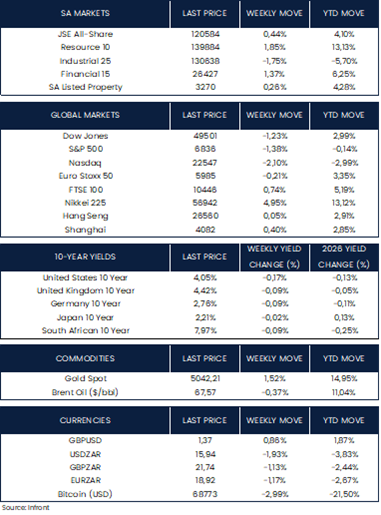
Equity markets, however, closed the week lower. The S&P 500 declined 1.39%, the Dow Jones Industrial Average fell 1.23%, and the Nasdaq Composite shed 2.1%, marking their largest weekly losses since November. Technology shares were particularly volatile, as concerns around artificial intelligence disruption and the significant capital expenditure required to support AI development weighed on sentiment.

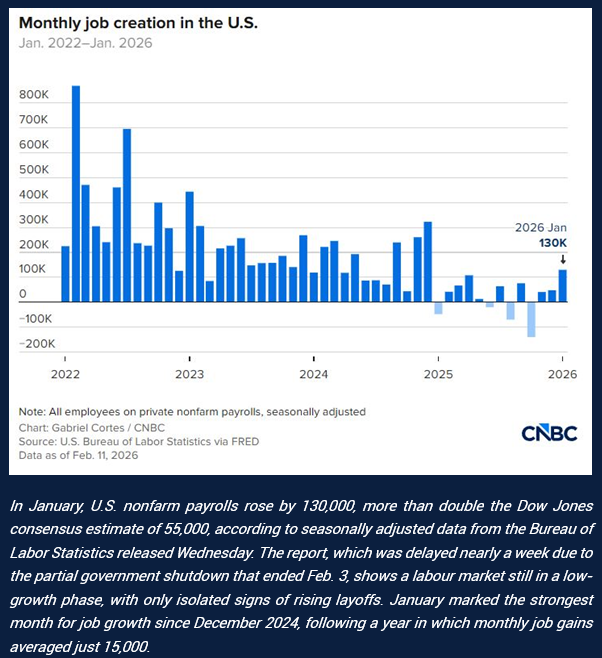
On Wednesday, the Bureau of Labor Statistics released January labour market data that exceeded expectations. Nonfarm payrolls rose by 130,000, well above consensus forecasts, while the unemployment rate ticked down to 4.3% from 4.4% in December. Job gains were led by healthcare, followed by social assistance and construction. The strong employment report highlights the continued resilience of the US economy, tempering expectations for aggressive interest rate cuts even as inflation shows signs of easing.

In Europe, the Euro STOXX 50 Index ended marginally lower as investors digested strong US jobs data and growing concerns about AI competition. Data from Eurostat showed that the eurozone economy expanded by 0.3% in the fourth quarter of 2025, offering modest support to the regional outlook.

In the UK, political uncertainty persisted amid calls for Prime Minister Keir Starmer to resign. Economic data from the Office for National Statistics indicated that real GDP grew by just 0.1% in Q4 2025, while annual growth reached 1%. Manufacturing activity improved over the quarter, though construction contracted. Retail sales rose 2.3% year on year in January, and the FTSE 100 added 0.74% for the week.

Japanese equities outperformed, with the Nikkei 225 surging 4.96% following the February 8 lower house election, where Prime Minister Sanae Takaichi’s Liberal Democratic Party secured a supermajority. In China, markets were modestly higher ahead of Lunar New Year holidays, with the Shanghai Composite Index gaining 0.43% while Hong Kong’s Hang Seng Index was little changed. The People’s Bank of China reiterated its commitment to a “moderately loose” monetary policy stance in 2026 as inflation data pointed to ongoing deflationary pressures.

In commodities, gold rebounded after recent weakness, supported by lower Treasury yields and a softer US dollar. Oil prices, however, edged lower, with Brent crude on track for a second consecutive weekly decline amid easing concerns over potential supply disruptions linked to US-Iran tensions.

Looking ahead, markets will focus on the Federal Reserve’s upcoming meeting minutes, US fourth-quarter GDP data, and income and spending figures. Canada’s inflation release, European PMIs, Japan’s GDP and inflation data, will also provide further insight into the global economic trajectory amid ongoing trade, fiscal, and monetary policy uncertainty.

Market Moves of the Week:

On Thursday night, President Cyril Ramaphosa delivered a candid assessment of South Africa’s most urgent challenges, pledging decisive action on crime, water shortages, dysfunctional municipalities, and the next phase of Eskom’s restructuring. Crime took centre stage, with Ramaphosa describing organised criminal networks as “the most immediate threat to our democracy, our society and our economic development.” He announced a strengthened offensive, including the consolidation of intelligence at the national level and the deployment of multidisciplinary intervention teams aimed at dismantling criminal networks. The South African National Defence Force will also support police operations in hotspot areas.
 
On infrastructure, the government has committed over R156 billion to water and sanitation projects over the next three years, advancing initiatives such as the Lesotho Highlands Water Project and the Ntabelanga Dam. Municipalities that fail to deliver services, Ramaphosa warned, will face consequences. On the energy front, the first round of independent transmission projects will begin this year, enabling private investment to expand the grid, while work continues to address load-shedding caused by transformer overloading and illegal connections.

On the markets, the FTSE/JSE All Share Index ended the week modestly higher, up 0.44%, with mining and resource-linked stocks leading gains thanks to robust demand and favourable commodity prices. Financials also performed well, reflecting continued investor confidence in banks and lenders, while industrials lagged amid currency strength and softer sector performance.

On the currency front, the rand maintained a strong position below the 16.00 level against the dollar, buoyed by high precious metal prices (gold, platinum, palladium) and improved sentiment around South African economic reforms.

Looking ahead, market and economic attention will turn to South Africa’s fourth-quarter unemployment figures, January inflation data, and December retail sales numbers.

Chart of the Week:

As always, we appreciate your support and value your trust in LNKD Investment Managers.