Weekly Insights: Markets Rotate as Technology Leadership Pauses

Global markets delivered a mixed performance this week as investors navigated a combination of economic data, shifting policy expectations and evolving sector leadership. While overall index movements were relatively contained, underlying market dynamics pointed to a continued rotation away from narrow technology leadership toward more cyclical and value-oriented areas.

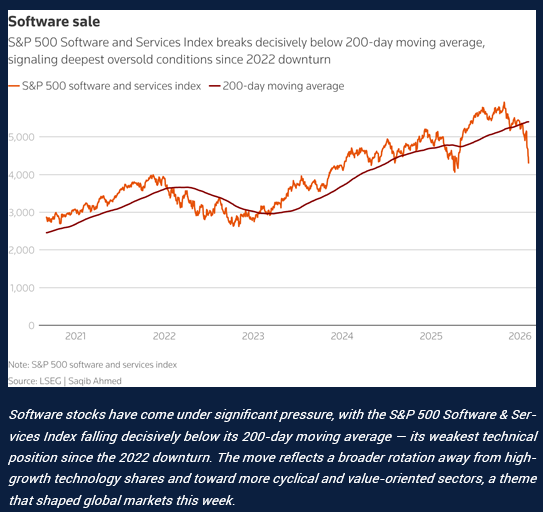
In the United States, equity markets ended the week divided. The Nasdaq declined 1.84%, reflecting pressure on large-cap technology shares, while the S&P 500 was broadly unchanged at -0.10%. In contrast, the Dow Jones Industrial Average rose 2.50%, supported by gains in more traditional and cyclical sectors. The week highlighted a shift in investor positioning, as concerns around the pace of artificial intelligence investment and its impact on corporate profitability weighed on high-growth companies that have driven market returns in recent years. At the same time, investors rotated into areas of the market that have lagged, including financials and industrials, which benefited from improving economic expectations. Economic data releases added to the cautious tone. Labour market indicators were softer than anticipated, with slower private job creation, a decline in job openings to their lowest level since 2020 and a notable rise in layoffs. Despite this, parts of the real economy showed resilience. Manufacturing activity returned to expansion territory for the first time in a year, supported by stronger new orders, while services activity remained stable and continued to expand. In fixed income markets, U.S. Treasury yields edged lower, supporting bond returns, as investors positioned more defensively amid mixed economic signals.

Across the United Kingdom and Europe, markets delivered a steadier performance. The Euro Stoxx 50 gained 0.85% and the FTSE 100 rose 1.43% over the week, supported by easing inflation and a relatively resilient economic backdrop. Policymakers maintained a cautious stance, with the European Central Bank holding rates unchanged and signalling that inflation is gradually moving back toward its 2% target. The Bank of England also left policy rates on hold but indicated that the path toward rate cuts may be approaching, particularly if inflation continues to moderate. Economic data was mixed, with retail activity softening slightly, although broader trends suggest household spending is stabilising. Overall, sentiment across the region remained constructive as investors balanced slowing inflation with steady growth.

Asian markets showed diverging trends. In China, equities struggled, with the Shanghai Composite falling 1.27% and the Hang Seng declining 3.07%. Weakness in technology shares and ongoing concerns about domestic demand continued to weigh on investor sentiment. Economic indicators provided a mixed picture. Private-sector surveys suggested modest improvements in activity, particularly in manufacturing and services, supported by export demand. However, official data pointed to slower overall momentum, highlighting the challenges China faces in reviving domestic consumption. Expectations remain that policymakers will introduce further measures to support growth in the months ahead. In Japan, equity markets moved higher, with the Nikkei 225 rising 1.75% for the week. Investor optimism was supported by expectations of continued fiscal support and political stability ahead of the country’s upcoming election. A weaker yen provided additional support for export-oriented companies, although it also underscores the delicate balance policymakers face in managing inflation and financial stability. Economic data showed that household spending declined, reflecting the ongoing pressure on consumers from rising prices. Bond yields remain elevated, reinforcing concerns around Japan’s fiscal position and the long-term sustainability of its debt levels.

Market Moves of the Week:
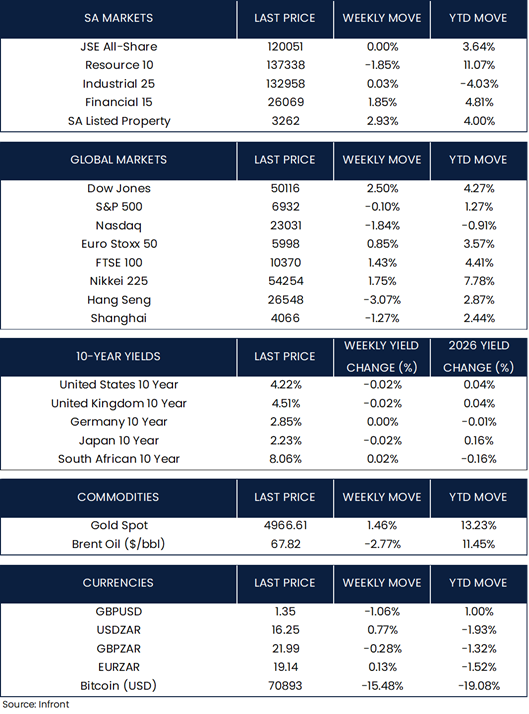
South African markets were relatively stable, with the JSE All Share finishing the week unchanged. Performance across sectors was mixed, with financials and listed property posting gains while resources declined amid commodity volatility and industrials were largely flat. The domestic bond market was steady, with the 10-year government yield closing around 8.06%.

On the policy front, South Africa moved to deepen its economic relationship with China through the signing of a new framework agreement aimed at expanding trade and investment ties. The agreement is expected to improve access for South African exports into Chinese markets while encouraging further Chinese investment across sectors such as mining, agriculture, renewable energy and manufacturing. Although still in its early stages, the initiative signals growing economic cooperation and could support longer-term growth and employment prospects. Overall, the week reinforced a key theme shaping global markets: leadership is broadening. After an extended period dominated by large-cap technology, investors are increasingly allocating toward value-oriented sectors, cyclical industries and regions outside the United States. Economic data remains mixed, with labour markets softening in some areas while manufacturing stabilises and inflation continues to ease. For long-term investors, this environment supports the case for diversification across geographies, asset classes and sectors, as markets adjust to shifting growth expectations and evolving monetary policy paths.

Chart of the Week:
As always, we appreciate your support and value your trust in LNKD Investment Managers. 

Weekly Insights: U.S. Confidence Slides in January

After three consecutive cuts, the Federal Reserve left the fed funds rate unchanged at 3.50%–3.75%, in line with expectations, in a 10–2 vote, with two officials favouring a 25-basis-point reduction. The accompanying policy statement struck a more constructive tone on growth, noting activity has been expanding at a solid pace, while inflation remains somewhat elevated and labour market conditions are showing signs of stabilisation. At the press conference, Chair Jerome Powell said rates did not appear “significantly restrictive” given economic momentum and reiterated that decisions would be taken on a meeting-by-meeting basis.

On Friday morning, U.S. President Donald Trump nominated former Federal Reserve governor Kevin Warsh to succeed Jerome Powell as Fed chair when Powell’s term expires in mid-May, subject to Senate confirmation. Warsh served from 2006 to 2011 and was a finalist for the role in 2017. He is viewed as a pragmatist who argues the Fed has strayed from its mandate and that its balance sheet is excessive, with his nomination seen as largely easing recent concerns over central bank independence. The announcement sparked a rebound in the dollar, weighing on precious metals and pushing gold and silver lower after investors had piled into the sector.

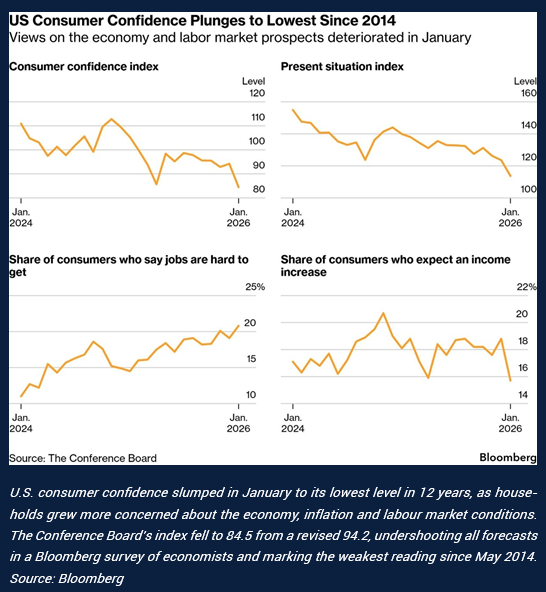
U.S. producer prices climbed by the most in five months in December, partly reflecting pass-through from import tariffs and pointing to renewed inflation pressures. The figures, published by the United States Department of Labor, came in above expectations and were driven mainly by higher services prices, especially trade margins, hotel accommodation and airfares. Goods prices were unchanged, while the data reinforced the likelihood that the Federal Reserve keeps interest rates steady for now. Separately, the Conference Board’s consumer confidence index fell sharply in January to its lowest level since May 2014, undershooting expectations as households reported weaker views on the economy and labour market.

The eurozone economy expanded 1.5% in 2025, up from 0.9% in 2024 and ahead of the European Commission’s 1.3% forecast, as stronger investment, household spending and exports offset political and economic uncertainty. Fourth-quarter GDP rose 0.3% quarter on quarter, slightly above expectations and in line with the prior pace, with faster growth in Germany, Spain and Italy helping to counter sluggish momentum in France.

British Prime Minister Keir Starmer visited Beijing this week to reset relations between the United Kingdom and China after years of strain linked partly to Hong Kong. After talks with President Xi Jinping, Starmer said the UK was entering a new, “sophisticated” relationship, with the two sides agreeing to study greater market access in business and financial services, cut Chinese whisky tariffs from 10% to 5%, and introduce visa-free travel for Britons. In response, U.S. President Donald Trump later warned Starmer that closer UK–China business ties would be “very dangerous.”

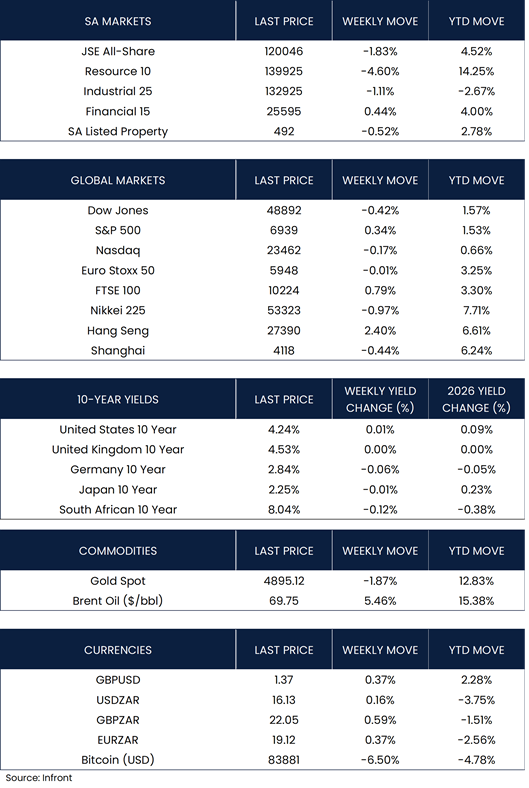
The S&P 500 Index edged slightly higher to finish the week up 0.34%, while the Nasdaq Composite and the Dow Jones Industrial Average ended marginally lower, down 0.17% and 0.42% respectively. In Europe, the STOXX Europe 50 Index was flat at -0.01%, while the UK’s FTSE 100 Index gained 0.79%.

In Asia, markets were mixed. Japan’s Nikkei 225 Index fell 0.97%, while mainland China’s Shanghai Composite Index slipped 0.44%. Meanwhile, Hong Kong’s Hang Seng Index gained 2.40%.

Market Moves of the Week:

The South African Reserve Bank held its repo rate at 6.75% at its first policy meeting of 2026, with the Monetary Policy Committee opting for caution amid ongoing global and domestic uncertainty and inflation expectations still above the 3% target. While two members favoured a 25-basis-point cut, the majority preferred to maintain the current stance, and the Bank’s projections continue to anticipate gradual easing as inflation trends lower. Governor Lesetja Kganyago noted that inflation is contained but services price pressures persist, and decisions will remain data dependent as the economy navigates risks including currency and administered price developments.

Similar to global peers, the JSE All-Share Index fell 1.83% over the week, dragged lower by a 4.60% drop in resources, while industrials (-1.11%) and SA property (-0.52%) also detracted from returns. Financials were the only sector to record gains, rising 0.44%. In currency markets, the rand strengthened earlier in the week to around R16 per dollar—its firmest level since mid-2022 on the back of elevated gold prices—before ending Friday at R16.13 after a rebound in the dollar, leaving it 0.13% weaker over the week.

Chart of the Week:

As always, we appreciate your support and value your trust in LNKD Investment Managers. 

Weekly Insights: Volatility Flares, Fundamentals Hold

Global markets navigated another week shaped by geopolitical uncertainty and shifting investor sentiment, as renewed U.S. tariff threats briefly unsettled risk appetite before attention returned to economic data and corporate earnings. A fresh round of company earnings is testing whether the AI-driven profit cycle is broadening beyond a narrow group of technology leaders, while recent geopolitical developments underscored how quickly policy uncertainty can re-emerge and influence market confidence. Although volatility proved short-lived, the episode highlighted the persistent tension between political risk and economic fundamentals that continues to define the global investment landscape.

In the United States, markets were initially rattled by an escalation in tariff rhetoric linked to President Trump’s push to acquire Greenland, triggering a sharp risk-off reaction. U.S. equities declined, the dollar weakened, Treasury yields fell and gold surged to record highs, briefly reviving the “sell America” narrative that had emerged at times in 2025. Sentiment improved later in the week after Trump softened his stance and signalled a potential framework for a deal, allowing markets to stabilise. Beneath the political headlines, economic data remained broadly resilient: real GDP growth was revised higher to an annualised 4.4% in the third quarter, core inflation held at 2.8% year-on-year, jobless claims remained near historically low levels and business activity indicators showed modest improvement. Together, these data suggest the U.S. economy continues to expand at a solid pace, even as political uncertainty injects episodic volatility.

Across Europe, the macro backdrop showed tentative improvement but remained uneven, with stabilising inflation and improving business sentiment offset by persistent structural headwinds. Eurozone inflation rose 0.2% month-on-month in December, while survey data pointed to modest expansion and stronger forward-looking confidence, particularly in Germany. However, the region’s trade surplus narrowed sharply, highlighting the ongoing drag from weak external demand and elevated global uncertainty. Overall, the data suggest that while recession risks have eased, the recovery remains fragile and heavily dependent on the global trade cycle.

In the UK, the economic picture was similarly mixed. The unemployment rate held at a five-year high of 5.1% and wage growth continued to slow, signalling a gradual cooling in the labour market, while inflation surprised slightly to the upside in December. At the same time, retail sales rebounded and consumer confidence improved modestly, indicating that household spending remains resilient despite persistent cost-of-living pressures. Against this backdrop, renewed progress on U.S.–EU trade relations helped stabilise sentiment, although ongoing political and trade tensions continue to constrain Europe’s growth outlook and leave the region highly sensitive to global policy and geopolitical developments.

In Asia, Japan experienced heightened volatility as political uncertainty and fiscal concerns weighed on markets. An early election announcement and proposals for expansionary fiscal measures raised questions about the sustainability of public finances, triggering sharp moves in long-dated government bond yields. Economic data painted a mixed picture: industrial production declined on a year-on-year basis in November, while business activity improved, with both manufacturing and services PMIs moving further into expansionary territory. Inflation moderated to 2.1% year-on-year and the Bank of Japan kept policy unchanged, maintaining a cautious stance amid rising sensitivity to bond yields and fiscal risks.

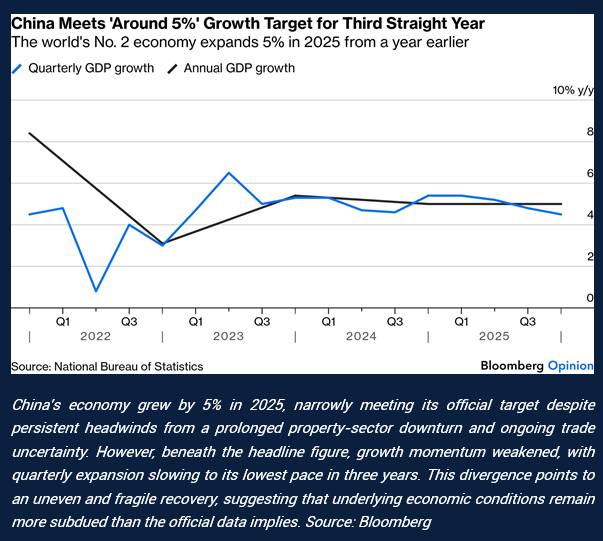
China, meanwhile, reported GDP growth of 4.5% in the fourth quarter and 5% for 2025, again meeting its official target, but underlying trends revealed a more fragile recovery. Nominal growth slowed, fixed asset investment declined for the first time in decades and retail sales remained subdued, underscoring persistent weakness in domestic demand even as industrial output strengthened.

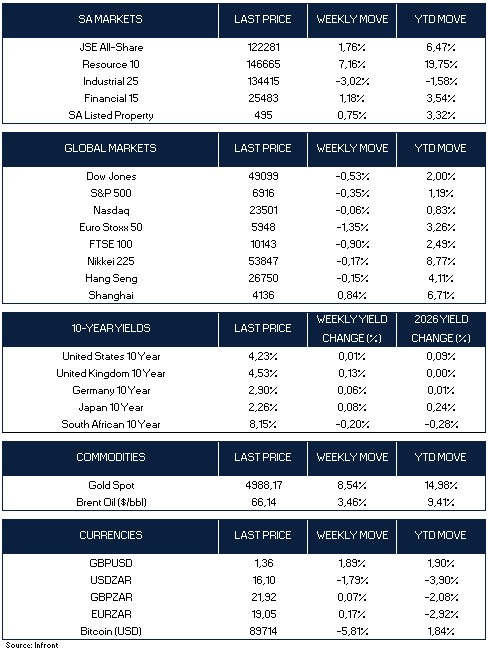
Global equity markets ended the week slightly lower, reflecting a broadly cautious risk environment. The Dow Jones fell 0.53%, the S&P 500 eased 0.35% and the Nasdaq slipped 0.06%. European equities underperformed, with the Euro Stoxx 50 down 1.35% and the FTSE 100 declining 0.90%. In Asia, market performance was mixed: Japan’s Nikkei 225 and Hong Kong’s Hang Seng recorded small losses, while Chinese equities outperformed, with the Shanghai Composite rising 0.84%. Bond markets were relatively stable overall, while commodities strengthened, led by a sharp rally in gold and a solid rise in oil prices. Bitcoin declined over the week but remains modestly higher on a year-to-date basis.

Market Moves of the Week:

The South African rand strengthened over the week, closing near R16.10/$ as markets positioned ahead of the upcoming interest rate decision and continued to price in supportive global and domestic dynamics. The currency remains close to its strongest levels since mid-2022, underpinned by record-high gold prices, improved fiscal metrics, a credible monetary policy framework and a softer U.S. dollar. The rand has gained more than 2% against the dollar since the start of 2026, with further upside possible should commodity prices remain firm and global risk sentiment stay supportive. However, structural constraints, including weak domestic growth prospects and the currency’s inherent volatility, suggest that recent gains remain vulnerable to shifts in global conditions.

On the macro front, inflation remains well contained, reinforcing expectations that monetary conditions could gradually ease in the year ahead. Consumer inflation rose 0.2% month-on-month in December, following a decline in the previous month, while headline CPI increased to 3.6% year-on-year from 3.5%, remaining within the Reserve Bank’s target range. Domestic data painted a mixed picture: retail sales rose 0.6% month-on-month in November and accelerated to 3.5% year-on-year, signalling resilient consumer activity, while mining production deteriorated, falling 5.9% month-on-month and declining 2.7% year-on-year, marking a sharp reversal from the prior month’s gains. Overall, South Africa’s macro environment reflects a cautiously improving inflation backdrop and resilient consumption, tempered by ongoing weakness in the mining sector and a still subdued growth outlook.

Local equities advanced over the week, with the JSE All Share Index rising 1.76%, supported by a strong rebound in resource stocks (+7.16%) and solid gains in financials (+1.18%), while listed property also advanced (+0.75%). Industrials lagged the broader market, declining 3.02%. The rand strengthened against the U.S. dollar to around 16.10, while the 10-year South African government bond yield declined to 8.15%, reflecting improved sentiment in local fixed income markets.

Chart of the Week:

As always, we appreciate your support and value your trust in LNKD Investment Managers. 

Weekly Insights: Global Markets Mixed as Resources Rally

Global equity markets delivered mixed performances over the week, with small-cap and value stocks extending their year-to-date outperformance relative to large-cap and growth-oriented shares. The start of the fourth-quarter earnings season in the US set the tone, particularly within the financial sector, where results and market reactions varied.

Several major US banks reported earnings during the week. JPMorgan Chase and Citigroup shares declined after both institutions posted lower quarterly profits, while Morgan Stanley and Goldman Sachs advanced, supported by results that broadly exceeded market expectations. Technology shares provided some support to broader markets, led by the semiconductor sector. Taiwan Semiconductor, Nvidia, Micron and peers rallied on strong earnings updates, continued AI-driven optimism, and news of a US–Taiwan trade agreement committing approximately USD 250 billion toward US-based semiconductor manufacturing.

Outside of precious metals, markets were notably calm despite heightened political uncertainty in the United States. Late Sunday, news emerged that Federal Reserve Chair Jerome Powell was under investigation by the US Department of Justice regarding testimony on cost overruns related to the Federal Reserve’s headquarters renovation. Powell pushed back strongly, characterising the investigation as politically motivated amid renewed pressure from President Donald Trump to accelerate interest rate cuts and challenge central bank independence. Market reaction, however, remained muted.

On the macroeconomic front, US inflation data surprised modestly to the downside. Core CPI rose 0.2% month-on-month and 2.6% year-on-year in December, below consensus expectations. Headline CPI increased 0.3% month-on-month and remained steady at 2.7% year-on-year, easing concerns that prior methodological adjustments would lead to a renewed acceleration in inflation.

For the week, US equity indices ended lower, with the S&P 500 down 0.4%, the Dow Jones Industrial Average declining 0.3%, and the Nasdaq Composite falling 0.7%.

Geopolitical developments also came into focus. Widespread protests in Iran prompted President Trump early in the week to suggest possible US military action, warning that Iran was approaching a “red line.” He simultaneously signalled support for protesters and began withdrawing US troops from select Middle Eastern bases. By midweek, the tone softened as the administration indicated assurances had been received that executions would halt and violence against protesters would subside.

In Europe, markets were more constructive. The STOXX Europe 50 Index gained 0.53%, supported by resilient economic data and earnings. Germany recorded its first annual economic growth in three years, with GDP expanding 0.2% in the fourth quarter and for the full year. The Bundesbank forecasts growth of 0.6% in 2026, driven by increased defence and infrastructure spending. In the UK, GDP grew 0.3% month-on-month in November, exceeding expectations, with services, production and manufacturing contributing positively. The FTSE 100 rose 1.09% for the week.

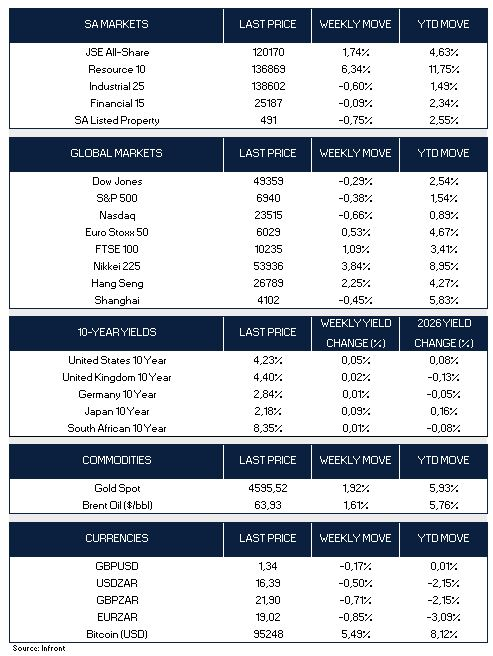
Asian markets were mixed. Japanese equities rallied sharply, with the Nikkei 225 Index gaining 3.84% and hovering near record highs. Optimism was underpinned by reports that Prime Minister Sanae Takaichi may call a snap general election, potentially strengthening political stability. In contrast, mainland Chinese markets declined after regulators tightened margin financing rules for domestic investors. Economic data showed exports rising 6.6% in December and a record USD 1.2 trillion trade surplus for 2025. The Shanghai Composite fell 0.45%, while Hong Kong’s Hang Seng Index rose 2.25%.

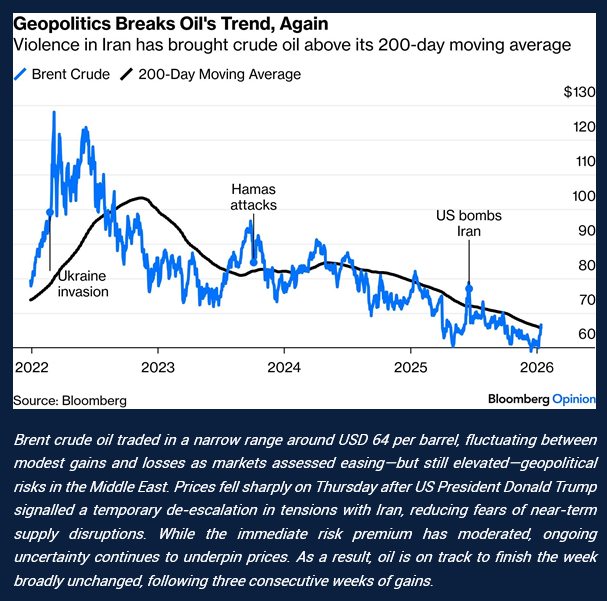
Commodity markets reflected ongoing geopolitical uncertainty. Brent crude oil rose 1.6% on the week, settling near USD 64 per barrel after a volatile period marked by concerns over Iranian supply disruptions. Prices eased later in the week as the likelihood of immediate US military intervention diminished, despite a continued build-up of US forces in the region. Gold prices were volatile, but still recorded a weekly gain of approximately 2%, after reaching a record high midweek. Safe-haven demand moderated as geopolitical tensions eased and expectations for near-term US rate cuts continued to fade.

The coming week will feature a busy US economic calendar, as agencies catch up following the government shutdown. Key releases include personal income and spending data, PCE inflation measures, and another estimate of third-quarter GDP. Leading indicators such as S&P PMIs and the University of Michigan consumer sentiment survey will also be closely watched. Internationally, PMIs will be released across the Eurozone, UK, Japan, Australia and India. The UK will publish inflation, labour market and retail sales data, while China’s final GDP print for the year and the Bank of Japan’s monetary policy decision will be key focal points for Asian markets.

Market Moves of the Week:

The South African rand weakened modestly on Friday, as market participants positioned ahead of next week’s inflation release, which is expected to provide further insight into the health of Africa’s most industrialised economy and the South African Reserve Bank’s (SARB) interest rate trajectory for the year ahead.
 
Inflation eased for the first time in three months in November, slowing to 3.5% year-on-year and remaining comfortably within the SARB’s 3% target band. At its most recent policy meeting, the central bank cut the repo rate by 25 basis points to 6.75% in a unanimous decision, noting that an improved inflation outlook had created scope for a less restrictive policy stance.
 
Looking ahead, a further rate cut at the end of January is increasingly likely, supported by subdued inflation dynamics and the continued resilience of the rand amid a weaker US dollar. A further 25 basis point reduction would lower the repo rate to 6.50%, bringing the prime lending rate down to 10%. Such a move would provide additional relief to indebted consumers and enhance the domestic economy’s resilience against ongoing global uncertainty.
 
Equity markets responded positively over the week. The FTSE/JSE All Share Index advanced 1.74%, led by strong gains in resource stocks, reflecting firmer commodity prices and renewed investor appetite for mining counters.

Chart of the Week:

As always, we appreciate your support and value your trust in LNKD Investment Managers.

Weekly Insights: US hiring slows and SA PMI disappoints, but markets hold firm

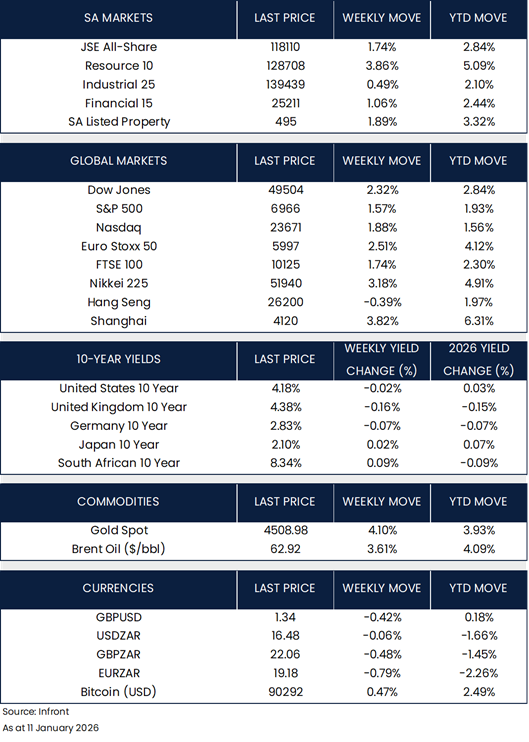
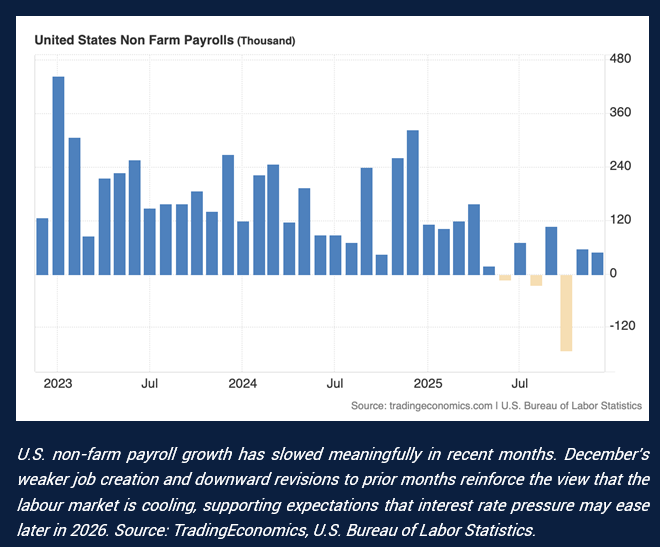
US markets began the year on a confident footing. The Dow Jones rose 2.32% over the week, while the S&P 500 gained 1.57% and the Nasdaq advanced 1.88%. This was not just a technology-driven rally. Smaller companies and value-oriented shares outperformed, which signals growing confidence in the broader economy. Beneath the market strength, the economic data was more nuanced. Job growth slowed sharply in December and prior months were revised lower, confirming that the labour market is cooling. Job openings also declined, which points to easing demand for workers. Manufacturing remains under pressure, with activity still contracting, but the services sector continues to show resilience and even signs of improvement.

European equities built on improving sentiment this week. The Euro Stoxx 50 rose 2.51% and the FTSE 100 gained 1.74%, reflecting growing optimism that the region may be stabilising after a difficult period.

Economic data helped support this view. Industrial production and manufacturing orders in Germany surprised positively, while retail sales across the eurozone also exceeded expectations. Inflation eased to 2.0%, which is exactly in line with the European Central Bank’s target and a welcome development for consumers and businesses.

That said, the outlook is not without risks. Services inflation remains elevated, which means interest rates are likely to stay higher for longer. In the UK, housing data showed ongoing softness, with mortgage approvals slipping and house prices falling again in December. This continues to weigh on household confidence. Overall, Europe is showing signs of progress, but the recovery remains uneven. Market returns this week reflect cautious optimism rather than full conviction.

China delivered a split performance this week. The Shanghai Composite rose 3.82%, driven by enthusiasm around artificial intelligence and domestic technology stocks, while Hong Kong’s Hang Seng declined 0.39%, highlighting the uneven nature of investor sentiment.

Trading activity in mainland markets has increased sharply and retail participation remains elevated, which reflects strong speculative interest in selected sectors. However, the economic backdrop remains fragile. Consumer inflation has improved modestly, but producer prices are still falling year on year, which continues to pressure corporate profitability.

China remains heavily dependent on policy support. Investors are watching closely for further stimulus measures in 2026, as additional easing could meaningfully influence both economic growth and market performance.

This remains a market with significant upside potential, but also elevated risk, which reinforces the importance of maintaining balanced exposure.

Japan was one of the strongest performers globally this week. The Nikkei 225 rose 3.18%, supported by strong gains in technology shares and a weaker yen, which benefits export-oriented companies.

Encouragingly, the economic backdrop is also improving. Household spending rebounded strongly in November, driven by higher spending on vehicles and everyday consumption such as food and dining. This suggests that Japanese consumers are becoming more confident again, even though real wages remain under pressure. The Bank of Japan continues to signal that interest rates may rise gradually during 2026 as inflation and growth become more sustainable. Markets appear comfortable with this path, viewing it as a sign of economic normalisation rather than a threat to growth.

Market Moves of the Week:

Local markets posted positive returns over the week. The JSE All Share gained 1.74%, with resources performing particularly well as the Resources 10 Index rose 3.86%. Financials gained 1.06%, industrial shares rose 0.49%, and listed property advanced 1.89%.

Despite the positive market performance, the economic data continues to paint a challenging picture. The Absa Purchasing Managers’ Index fell to 40.5 in December, the weakest reading since the lockdown period. This confirms that South Africa’s manufacturing sector remains in contraction and under significant strain.

The weakness was driven by falling employment and declining inventories, both of which signal soft demand conditions. While business activity showed some improvement, economists broadly agree that manufacturing is likely to drag on growth into 2026. GDP growth expectations remain subdued at around 1.0% to 1.3%.

There was, however, one encouraging signal. Business expectations for the next six months improved sharply, suggesting that confidence could recover if conditions stabilise and operational challenges ease.

For investors, this reinforces the importance of maintaining offshore diversification while selectively taking advantage of opportunities within the local market.

Chart of the Week:

As always, we appreciate your support and value your trust in LNKD Investment Managers. 
Weekly Insights: 2025 – A Strong Year for Investors

As we kick off 2026, we’d like to wish you a happy, healthy and prosperous year ahead. As always, we remain focused on helping investors navigate an evolving global landscape with discipline, perspective and a long-term mindset.

2025 reinforced an important lesson for investors: portfolios are rarely rewarded for reacting to political noise. Despite an almost constant stream of policy headlines, markets delivered robust returns, underscoring the value of staying invested and focused on fundamentals. Below, we highlight some of the key themes that shaped the year.

Key themes that shaped 2025

  • Markets outperformed despite political noise: Strong returns across asset classes reinforced the importance of avoiding politically driven investment decisions.
  • AI moved from promise to dominance: Breakthroughs in artificial intelligence reshaped industries, accelerated capital investment and emerged as a defining structural theme, with regulation lagging innovation.
  • Trade tensions resurfaced: Aggressive tariff rhetoric, particularly between the U.S. and China, contributed to episodic volatility, despite temporary truces limiting near-term disruption.
  • Geopolitical risks remained elevated: Conflicts across multiple regions heightened global uncertainty and influenced energy markets and investor sentiment.
  • Volatility returned to markets: Global equities swung between a sharp pullback and record highs as technology shocks, trade risks and central bank uncertainty collided.
  • Consumers showed selective resilience: Spending on entertainment and leisure remained firm despite tighter financial conditions.
  • Climate risks moved into sharper focus: Extreme weather events highlighted growing economic, insurance and infrastructure risks.
  • Property affordability deteriorated: Housing and rental markets continued to reprice higher globally, intensifying affordability pressures amid structural supply constraints and the lagged impact of higher interest rates.

U.S. economic data over the holiday-shortened week presented a mixed but broadly constructive picture. Housing activity showed tentative signs of recovery, with pending home sales posting their strongest monthly gain since early 2023 as easing mortgage rates and solid wage growth improved affordability. House prices rebounded modestly in October, while year-on-year gains remained contained, suggesting price pressures are cooling rather than accelerating. Mortgage rates fell for a third consecutive week, ending 2025 at their lowest level of the year and beginning to draw buyers back after a subdued housing market.

Monetary policy remained a central focus following the release of minutes from the Federal Reserve’s December meeting. While the Fed delivered a 25 basis-point rate cut, policymakers struck a cautious tone, emphasising the need to balance easing inflation against lingering upside risks to prices and growing downside risks to employment. Markets reacted calmly, with investors continuing to price in a low probability of near-term rate cuts as the Fed maintains a data-dependent, wait-and-see approach.

Labour market signals were less clear-cut. Initial jobless claims fell to one of the lowest levels of the year, although seasonal distortions around the holidays likely contributed to volatility. Continuing claims also edged lower, pointing to limited immediate deterioration, even as broader indicators suggest hiring momentum has slowed through 2025 and the unemployment rate has risen to a four-year high. Manufacturing data echoed this late-cycle dynamic, with pockets of improvement in regional surveys offset by ongoing weakness in parts of the industrial sector.

Across Europe, data pointed to a gradual cooling in economic momentum. Spanish inflation eased further in December, driven by lower fuel prices, although core inflation remained sticky, reflecting persistent services pressures. France saw a modest improvement in registered unemployment on a month-on-month basis, but joblessness remains materially higher than a year ago. In the UK, house prices unexpectedly declined, highlighting ongoing affordability constraints, while Sweden’s central bank signalled a prolonged pause in policy rates through 2026 as it waits for inflation to normalise more convincingly.

In Asia, Japan and China offered contrasting signals. The Japanese yen remained under pressure near multi-year lows, fuelling speculation around potential official intervention, while government bond yields climbed to their highest levels since the late 1990s on expectations of gradual policy normalisation. In China, manufacturing activity stabilised, with the official PMI returning to expansion territory for the first time in eight months. While the improvement was modest, it supports expectations of a measured policy approach in 2026, complemented by longer-term initiatives such as Beijing’s new national venture capital fund aimed at fostering domestic innovation and technological self-sufficiency.

Market Moves of the Week:

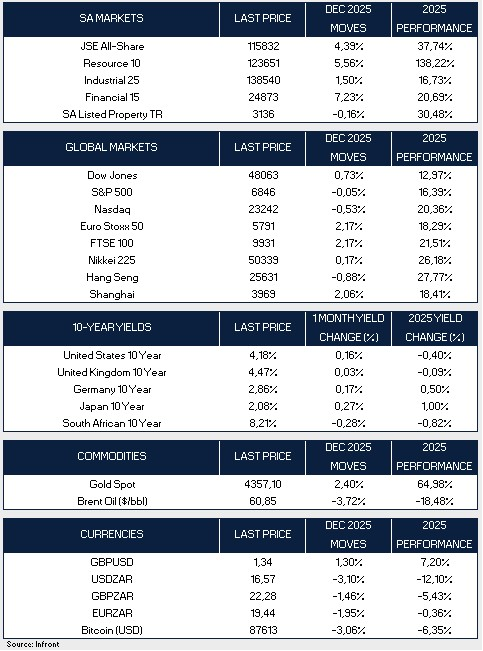
Global markets delivered a strong but increasingly differentiated performance in 2025, with equity returns broadening beyond the dominant U.S. technology trade. U.S. equities posted solid double-digit gains, led by the Nasdaq (+20.4%) and supported by a resilient S&P 500 (+16.4%), despite choppier conditions into year-end. Outside the U.S., returns were equally compelling: Japan’s Nikkei 225 surged 26.2% on improved corporate governance and yen dynamics, European equities ended the year firmly higher (Euro Stoxx 50 +18.3%, FTSE 100 +21.5%), while China and Hong Kong rebounded meaningfully after a weak start to the year. Bond markets reflected shifting monetary dynamics, with U.S. and UK 10-year yields ending the year modestly lower, German yields higher, and Japan’s 10-year yield rising sharply as expectations of policy normalisation intensified.

South African markets were standout performers in 2025, underpinned by a powerful recovery in resources and improved global risk sentiment. The JSE All Share Index rose 37.7% for the year, driven by an exceptional 138.2% gain in the Resource 10 index, while financials (+20.7%) and industrials (+16.7%) also delivered solid returns. Listed property rebounded strongly, ending the year up 30.5% despite some volatility in December. Commodities were mixed, with gold emerging as a clear winner (+65.0%) amid persistent geopolitical uncertainty and strong central bank demand, while Brent crude declined sharply (-18.5%) on supply dynamics and slower global growth. The rand strengthened materially over the year, with USD/ZAR appreciating 12.1% in favour of the currency, supported by improved sentiment and a softer U.S. dollar, while South Africa’s 10-year bond yield declined 82 basis points, reflecting easing inflation pressures and improved fiscal and policy credibility.

Chart of the Week:

As always, we appreciate your support and value your trust in LNKD Investment Managers. 

Weekly Insights: Bank of Japan raises rates to 30-year high

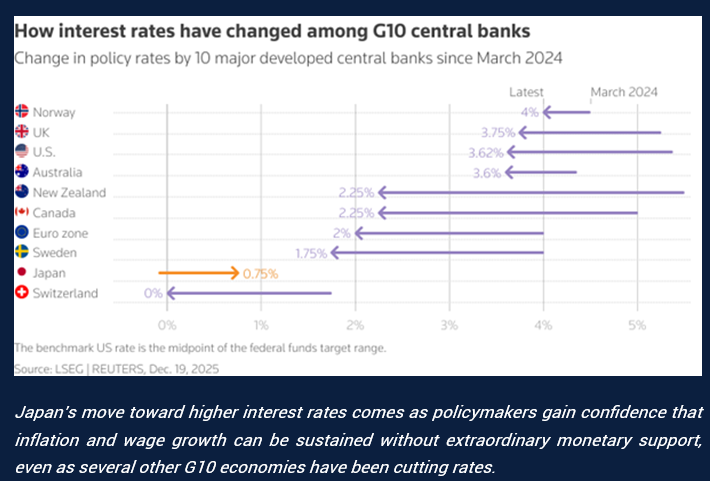
The Bank of Japan delivered a widely expected 25 basis point increase in its benchmark interest rate, lifting it from 0.50% to 0.75%, the highest level since 1995. The decision was unanimous and reflected growing confidence that the central bank’s economic outlook will be realised.

The U.S. Bureau of Labor Statistics reported that nonfarm payrolls rose by 64,000 in November, beating expectations and rebounding from the 105,000 jobs lost in October due to the federal government shutdown. Job gains were led by health care and construction, while the unemployment rate edged up to 4.6%, its highest level in over four years.

US consumer inflation eased more than expected in November, with headline CPI rising 2.7% year on year, down from 3.0% in September and below market expectations. Core inflation, which excludes food and energy, slowed to 2.6% year on year, the softest underlying inflation outcome since early 2021. The Bureau of Labor Statistics noted that data collection was affected by the recent federal government shutdown, while inflation in essential categories such as food and electricity remained relatively elevated.

Meanwhile, S&P Global’s Flash US Composite PMI pointed to a moderation in business activity in December, falling to 53.0 from 54.2 in the previous month. While the index remained in expansionary territory, the reading was the lowest in six months, reflecting slower growth across both manufacturing and services.

UK inflation fell more than expected in November, with headline CPI easing to 3.2% year on year from 3.6% in October, marking its lowest level in eight months. The Office for National Statistics noted that the decline was driven in part by lower prices for certain food items, including cakes, biscuits and breakfast cereals. Following the softer inflation outcome, the Bank of England voted to cut interest rates by 25 basis points to 3.75%, taking the base rate to its lowest level since February 2023.

The European Central Bank (ECB) left the deposit rate unchanged at 2.0% for a fourth consecutive meeting. President Christine Lagarde said policy remains “in a good place,” while reiterating a data-dependent, meeting-by-meeting approach amid ongoing uncertainty. The ECB also marginally lifted its growth outlook, forecasting GDP growth of 1.4% in 2025, 1.2% in 2026, and 1.4% in 2027–28.

In China, data from the National Bureau of Statistics showed that retail sales rose 1.3% year on year in November, the slowest pace since the pandemic, highlighting ongoing weakness in consumption despite government efforts to stimulate demand. Fixed asset investment fell 2.6% over the first 11 months of the year, missing expectations, while industrial output rose 4.8% year on year, underscoring the economy’s continued reliance on exports. Earlier in December, Chinese leaders signalled that they are unlikely to materially ramp up stimulus next year, even as they reiterated support for growth.

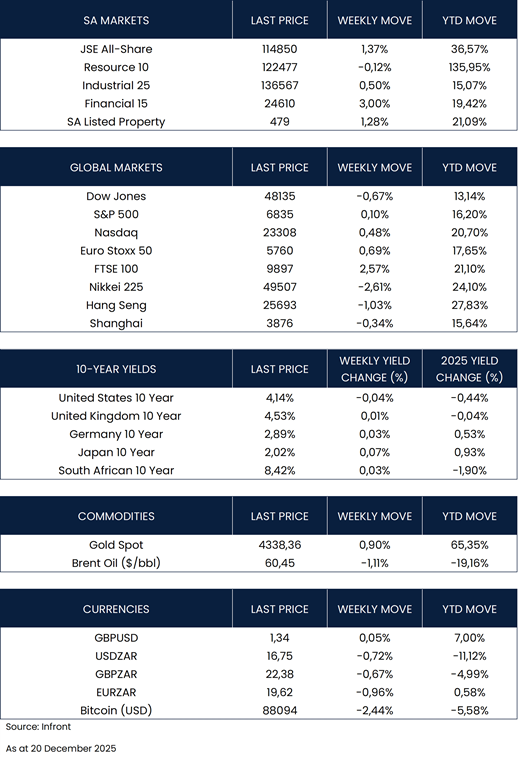
U.S. equity markets ended the final full trading week of the year mixed, as the Dow Jones Industrial Average fell 0.67%, the S&P 500 finished broadly flat, and the Nasdaq Composite rose 0.48%.

European equities posted modest gains in local currency terms, supported by signs of steady economic growth and a more accommodative monetary policy backdrop. The STOXX Europe 50 Index advanced 0.69%, while the UK’s FTSE 100 gained 2.57%.

Asian equities were weaker over the week. Japan’s Nikkei 225 fell 2.61%, pressured by losses in technology stocks amid valuation concerns and elevated spending on artificial intelligence. Chinese markets also declined, with the Shanghai Composite down 0.34% and Hong Kong’s Hang Seng Index falling 1.03%.

Market Moves of the Week:

South African consumer inflation edged lower in November, with headline CPI slowing to 3.5% year on year from 3.6% in October. The moderation was supported by lower fuel prices and a firmer rand, according to Statistics South Africa (Stats SA). Core inflation, which excludes food, non-alcoholic beverages, fuel and electricity, edged slightly higher to 3.2% from 3.1% in October, indicating that underlying price pressures remain broadly stable.

Producer price inflation, which measures changes in the cost of goods before they reach consumers, was unchanged at 2.9% year on year in November, according to Stats SA. Electricity and water producer prices eased to 15.3% from 16.1%, while mining producer inflation rose to 19.9%. While recent readings point to contained inflation pressures, both producer and consumer inflation are expected to trend higher in the months ahead due to base effects.
 
The JSE All-Share Index advanced 1.37% over the week, supported by a strong 3.00% gain in the financial sector. The industrials and property sectors posted modest gains of 0.50% and 1.28%, respectively, while the resource sector marginally declined by 0.12%. Meanwhile, the rand strengthened modestly, appreciating 0.72% against the U.S. dollar to close at R16.75 on Friday.

Chart of the Week:

As always, we appreciate your support and value your trust in LNKD Investment Managers.
The Federal Reserve’s split rate cut

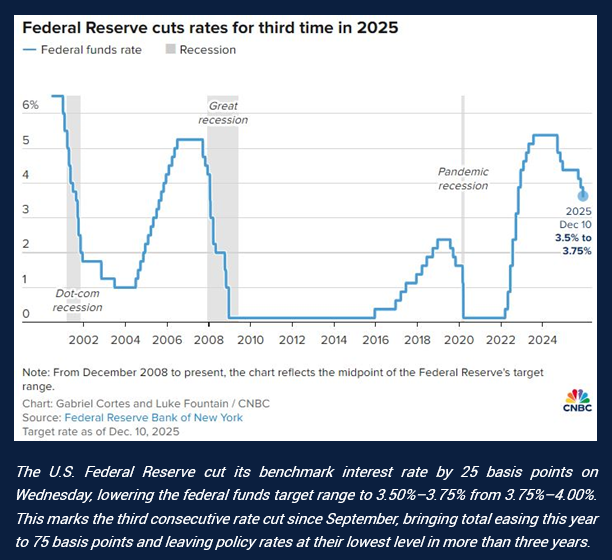
The U.S. Federal Reserve cut interest rates by 25 basis points on Wednesday, as widely expected, marking the third-rate reduction this year. The decision was passed by a 9–3 vote, again highlighting a growing divide within the committee. Hawkish members remain concerned about inflation and favour higher rates, while dovish members are more focused on supporting the labour market through lower borrowing costs.

The Fed’s updated “dot plot” points to a cautious path ahead, with policymakers collectively pencilling in just one additional rate cut in 2026 and another in 2027, underscoring significant disagreement about the future direction of policy. In a further move to support market liquidity, the Fed announced it will resume purchases of U.S. Treasury securities, starting with $40 billion in Treasury bills from Friday.

On the economic outlook, the committee raised its forecast for U.S. GDP growth in 2026 to 2.3%, a half-percentage-point increase from its September projection. Inflation, however, is still expected to remain above the Fed’s 2% target until 2028. The Fed’s preferred inflation gauge showed prices rising at an annual rate of 2.8% in September—well below recent peaks, but still uncomfortably high for policymakers.

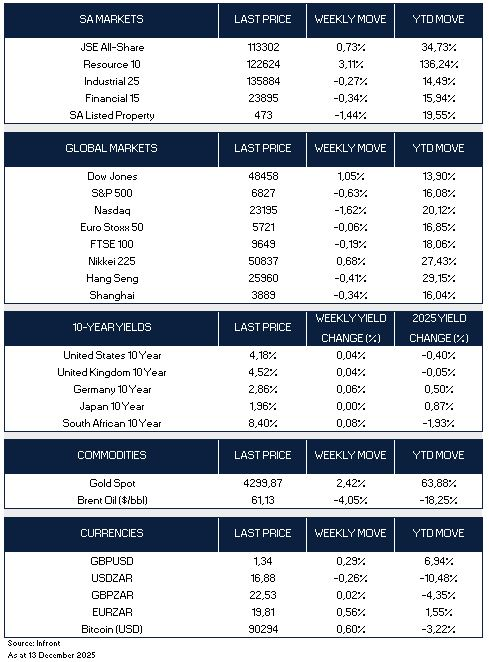
U.S. equities pulled back on Friday as investors continued to rotate out of technology stocks into more value-oriented sectors. Concerns over elevated valuations and whether heavy spending on artificial intelligence infrastructure will deliver sufficient returns weighed on the tech-heavy Nasdaq Composite. For the week, the S&P 500 declined 0.6% and the Nasdaq fell 1.6%, while the Dow Jones Industrial Average bucked the trend, gaining 1.1%.

Divisions within the Fed have increasingly played out in public, presenting a challenge for Chair Jerome Powell as uncertainty around the U.S. economic outlook persists, particularly in light of President Donald Trump’s aggressive trade policies. President Trump has repeatedly pressured the Fed to cut rates and has signalled that former Fed governor Kevin Warsh is now a leading candidate to succeed Powell when his term expires in May, according to reports.

European markets were modestly weaker. The STOXX Europe 50 Index ended slightly lower, while the UK’s FTSE 100 slipped 0.19%. The European Central Bank is widely expected to keep interest rates unchanged at its December 18 meeting, marking a fourth consecutive hold since its June rate cut. ECB officials struck a relatively confident tone during the week, with President Christine Lagarde noting that the European economy appears resilient to trade tensions and could see upgraded growth projections later this month.

In the UK, economic data disappointed as GDP unexpectedly contracted by 0.1% in October, following a similar decline in September. Construction was the weakest sector, while services output also fell.

Asian markets were mixed. Japan’s equities advanced, with the Nikkei Index rising 0.68% for the week. Ahead of the Bank of Japan’s December policy meeting, economists expect a 25-basis-point rate hike to 0.75%, which would mark another step away from ultra-loose policy. In contrast, Chinese markets retreated as investors took profits. The Shanghai Composite fell 0.34% and Hong Kong’s Hang Seng Index slipped 0.41%. Inflation data continued to highlight deflationary pressures in China, with consumer prices rising just 0.7% year on year in November.

Brent crude oil prices stabilised around $61 per barrel but were still on track for a weekly decline of more than 4%, driven by expectations of a global supply surplus. Gold prices climbed above $4,300 per ounce, testing record highs last seen in October, and posted a weekly gain of 2.4% on expectations of further U.S. monetary easing.

The week ahead is packed with key data releases. In the U.S., markets will focus on the delayed jobs reports for October and November, November CPI inflation, and retail sales figures. In Europe, monetary policy will be in the spotlight as both the ECB and the Bank of England hold policy meetings. In Asia, investors will watch a range of Chinese economic indicators, while in Japan attention will centre on the Bank of Japan meeting, where a rate hike to 0.75% is widely anticipated.

Market Moves of the Week:

South Africa’s Communications Minister, Solly Malatsi, has directed the country’s telecoms regulator to amend regulations to allow international players, including Elon Musk’s Starlink, to enter the local market under an alternative empowerment framework. Currently, the Electronic Communications Act requires foreign-owned communications licensees to sell 30% of equity in their South African subsidiaries to historically disadvantaged groups—a requirement that has drawn criticism from Starlink and other global operators.

Under a new policy direction published in the Government Gazette on Friday, so-called “equity equivalent” investment programmes will be recognised as contributing toward empowerment objectives. This change would enable communications companies to bypass the 30% equity requirement, instead meeting empowerment goals through investments such as digital infrastructure and related initiatives, potentially easing market entry for global technology providers.

Investor attention is turning to November consumer inflation data, scheduled for release on 17 December. The data will be closely watched following South Africa’s decision last month to lower its inflation target to 3%, from the previous 3%–6% range. A fourth-quarter survey of business leaders, trade union officials and analysts released on Friday showed a sharp decline in inflation expectations for 2026, suggesting growing confidence in the credibility of the new lower inflation target.

On the Johannesburg Stock Exchange, the JSE All Share Index finished the week 0.73% higher, supported by strong performances from resource companies.

The South African rand was largely steady on Friday, underpinned by firmer gold prices. Currency markets remained cautious ahead of next week’s inflation release, which is expected to provide further insight into the underlying health of Africa’s most industrialised economy.

Chart of the Week:

As always, we appreciate your support and value your trust in LNKD Investment Managers. 
Weekly Insights: Global Equities Gain as Rate-Cut Expectations Build

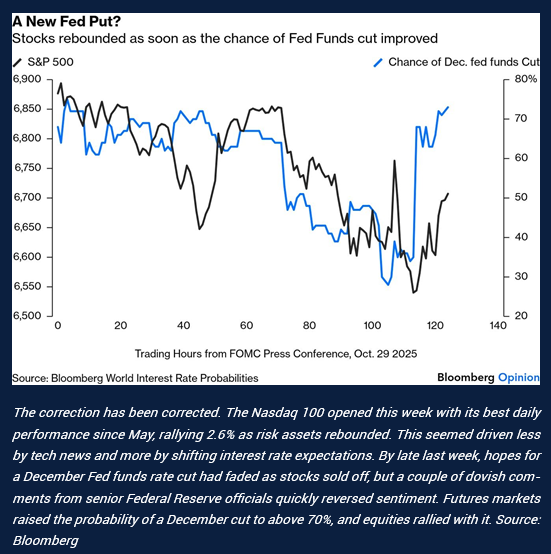
U.S. markets ended the holiday-shortened week higher, supported by dovish signals from Federal Reserve officials and a run of softer economic data that strengthened expectations of a December rate cut. Small caps outperformed, the Nasdaq bounced back on renewed AI optimism, and overall sentiment remained constructive despite typically thin Thanksgiving trading volumes.

U.S. economic releases pointed to cooling momentum. Retail sales slowed sharply, core control-group sales contracted, and producer price inflation remained contained. Durable goods orders offered a pleasant upside surprise, though business surveys such as the Chicago PMI and Richmond Fed continued to signal softer underlying activity. Labour market indicators were mixed: initial jobless claims fell to a seven-month low, suggesting employers remain reluctant to cut staff, while continuing claims nudged higher. Meanwhile, consumer sentiment deteriorated meaningfully as surveys highlighted mounting concerns over inflation, job security and household finances heading into the holiday season.

The Fed’s Beige Book reinforced the narrative of a gradually slowing economy, noting slightly weaker employment, moderate price pressures and softer consumer spending. Markets became increasingly sensitive to policy signals after comments from senior Fed officials and reports that Kevin Hassett may replace Jerome Powell, both of which reinforced expectations that the next move will likely be a rate cut. Bond yields drifted lower, the dollar softened, and tech stocks rallied on further AI-related developments.

Across Europe, data continued to point to mild stabilisation. Germany’s GDP flatlined after a prior contraction and consumer confidence improved slightly, while France recorded a small dip in sentiment. Eurozone-wide confidence held steady, and inflation remained subdued across major economies, keeping the headline CPI reading close to the ECB’s 2% target. In the UK, the Autumn Budget introduced GBP 26 billion in new taxes, prompting the OBR to lower growth forecasts and highlight a rising long-term tax burden.

Tensions in East Asia escalated as China criticised Japan’s position on Taiwan and imposed travel and import restrictions, heightening geopolitical risks in the region. Despite this backdrop, Japan’s economic readings were mixed: inflation held steady, unemployment remained unchanged and industrial production softened. Japanese equities nevertheless advanced on dovish U.S. signals, while speculation around a possible BoJ rate hike pushed the 10-year JGB yield toward 17-year highs.

In China, equity markets rose as renewed enthusiasm for domestic tech and AI overshadowed concerns about slowing economic momentum. Industrial profits unexpectedly declined and producer prices remained in deflation, signalling still-weak underlying demand. Even so, most analysts continue to expect China to meet its 5% growth target, supported by ongoing policy measures and relatively steady consumer sectors.

Broader geopolitical developments added fresh dynamics to global markets. Growing optimism around potential peace in Ukraine and the prospect of a new U.S.–China trade agreement triggered debate about asset-allocation shifts for 2026. Defence stocks pulled back, while reconstruction-linked materials gained strongly. Oil prices edged lower ahead of the OPEC+ meeting as markets weighed diplomatic developments against supply expectations, with Brent drifting toward $62 a barrel amid signs of a growing global surplus.

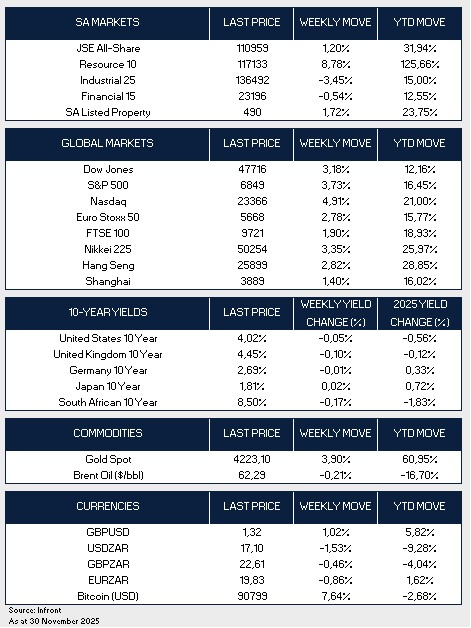
Global markets closed the week firmly higher, buoyed by improving risk appetite and ongoing optimism around U.S. monetary easing. All three major U.S. indices posted strong gains, led by a 4.91% rise in the Nasdaq. European equities also pushed higher, while in Asia, Japan’s Nikkei 225 climbed 3.35%, Hong Kong’s Hang Seng rose 2.82% and the Shanghai Composite added 1.40%. Bond yields were mostly softer, with U.S., UK and German yields edging lower as rate-cut expectations strengthened, while Japan’s 10-year yield moved higher to 1.81% on growing expectations of BoJ tightening.

Market Moves of the Week:

South Africa is considering a 20% tax on online gambling to slow the industry’s rapid expansion and limit related social harms. Treasury expects the measure could raise about R10 billion, but stresses that the main objective is to curb problem gambling, which has surged alongside smartphone adoption and economic strain. Participation has risen sharply, and total wagers reached R1.5 trillion in 2024/25, almost one-third higher than the previous year. The proposal follows global trends – such as the UK’s 21% remote gaming tax – and may include stricter reporting and registration requirements for online operators.

Nersa has taken three major steps toward launching South Africa’s competitive wholesale electricity market in April 2026: approving a market-operator licence for Eskom’s NTCSA, finalising grid access rules, and establishing the Electricity Market Advisory Forum. However, it is withholding final licence conditions until NTCSA outlines how it will prevent conflicts of interest with Eskom, which will compete alongside other generators. Industry bodies have welcomed the reforms as long-overdue measures that improve transparency, strengthen oversight, and support a more competitive investment environment.

Other economic developments included a 1.2% MoM decline in South Africa’s leading business cycle indicator for September and mixed producer inflation data, with PPI down 0.1% MoM but up 2.9% YoY in October. Globally, China’s launch of physically settled platinum futures boosted platinum prices and offered a structural positive for South African PGM producers. Meanwhile, U.S. President Donald Trump escalated political tensions by declaring South Africa would not be invited to the 2026 G20 Summit, questioning its membership and threatening to halt U.S. support.

South African markets delivered a mixed performance over the week, with the JSE All Share Index rising 1.20% as a sharp rebound in resources (+8.78%) offset weakness in industrials (-3.45%) and financials (-0.54%). Resource counters continued to surge on stronger commodity prices, while listed property added 1.72%, extending its solid year-to-date gains. The rand strengthened meaningfully, appreciating 1.53% to R17.10/$ alongside broader U.S. dollar softness, and the South African 10-year government bond yield declined 17 basis points to 8.50%, supported by improved global risk sentiment and expectations of further monetary easing abroad.

Chart of the Week:

As always, we appreciate your support and value your trust in LNKD Investment Managers. 

Weekly Insights: U.S. Payrolls Rebound in September

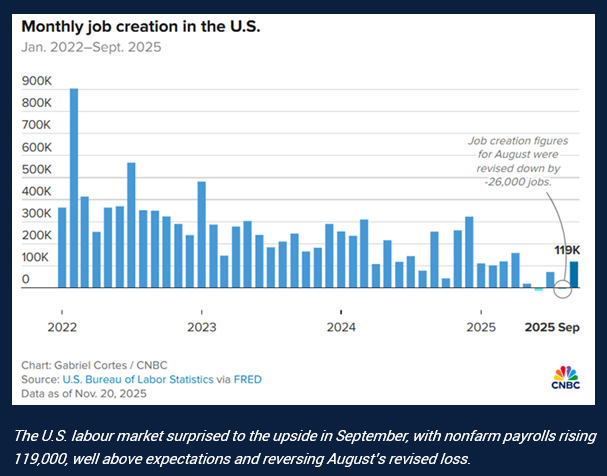
After a six-week delay due to the government shutdown, the September employment report offered a mixed reading. Payroll growth came in higher than expected at 119,000, marking an improvement from the subdued hiring seen over the summer. However, the unemployment rate edged up to 4.4%, the highest level in four years. The Bureau of Labor Statistics confirmed that the October report has been cancelled, with the next release, covering November, scheduled for 16 December.

In one of the most closely watched earnings releases of the quarter, NVIDIA reported record revenue that exceeded expectations, supported by strong demand for its AI chips. The company also issued a stronger-than-anticipated Q4 outlook. Markets opened higher on Thursday, but momentum faded later in the session, and NVIDIA ended the week 3.90% lower, as renewed uncertainty around the broader AI theme weighed on major equity indices.

The minutes from the early-November FOMC meeting revealed deeper divisions among policymakers than initially suggested, even after the committee delivered a rate cut earlier in the month. Several members argued that a December cut would be inappropriate and could risk adding to inflation pressures, while most still anticipate a continued easing cycle over time. The Fed also noted that the labour market is expected to soften gradually, with no signs of a sharp deterioration. Political pressure resurfaced as President Trump criticised Chair Jerome Powell as “grossly incompetent” and hinted he has identified a potential replacement ahead of Powell’s term expiry in May.

Early eurozone PMI readings for November indicated that activity continued to expand at a steady pace. The HCOB composite PMI eased slightly to 52.4 from 52.5, remaining above expectations and still in expansionary territory. Services firmed to an 18-month high of 53.1, while manufacturing slipped back below 50 to 49.7.

In the UK, annual CPI inflation slowed to 3.6% in October from 3.8%, supported by softer airfare, gas and utility prices. While marginally above consensus, the print reinforced expectations for a December rate cut. Core inflation eased to 3.4% from 3.5%, indicating further moderation in underlying pressures.

Japan approved a JPY 21.3 trillion (USD 135 billion) stimulus package, marking progress toward the expansionary fiscal stance anticipated under new Prime Minister Sanae Takaichi. The measures include spending, targeted tax breaks and investment across areas such as shipbuilding and AI, aimed at supporting growth and easing pressure on households affected by elevated inflation.

In China, no major economic indicators were released during the week. However, policy developments were in focus as authorities reportedly consider additional measures to support the property market amid concerns that ongoing weakness could pose broader financial-stability risks.

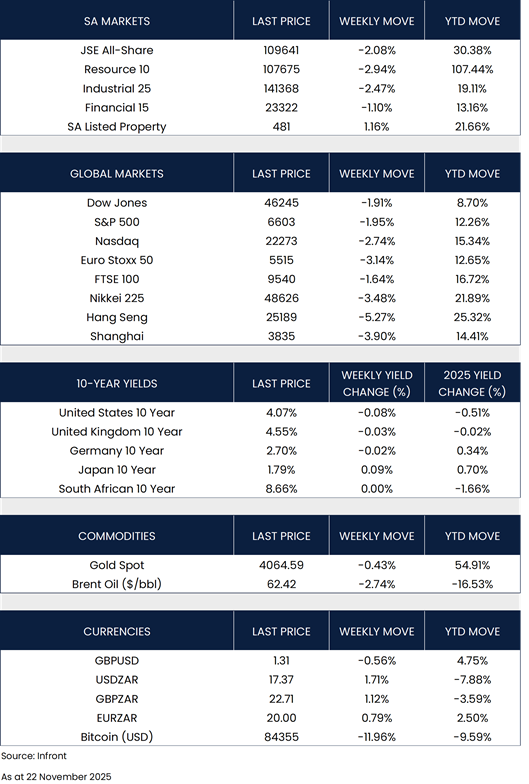
Despite some supportive earnings releases and economic data, U.S. equities ended the week lower. The Nasdaq Composite fell 2.74%, while the S&P 500 (-1.95%) and Dow Jones (-1.91%) also posted declines.
 
In Europe, the STOXX Europe 50 slipped 3.14% in local-currency terms as renewed caution around AI-related valuations and reduced expectations for a near-term U.S. rate cut weighed on sentiment. The FTSE 100 declined 1.64%.
 
Asian markets were similarly softer. Japan’s Nikkei 225 eased 3.48%, reflecting weakness in AI-linked technology names on valuation concerns. Mainland China’s Shanghai Composite fell 3.90%, while Hong Kong’s Hang Seng Index dropped 5.27%, mirroring the broader risk-off tone.

Market Moves of the Week:

South Africa’s latest CPI print showed inflation holding steady, with headline and core measures remaining broadly aligned with the SARB’s target range. According to Stats SA, headline CPI was 3.6% in October, slightly higher than in September but still in line with gradually easing price pressures.

Following the release, the SARB unanimously reduced the repo rate from 7.00% to 6.75% on Thursday, its first adjustment under the updated inflation-targeting framework. The MPC highlighted the improvement in the inflation backdrop but maintained a data-dependent approach.

During the week, the G20 meetings commenced, with discussions focusing on global growth, inflation dynamics and the broader policy outlook. The U.S. did not participate in this round of meetings, and discussions proceeded with the remaining members focusing on coordination efforts and broader global financial developments.
 
The JSE All-Share Index mirrored global peers, declining 2.08% over the week. Most sectors ended lower, with resources (-2.94%), industrials (-2.47%) and financials (-1.10%) all recording weekly losses. Property was the only positive performer, gaining 1.16%. Meanwhile, the rand depreciated 1.71% against the U.S. dollar, closing at R17.37 on Friday.

Chart of the Week:

As always, we appreciate your support and value your trust in LNKD Investment Managers.