

Alternative Investments

Incorporating alternative assets is increasingly crucial for building a resilient investment portfolio.
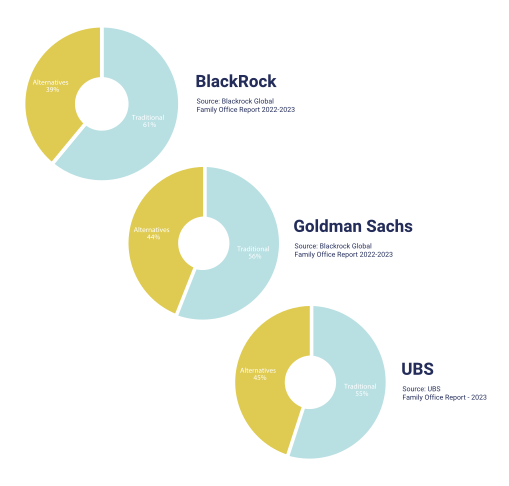
Recent studies from prominent financial firms like BlackRock, Goldman Sachs, and UBS reveal that family offices typically allocate between 39% and 45% of their portfolios to alternative investments.
Family offices invest in alternative assets primarily due to their lower correlation with traditional asset classes and their comparatively lower return volatility.
Defining Alternative Investments
01
Private Equity
Private equity involves investing in privately held companies, supplying capital to help them scale and seize growth opportunities. While these investments can offer high returns, they typically require long-term commitments, often ranging from 5 to 10 years.
04
Private Credit
Private debt or credit, is an investment strategy where non-bank lenders including private investors, provide loans to businesses. This type of investment can offer higher yields, portfolio diversification, and lower volatility compared to traditional fixed income. However, it typically requires long-term commitments, usually ranging from 1 to 5 years.
02
Hedge Funds
Hedge funds typically invest in traditional asset classes like stocks and bonds but employ sophisticated techniques such as short-selling, leverage, and derivatives like options and futures to generate positive returns regardless of market conditions. They operate across a wide range of strategies, each with distinct risk and return profiles.
05
Infrastructure Investments
Infrastructure investments involve allocating capital to physical assets like transportation systems, utilities, and communication networks. These investments are typically long-term and offer stable returns, often linked to inflation. Investors in infrastructure aim to benefit from steady cash flows and lower risk compared to more volatile asset classes.
03
Commodities
Commodity investments involve trading in physical goods such as gold, oil, and agricultural products. These investments often utilise advanced strategies like futures contracts and options to capitalise on price movements.
06
Real Estate
Global listed real estate involves investing in publicly traded real estate companies, such as Real Estate Investment Trusts (REITs) across global markets. Global listed real estate spans a diverse range of sectors—including office, industrial, retail, residential, and specialised property types.
Defining Alternative Investments
01
Private Equity
Private equity involves investing in privately held companies, supplying capital to help them scale and seize growth opportunities. While these investments can offer high returns, they typically require long-term commitments, often ranging from 5 to 10 years.
02
Hedge Funds
Hedge funds typically invest in traditional asset classes like stocks and bonds but employ sophisticated techniques such as short-selling, leverage, and derivatives like options and futures to generate positive returns regardless of market conditions. They operate across a wide range of strategies, each with distinct risk and return profiles.
03
Commodities
Commodity investments involve trading in physical goods such as gold, oil, and agricultural products. These investments often utilise advanced strategies like futures contracts and options to capitalise on price movements.
04
Private Credit
Private debt or credit, is an investment strategy where non-bank lenders including private investors, provide loans to businesses. This type of investment can offer higher yields, portfolio diversification, and lower volatility compared to traditional fixed income. However, it typically requires long-term commitments, usually ranging from 1 to 5 years.
05
Infrastructure Investments
Infrastructure investments involve allocating capital to physical assets like transportation systems, utilities, and communication networks. These investments are typically long-term and offer stable returns, often linked to inflation. Investors in infrastructure aim to benefit from steady cash flows and lower risk compared to more volatile asset classes.
06
Real Estate
Global listed real estate involves investing in publicly traded real estate companies, such as Real Estate Investment Trusts (REITs) across global markets. Global listed real estate spans a diverse range of sectors—including office, industrial, retail, residential, and specialised property types.
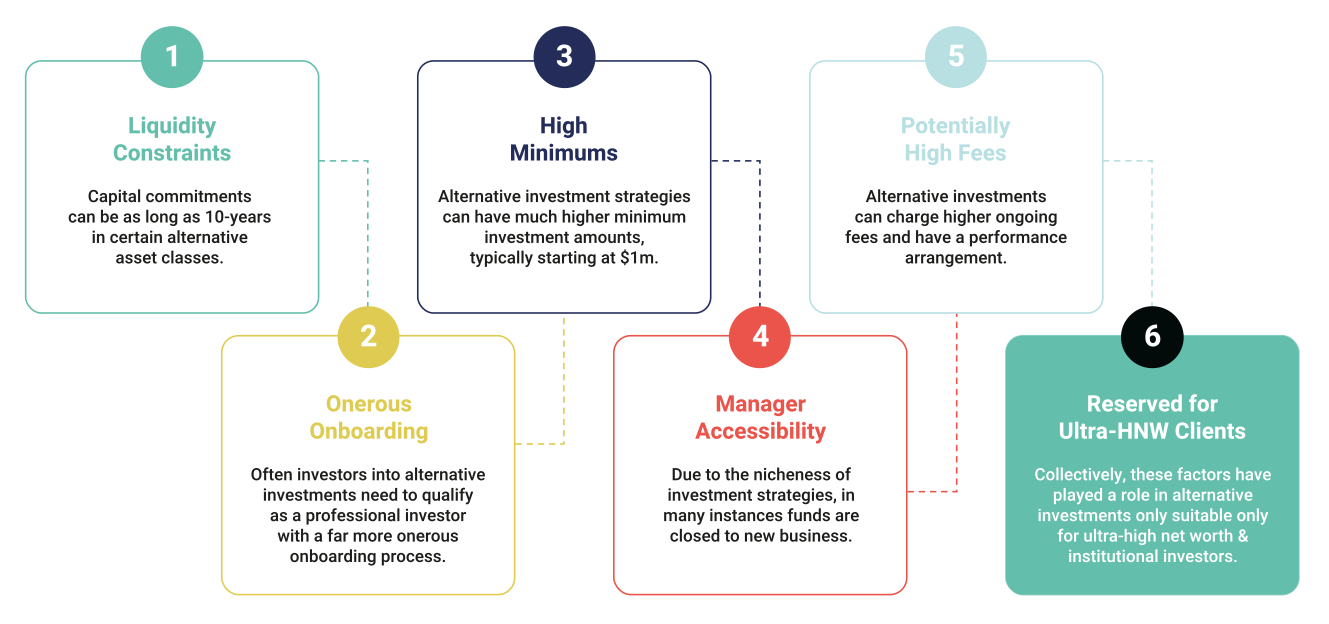
The challenge with Alternative Investments
What are
Liquid Alternatives
Characteristics of Liquid Alternatives
- Daily Liquidity
- Transparent & Regulated
- Easily Accessible
- Diverse Strategies
Benefits of the Liquid Alternative Solution
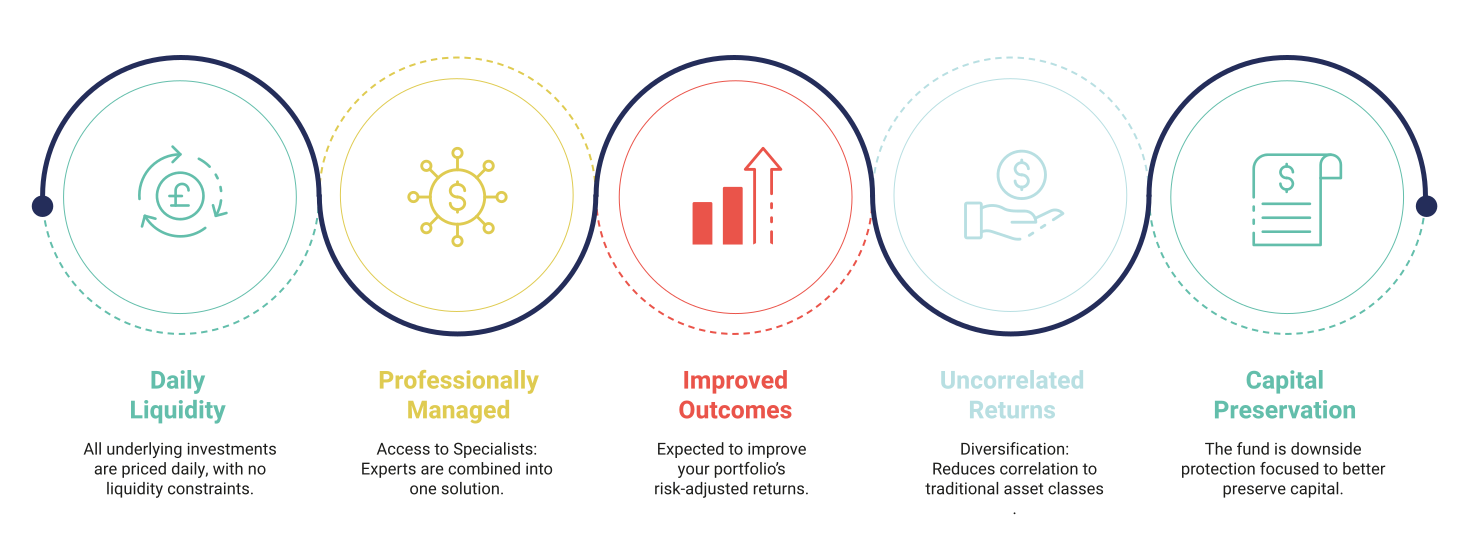
Drawdown protection
Alternate sources of return with limited drawdown risk
Value Added Core-Satellite Allocations
Enhances risk-adjusted returns